
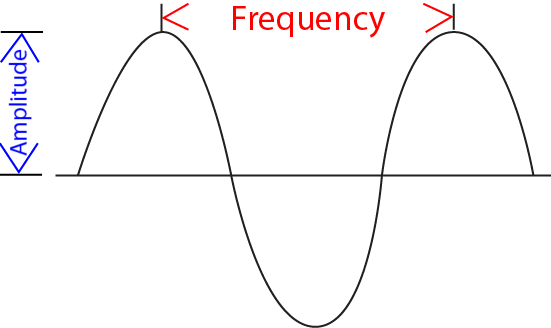
Frequency on a synthesizer refers to the number of times a waveform oscillates within one second, measured in hertz (Hz). It is a parameter that governs the pitch of the sound being produced and is located on the oscillator section of a synthesizer.
In a synthesizer, each oscillator has a frequency control that enables the user to adjust the oscillator’s pitch concerning a musical scale. A synth’s frequency can be set to a specific number, such as 440Hz, which is the pitch of the note A in standard tuning, or to a particular note, such as “A4”, which is also tuned to 440Hz. Some synths, such as those with a pitch bend wheel or a pitch modulation control, let the user set the frequency more flexibly.
One of the critical factors determining how a synth sounds are its oscillator’s frequency, which is used to produce a wide variety of sounds. Higher frequencies produce higher-pitched sounds, while lower frequencies produce sounds with a lower pitch. Furthermore, real-time frequency modulation enables the creation of dynamic and expressive changes in the sound. This can create various effects, including vibrato, pitch bends, and other modulation types, and it can be done by using an LFO or an envelope generator.
 Synthesizer Online