Categories
Common Synthesizer Controls

Gate Signals

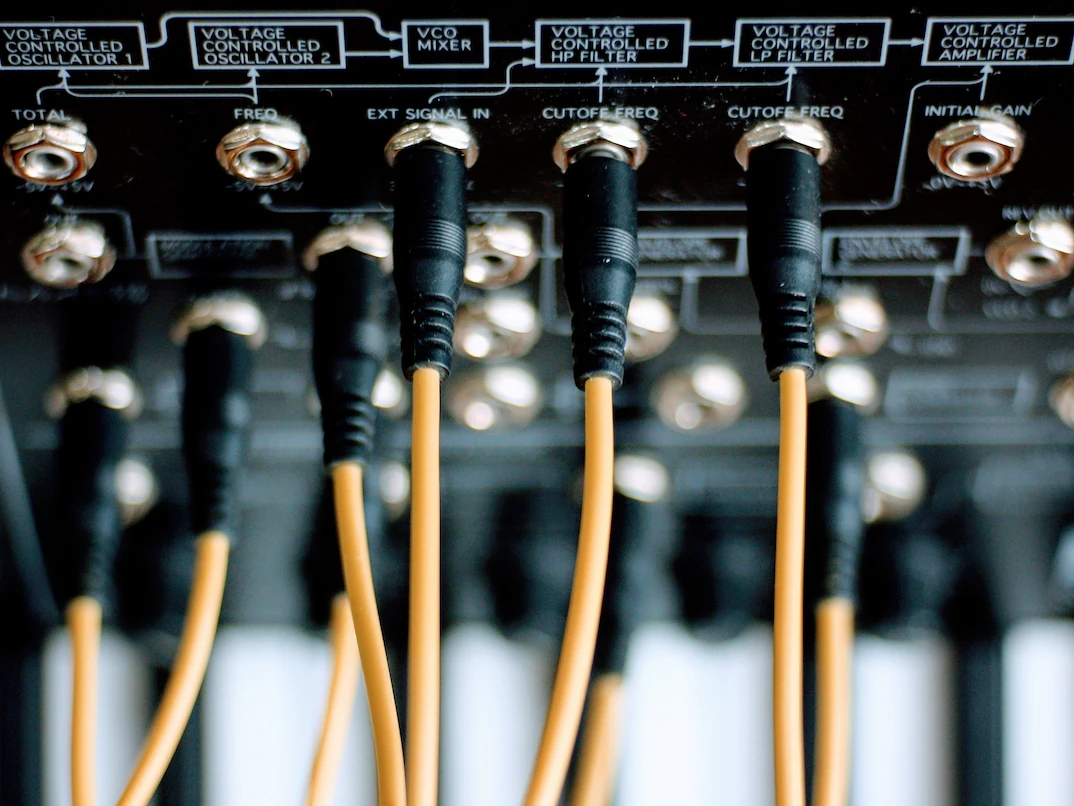
A gate signal in a modular synthesizer is an electrical signal used to control the duration of a sound. It is a binary signal frequently used to activate envelopes and other sound amplitude-controlling modules.

A gate signal is typically a positive voltage signal that rises when a note is played (for example, to 5V) and falls (for instance, to 0V) when the note is released. By turning it on and off, it is used to regulate the length of the sound. It can also be used to activate other modules, such as an envelope generator, which governs the sound’s amplitude.

Gate signals can be sent to different modules using patch cables and are typically produced by a gate-source, such as a keyboard or sequencer. They make it possible to precisely control the sound’s duration, enabling the creation of intricate rhythms and patterns.

In a nutshell, the duration of a sound is controlled by an electrical signal called a gate signal in a modular synthesizer. It is a binary signal that is frequently used to activate the envelopes and other sound amplitude-controlling modules. The duration of the sound can be precisely controlled, enabling the creation of intricate rhythms and patterns. It is typically produced by a gate-source, such as a keyboard or sequencer, and can be sent to various modules via patch cables.

Categories
Common Synthesizer Controls

Control Voltages (CV)

Control voltages (CV) in modular synthesizers are electrical signals used to control various parameters of the modules, such as pitch, frequency, and amplitude. They are used to control the sound in a similar way to how notes on a keyboard or knob movements on a traditional synthesizer control sound.

CV signals are typically low-frequency signals, usually in the range of 0-5V, and are typically generated by a control voltage source, such as an LFO or an envelope generator. These signals are then sent to various modules via patch cables, where they are used to control different parameters, such as the frequency of an oscillator or the cutoff of a filter.

CV is a standard feature in modular synthesizers and it allows for greater flexibility and expression than traditional synthesizers. CV signals can be used to control multiple parameters at once, and the signal can be modulated by other modules, allowing for complex and dynamic sound creation.

In summary, Control voltages (CV) in modular synthesizers are electrical signals used to control various parameters of the modules, such as pitch, frequency, and amplitude. They are low-frequency signals usually in the range of 0-5V, generated by a control voltage source and sent to various modules via patch cables, allowing for greater flexibility and expression than traditional synthesizers.

Categories
Sound Design and Production Concepts Synthesizer Concepts

Wavetable

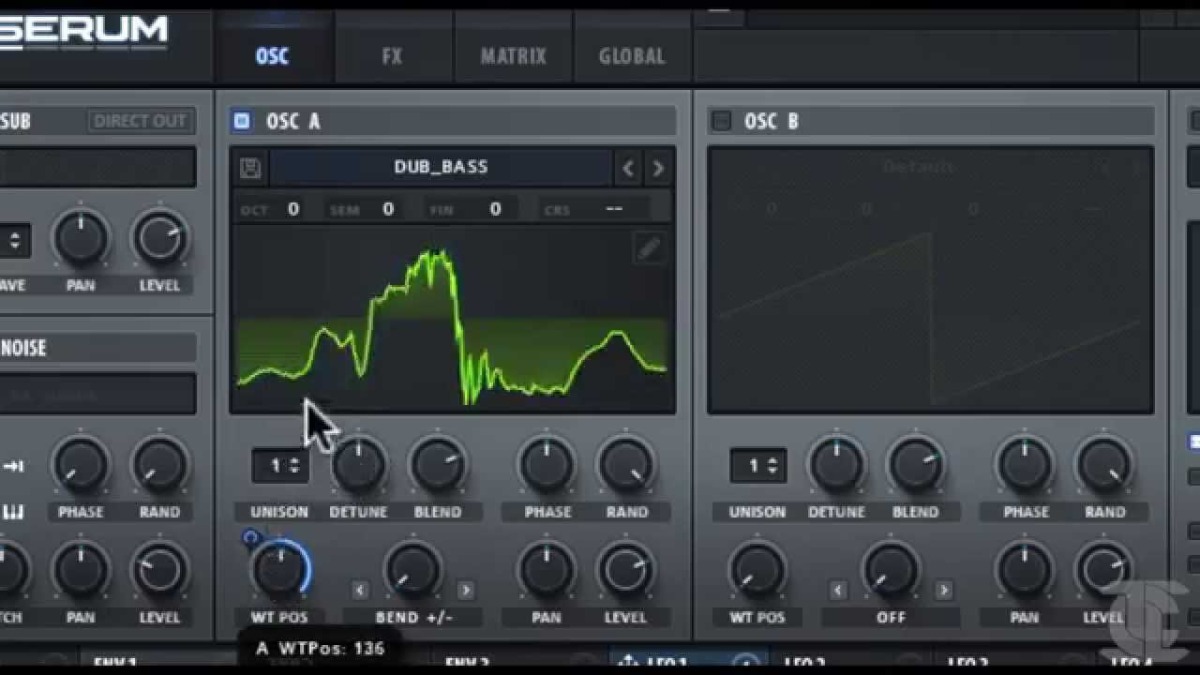
A wavetable is a group of sound samples stored digitally and used as the foundation for wavetable synthesis in synthesizers. It is a table of values that creates a digital representation of a waveform by representing the amplitude of a sound at various points in time. This waveform could be a straightforward sine wave or a more complex sound, like an instrument recording or a soundscape.

Wavetable synthesis uses the samples in the wavetable as the starting point for creating new sounds and uses wavetables. An oscillator that can be modulated to produce different sounds reads the wavetable. For instance, the index can be modulated to move through the wavetable at different rates, changing the harmonic content and overall character of the sound. The oscillator’s frequency can also alter the sound’s pitch.

In summary, a wavetable is a group of sound samples that can be used as the foundation for sound synthesis using wavetable synthesis and is stored in a digital format. It can be modulated to produce various sounds and read by an oscillator to generate a sound.

Categories
Sound Design and Production Concepts Synthesizer Features

Voices

A voice in a synthesizer is a standalone sound-generating or sound-processing unit that can create sounds independently. How many sounds a synthesizer can produce at once is determined by the number of voices it has.

For instance, a synthesizer with four voices can simultaneously produce four different sounds. This can be used to play multiple notes simultaneously, such as when playing a melody, or to create complex and layered sounds, such as chords.

One can also refer to a synthesizer as polyphonic if it has several voices. Monophonic refers to a synthesizer that can only play one note at a time. It is possible to switch between monophonic and polyphonic modes on some synthesizers.

Depending on the synthesis technique it employs, a synthesizer can produce a variety of voices. Oscillators, filters, and envelopes make up the voices of some subtractive synthesis synthesizers. Some people create voices using wavetable synthesis, which uses wavetables, filters, and envelopes. Granular synthesis is a synthesizer in which the voices are composed of grains, filters, and envelopes.

Additionally, some synthesizers have features like voice layering, voice stacking, and voice splitting that let you use multiple voices in various ways. For instance, you could layer various sounds to create complex timbres or divide the keyboard into different zones and assign multiple sounds to each zone.

Generally, a synthesizer’s capabilities and the types of sounds it can create depend on the number of voices it has and the voices it employs. These factors should be taken into account when selecting a synthesizer.

Categories
Common Synthesizer Controls Synthesizer Features

MIDI (Musical Instrument Digital Interface)

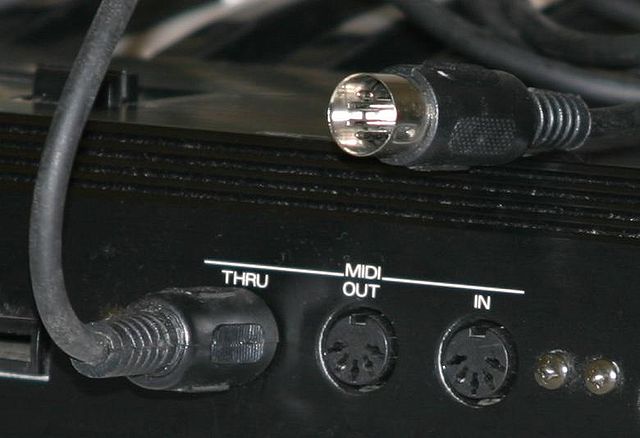
MIDI (Musical Instrument Digital Interface) is a technical standard that allows electronic musical instruments, computers, and other devices to communicate and synchronize. It is a protocol that allows various devices to communicate with one another and exchange musical data, such as the notes being played and the control settings of a specific instrument or effect.

Digital messages that can control the pitch and velocity of a note, the modulation of a sound, or the beginning and end of a drum loop make up MIDI data, which is sent and received via a MIDI cable or over a wireless connection. Lighting and visual effects can be managed during concerts using MIDI data.

In addition to allowing musicians to easily record, edit, and manipulate MIDI data in a digital audio workstation (DAW) to create intricate and dynamic musical arrangements, MIDI is a potent tool for music production and live performance.

MIDI devices include

  • MIDI keyboard controllers: used to play virtual instruments and control other MIDI-enabled devices.
  • MIDI drum pad controllers: used to trigger drum samples and control other MIDI-enabled devices.
  • MIDI guitar controllers: used to play virtual instruments and control other MIDI-enabled devices.
  • MIDI wind controllers: used to play virtual instruments and control other MIDI-enabled devices.
  • MIDI DJ controllers: used to control DJ software and other MIDI-enabled devices.

Overall, MIDI is a widely adopted and adaptable technology that has significantly increased electronic music’s production and live performance capabilities.

Categories
Sound Design and Production Concepts

Digital Audio Workstation (DAW)

A Digital Audio Workstation (DAW) is a piece of hardware or software used to create, edit, and record audio files. DAWs typically come with a wide range of features and tools that let users record, edit, mix, and master audio, among other things.

A typical DAW will have a central interface that enables waveform viewing and editing for audio files. Various virtual instruments, effects, and tools for editing, processing, and manipulating audio will also be included, including equalization, compression, reverb, and more. DAWs frequently allow plug-ins, which are different software applications that can be used to extend the DAW’s functionality.

Additionally, MIDI sequencing features are found in many DAWs, enabling users to record and edit MIDI data and use virtual instruments and external MIDI-enabled devices. Some DAWs can record and edit video files, making them helpful in creating music and video.

DAWs are an indispensable tool for professional music producers, audio engineers, and home studio enthusiasts because they offer a complete and potent solution for music production, audio post-production, sound design, and recording.

Examples

  • Ableton Live
  • Logic Pro
  • Pro Tools
  • FL Studio
  • Cubase
  • Reason Studios
Categories
Synthesizer Types

Software Synthesizer

A software synthesizer is a type of synthesizer that runs on a computer, as opposed to a hardware synthesizer which is a physical, electronic device. Virtual synthesizers, digital synthesizers, and softsynths are other names for software synthesizers. They could be standalone applications or plugins for a digital audio workstation (DAW) program. They can function on many operating systems, including Windows, Mac, Linux, and portable devices.

A software synthesizer typically produces sound using mathematical algorithms and can be programmed to mimic the sounds of classic analog synthesizers or to produce brand-new, original sounds. Oscillators, filters, envelopes, and modulation are just a few sound-shaping tools and features typically present in them. In addition to offering a large selection of presets, many software synthesizers also allow users to design and save their sounds.

Software synthesizers have many advantages over hardware synthesizers, including lower cost, ease of updating and adding new features, and the capacity to run multiple instances of the same synthesizer simultaneously. Additionally, they can produce intricate and changing sounds that are impossible with conventional hardware synthesizers.

Examples

  • Xfer Serum
  • Native Instruments Massive
  • Ableton Live’s Operator
  • Logic Pro’s ES2
  • Reason Studios Synth Rack
  • Arturia’s Synth Lineup
Categories
Synthesizer Types

Granular Synthesizers

A granular synthesizer is a type of synthesizer that creates new sounds by combining small sound “grains,” as the name suggests. These audio grains typically range from a few milliseconds to a few hundred milliseconds. To produce new sounds, the synthesizer combines and modifies these grains in various ways.

Granular synthesis is a technique for producing sounds that can be used to make a variety of sounds, from the sounds of traditional instruments to more experimental and abstract sounds. This synthesis technique is renowned for its capacity to produce intricate and dynamic textures and its innovative sound manipulation.

Sounds that are impossible or challenging to create with other synthesis techniques can be produced using granular synthesis. This can include tones with a lot of harmonic content, timbral variety, or a sense of motion over time.

Granular synthesis is one of the sound generation techniques used by many software synthesizers and some hardware synthesizers.

Examples

  • Ableton Live’s Grain: A software granular synthesizer that is integrated into Ableton Live’s rack.
  • Native Instruments Reaktor’s Grain: A software granular synthesizer that is integrated into Native Instruments Reaktor.
  • Mutable Instrument’s Grids: A Eurorack hardware granular synthesizer
  • Make Noise’s Clouds: A Eurorack hardware granular synthesizer
  • Qu-Bit Electronix’s Grain: A Eurorack hardware granular synthesizer
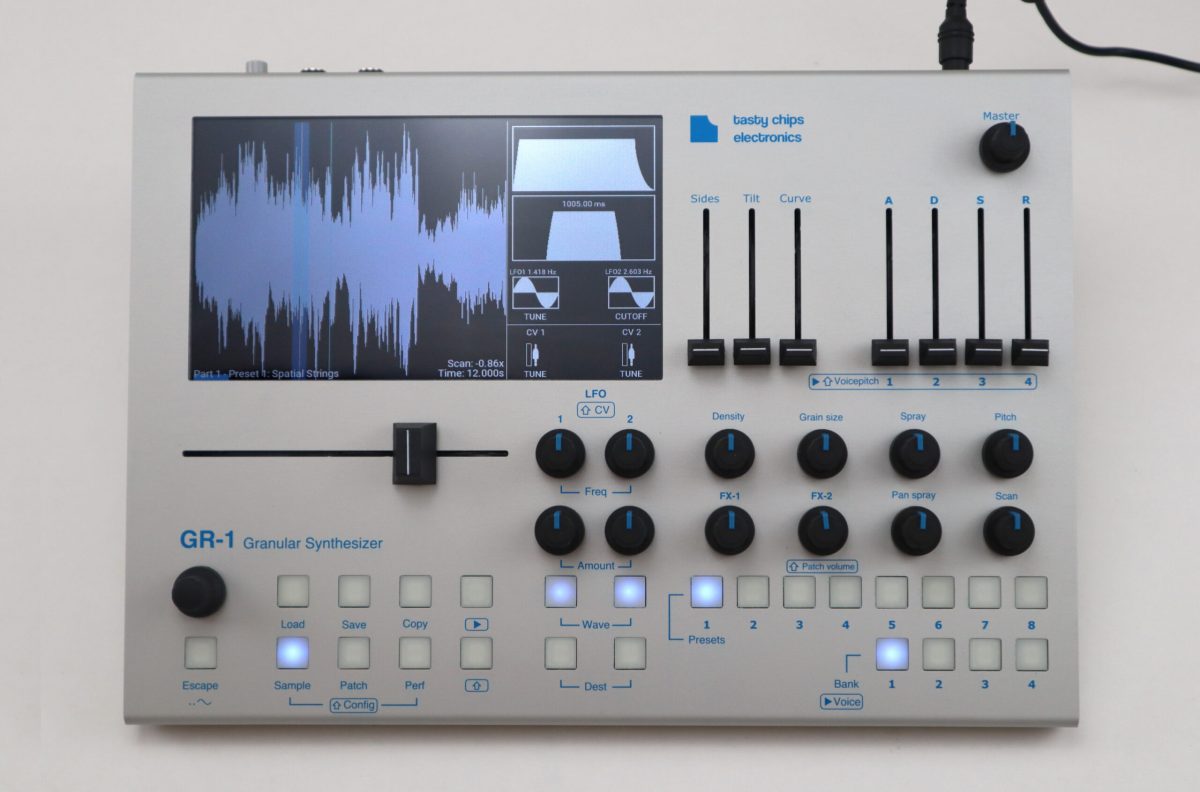
  • Tasty Chips GR-1: A hardware granular synth (pictured)
Categories
Synthesizer Types

Wavetable Synthesizers

A wavetable synthesizer is a type of synthesizer that creates sound using a table of previously recorded audio waveforms. The single-cycle waveforms that make up the wavetable are the fundamental building blocks for producing sounds. The synthesizer creates sound by replaying these waveforms at various pitches and utilizing various sound-shaping tools, including filters, envelopes, and modulation.

Various sounds, from conventional analog-like sounds to more complex and evolving sounds, can be produced using the wavetable synthesis technique. This synthesis technique is renowned for its capacity to create complex, rich timbres and seamless transitions between various sounds.

Wavetable synthesis is one of the sound generation techniques used by many contemporary digital synthesizers, including software synthesizers and some hardware synthesizers.

Examples

  • Xfer Serum: A popular software wavetable synthesizer that is widely used in electronic music production. It features a wide range of wavetables and sound-shaping tools, and has a user-friendly interface.
  • Native Instruments Massive: Another popular software wavetable synthesizer that is known for its powerful sound-shaping capabilities and wide range of presets.
  • Waldorf Quantum: A hardware wavetable synthesizer that features a large number of wavetables and sound-shaping tools, and is known for its high-quality sound.
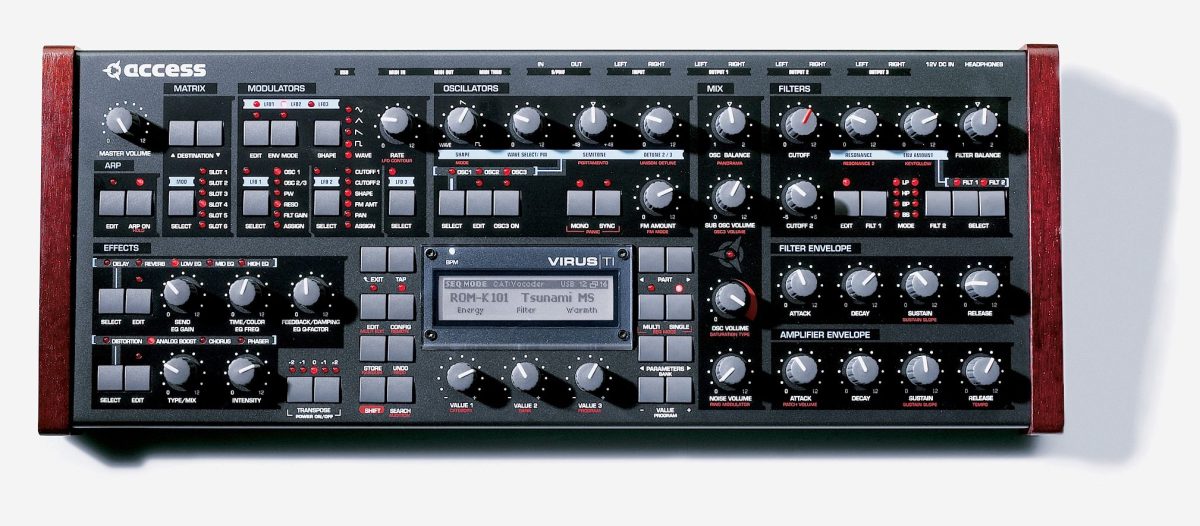
  • Access Virus TI: A hardware wavetable synthesizer that is popular among electronic music producers and is known for its versatile sound and powerful sound-shaping capabilities. (pictured)
  • PPG Wave 2.V: A classic hardware wavetable synthesizer from the 80s, known for it’s unique sound and versatility.
  • DSI Prophet Rev2: A hardware wavetable synthesizer with a large number of wavetables and sound-shaping tools and it’s known for its warm and rich sound.
Categories
Uncategorized

Noise

Noise in a synthesizer refers to a type of sound that is generated using random processes, as opposed to a sound that is generated using a specific waveform or tone. A synthesizer can use noise as a sound source to produce various effects, such as textures, percussive sounds, and background ambiance.

Different kinds of noise can be applied to a synthesizer. For instance, white noise, which has the same energy at all frequencies, can produce various effects, such as noise bursts, static, and hiss. For example, the sound of wind or ocean waves can be produced using pink noise because it has the same amount of energy per octave.

There are several ways to incorporate noise into a synthesizer. It can be used as an oscillator to create the basic sound, which is then processed by filters and envelopes, among other instruments, for modifying the sound. Additionally, it can be used as an effect, to give a good texture and movement, or to produce percussion sounds like snare drums and hi-hats.

It is possible to produce a wide variety of sounds and effects using noise in combination with other types of sound sources, such as oscillators and samples, that cannot be produced using other synthesis techniques. Numerous synthesizers include built-in noise generators and options for shaping the noise, such as filtering, gating, and amplitude modulation.

Types of Noise

  • White noise: A type of noise that has equal energy at all frequencies and can be used to create a wide range of effects, including noise bursts, static, and hiss. White noise is often used to create percussive sounds, like snare drums, and to add texture to a sound.
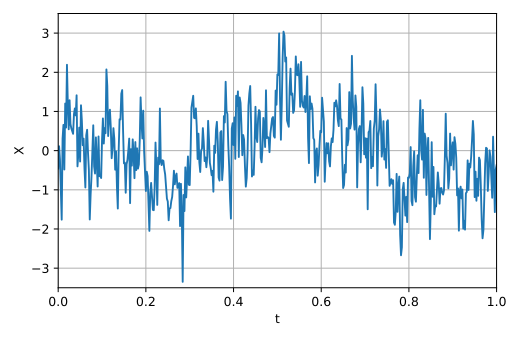
  • Pink noise (pictured): A type of noise that has equal energy per octave and can create a more natural-sounding noise, like wind or ocean waves. It can be used to develop a sense of movement or to add depth to a sound.
  • Brown noise: A type of noise that has more energy at lower frequencies and less energy at higher frequencies. It can create a sense of warmth or add a low-frequency rumble to a sound.
  • Blue noise: A type of noise that has more energy at higher frequencies and less energy at lower frequencies. It can be used to add brightness or sharpness to a sound.
  • Violet: Has more energy at the highest frequencies and less energy at the lower frequencies, similar to Blue noise but even more accentuated.
  • Grey noise: A type of noise that has equal energy across all frequencies but with the amplitude of each frequency band being inversely proportional to the frequency, similar to pink noise but with a more gradual slope.
  • Other types of noise, such as band-pass noise, filtered noise, gated noise, and more, can also be genera