Categories
Sound Design and Production Concepts

Harmonics

Harmonics in a synthesizer are the additional frequencies that are present in a sound, in addition to the fundamental frequency. The harmonics are the integer multiples of the fundamental frequency, which is the base frequency of a sound.

An oscillator in a synthesizer typically combines the fundamental frequency with a number of harmonics to produce a sound. These harmonics, which can be viewed as overtones or partials, are responsible for the sound’s distinctive timbre or tone. Different harmonics exist in each waveform, and the harmony between them gives each waveform its personality.

For instance, a square wave only has odd harmonics, while a sawtooth wave has all the harmonics. A sine wave only has the fundamental frequency.

A filter, a common component of many synthesizers, can modify the presence and balance of harmonics. Filters allow users to increase or decrease specific harmonics, which can be used to shape the sound and produce a wide variety of timbres. In addition, some synths have a harmonics control that enables the user to add or remove harmonics from the waveform, allowing for the creation of various waveform variations and new sounds.

Categories
Sound Design and Production Concepts

Timbre

Timbre, also referred to as tone color or sound quality, describes the distinctive attributes of a sound that set it apart from other sounds. The waveform of the oscillator, the cutoff and resonance settings for the filter, the envelope settings, and any effects that have been applied to the sound all contribute to the timbre of a synthesizer.

The harmonic content and relationship of the harmonics to the fundamental frequency of a sound influence its timbre. Each waveform has a distinct harmonic composition, and how these harmonics are balanced gives each waveform its personality. For instance, a sine wave has a highly pure and smooth timbre, whereas a sawtooth wave has a brighter and more complex timbre.

The waveform greatly influences the timbre of a sound in addition to the filter settings. Specific harmonics can be amplified or suppressed using the filter cutoff and resonance settings, which can be utilized to produce a wide variety of timbres. The envelope parameters can also be used to alter the attack, decay, sustain, and release of a sound, affecting the sound’s timbre.

The timbre of a sound can also be shaped using a variety of effects, including reverb, delay, and distortion. These effects can produce a broad array of timbres and give a sound depth, dimension, and character.

Categories
Synthesizer Concepts

Patches

A synthesizer patch is a collection of settings defining the sound a synthesizer produces. The oscillator‘s waveform, frequency, amplitude, cutoff and resonance, the settings for the envelope, and any sound effects are some examples of these settings.

A patch can be viewed as a memory of all the settings necessary to produce a particular sound. The user’s ability to save and retrieve patches enables them to easily switch between various sounds without constantly tweaking all the settings.

The user can combine related sounds by using banks, frequently used to arrange patches. For instance, a user might make a bank of patches appropriate for techno music, while another bank might have patches appropriate for ballads.

Additionally, by changing the synthesizer’s parameters, many synthesizers let the user generate unique patches. A user can produce their own distinctive sounds in this way and save them as patches for later use.

Categories
Synthesizer Concepts

Samples

Samples in electronic music are small segments of audio that have been recorded, digitized, and stored in a computer or electronic device. These samples can be utilized in many ways, such as to make loops and new sounds or give a track texture and intrigue.

Making loops is one of the most popular uses of samples in electronic music. A loop is a section of audio played repeatedly and can serve as the basis for a track. Drums, basslines, melodies, and other elements can all be sampled and used to create loops. A producer can make a complex and dynamic track by altering and overlaying many loops.

Additionally, new sounds can be produced using samples. For instance, a sample of a guitar sound can be altered and processed to create an entirely different sound from the original sample. Samples can also be merged and layered to add different textures and add interesting details to a track.

Additionally, samples can be used as a sound source in a synthesizer using “sampling synthesis,” a process that involves using the sample as an oscillator to produce new sounds.

Categories
Synthesizer Concepts

Digital Signal Processing (DSP)

Digital Signal Processing (DSP) is a method of manipulating and processing audio signals using digital computers or specialized digital signal processors. DSP can be used in a synthesizer to produce a large variety of sounds and effects, including filtering, modulation, and distortion. Digital versions of classic analog effects like reverb and delay can be produced using DSP algorithms, as can new and distinctive sounds that are impossible with analog synthesis.

For instance, DSP can also be used to design intricate modulation routings and sophisticated envelopes in a synthesizer’s control section. DSP can be used to produce expressive and responsive sound synthesis when combined with MIDI data. Large memory capacities are another feature of DSP-based synthesizers that enable the creation of more intricate and detailed sound programs and the simple storage, recall, and editing of sound parameters.

Categories
Synthesizer Concepts

Polyphonic

Categories
Synthesizer Concepts

Monophonic

Categories
Synthesizer Types

Sample-based Synthesizers

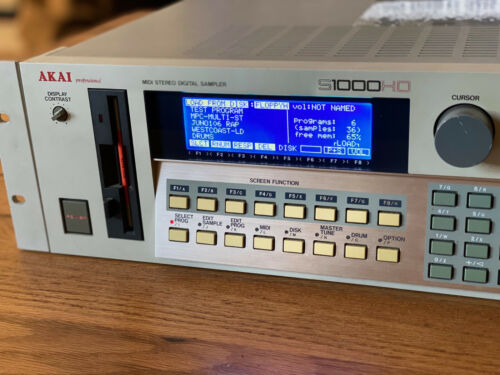
A sample-based synthesizer is a type of synthesizer that uses pre-recorded audio samples as the basis for creating new sounds. These samples are loaded into the synthesizer after being recorded from real instruments, found sounds, or other sources.

The samples are then played back and can be altered in various ways while typically controlled by a keyboard or other controller. For instance, the sample’s pitch can be changed to play different notes, the playback speed can be altered to change the tempo, and the sound can be given various effects like reverb and delay.

A very flexible and potent method, sample-based synthesis enables users to use real-world sounds and modify them however they see fit. It is frequently used in music production, particularly in styles like orchestral or ethnic music that calls for realistic instrument sounds.

It is significant to remember that sample-based synthesis is also a subcategory of ROMpler (Read-Only Memory player), a class of synthesizer that plays back previously recorded samples stored in ROM.

Examples

Categories
Synthesizer Types

Hybrid Synthesizers

A hybrid synthesizer is a type of synthesizer that combines two or more different synthesis techniques. As a result, sound design has more flexibility and access to a wider variety of sounds.

For instance, a hybrid synthesizer might combine additive and subtractive synthesis, which uses multiple sine waves to produce complex sounds and filters to shape the sound. The ability to shape sounds with filters and create complex sounds using multiple sine waves can give the user the best of both worlds.

Another illustration is the fusion of sample-based and FM synthesis, which allows the user to combine the sample-based synthesis’s realism with the FM synthesis’s rich harmonic content.

Hybrid synthesizers may employ more than two synthesis techniques depending on the particular synthesizer.

A hybrid synthesizer combines the advantages of various synthesis methods to produce a more adaptable instrument with a broader range of sound possibilities.

Examples

Omnisphere 2 by Spectrasonics, Kontakt by Native Instruments, and Massive X by Native Instruments are a few examples of hybrid synthesizers.

Categories
Uncategorized

Amplitude Modulation (AM) Synthesizer

An amplitude modulation synthesizer uses the principle of amplitude modulation to generate sound. Using amplitude modulation, two signals—a carrier signal and a modulating signal—are combined to create a new signal with elements of both the carrier and modulating signals’ frequencies.

The modulating signal is typically a more complex waveform with variable amplitude, whereas the carrier signal is usually a sine wave or other simple waveform with a fixed frequency. The modulating signal’s amplitude is used to modify the carrier signal’s amplitude, which alters the final signal’s overall loudness.

AM synthesis can produce various sounds, from subtle timbral variations to intricate, evolving textures. It is frequently used in electronic music and sound design to create sounds that are challenging to achieve with conventional subtractive synthesis or are not possible.

To control the amplitude of the carrier signal, an LFO (low-frequency oscillator) is frequently used as the modulating signal in AM synthesis. Although this is a straightforward application of AM synthesis, there are numerous other ways to create and modify the modulating signal to create various sounds.

There are countless ways to use AM synthesis, one of which is using a different sound source as the modulating signal.

The key is that the modulating signal’s amplitude controls the carrier signal’s amplitude, which changes the overall loudness of the resultant signal and produces a different sound.

Examples

  1. Csound: Csound is an open-source software synthesizer that uses additive synthesis to generate a wide range of sounds. It is widely used in academic and research settings and by electronic music composers and sound designers.
  2. Serum: Serum is a popular commercial software synthesizer that uses additive synthesis to create complex, detailed sounds. It is known for its high-quality sound and user-friendly interface.
  3. Reaktor: Reaktor is a software synthesizer and modular synth platform by Native Instruments. It allows users to create their own additive synthesizer using the software’s building blocks.
  4. Waldorf Blofeld: The Waldorf Blofeld is a hardware synthesizer that uses additive synthesis to create a wide range of sounds. It is known for its high-quality sound and ability to create complex, evolving textures.
  5. Yamaha FS1R: The Yamaha FS1R is a hardware synthesizer that uses additive synthesis to create a wide range of sounds. It is known for its unique formant synthesis, which allows for creating vocal-like sounds.