Categories
Synthesizer Features

Frequency Modulation (FM) Synthesizer

An FM (Frequency Modulation) synthesizer is a type of synthesizer that creates sound by modulating the frequency of one oscillator (the carrier) with the output of another oscillator (the modulator). This creates complex, harmonically rich timbres and can be used to create a wide range of sounds, from bell-like tones to metallic and percussive sounds.

In an FM synthesizer, the carrier oscillator generates the basic sound, and the modulator oscillator modifies the frequency of the carrier. The amount of modulation, or the “index” is controlled by the operator, and it determines the amount of harmonic complexity added to the sound. FM synthesis can produce a wide range of sounds, from simple sine waves to complex, evolving timbres.

FM synthesis was first developed by John Chowning in the 1970s, and it was later implemented in commercial synthesizers by Yamaha in the early 1980s. Since then, FM synthesis has been used in a wide variety of music genres, from electronic and pop to jazz and classical.

FM synthesis is known for its ability to create a wide range of sounds, from simple sine waves to complex, evolving timbres. It’s particularly good at creating bell-like, metallic and percussive sounds. FM synthesis can be a little bit more complex to use than other types of synthesis, but it is a very powerful and versatile technique, and it can be used to create a wide range of interesting and unique sounds.

Examples

  • Yamaha DX7: One of the most famous and widely used FM synthesizers, the DX7 was released in 1983 and it was known for its ability to create a wide range of sounds, including bell-like, metallic and percussive sounds. It became very popular in the 1980s, and it was used in a wide variety of music genres.
  • Yamaha DX9: An improved version of the DX7, the DX9 was released in 1985. It offered more features and capabilities than the DX7, including the ability to create more complex sounds.
  • Yamaha DX21: A more affordable version of the DX7, the DX21 was released in 1985. It has a similar sound engine to the DX7 but with a more limited set of features.
  • Korg DS-8: A digital FM synthesizer released by Korg in 1986, the DS-8 was known for its ability to create a wide range of sounds and its user-friendly interface.
  • Casio CZ-series: Casio released a series of affordable and compact FM synthesizers in the 1980s, which were known for their ability to create complex, evolving sounds.
  • Native Instruments FM8: A software FM synthesizer, FM8 is known for its ability to create a wide range of sounds and its user-friendly interface. It also allows for complex modulation and a wide range of presets.
Categories
Synthesizer Types

Additive Synthesizer

An additive synthesizer is a type of synthesizer that creates sound by combining multiple sine waves of different frequencies, amplitudes, and phases. The process of combining these sine waves is called additive synthesis.

An additive synthesizer typically has a large number of oscillators, each of which generates a sine wave at a specific frequency. The user can control the amplitude and phase of each oscillator, as well as the overall harmonic content of the sound by adjusting the balance of the different sine waves. By adjusting the parameters of the individual oscillators, the user can create a wide range of sounds and timbres.

One of the main advantages of additive synthesis is that it allows for a high degree of control over the harmonic content of the sound. Because the sound is created by combining individual sine waves, the user can precisely control the balance of different harmonics in the sound. This allows for the creation of very rich and complex timbres.

Additive synthesis was initially developed in the 1960s and 1970s, and it was one of the earliest forms of synthesis. Today, additive synthesis is still used in some synthesizers, and it can also be found in software synthesizers and in digital signal processing (DSP) applications.

Additive synthesis is known for its ability to create very complex and rich sounds, it is often used in experimental, electronic, and ambient music. However, it can be used in other genres as well.

Examples

Categories
Synthesizer Features

Subtractive Synthesizer

A subtractive synthesizer is a type of synthesizer that uses filters to subtract harmonics from a waveform to create a desired sound. It begins with a complicated sound, like a sawtooth, square, or noise waveform, and then employs filters to eliminate particular frequencies or harmonics. Because the harmonics are being subtracted from the original waveform, this process is known as “subtraction.”

The low-pass filter is the most typical type used in subtractive synthesis. It attenuates or blocks out higher frequencies while allowing low frequencies to pass through. This kind of synthesis also employs high-pass, band-pass, and band-stop filters. Envelopes also gradually alter the sound’s amplitude and other properties.

One of the most popular synthesis methods in electronic music is subtractive synthesis, which also serves as the foundation for many iconic analog synthesizers like the Moog Minimoog and Roland SH-101.

One of the most flexible sound design techniques is a straightforward and intuitive synthesis method that enables the user to shape and sculpt the sound in various ways.

To produce a desired sound, subtractive synthesis uses filters to remove harmonics from a waveform. It begins with a complicated waveform, like a sawtooth, square, or noise waveform, and then employs filters to eliminate particular frequencies or harmonics. The low-pass filter is the most popular filter used in subtractive synthesis. It is one of the most widely used synthesis techniques in electronic music, is easy to understand, and serves as the foundation for many iconic analog synthesizers.

Examples

Categories
Synthesizer Features

Semi-modular Synthesizers

A semi-modular synthesizer is a type of synthesizer that combines features of both modular and traditional synthesizers. Like a modular synthesizer, a semi-modular synth has a collection of functional modules, such as oscillators, filters, and envelopes, that can be connected together using patch cables. However, unlike a full modular synth, a semi-modular synthesizer usually has a predetermined signal flow or patching, so that the user can produce sound without patching cables.

A semi-modular synthesizer is a compromise between a fully patchable modular synth and a fixed architecture synth. They are a good option for musicians and producers who want to experiment with the possibilities of patching and modular synthesis, but also want to have a more traditional and predictable sound generation mechanism.

Some popular semi-modular synthesizers include the Moog Mother-32, the Make Noise 0-Coast, Arp 2600, and the Pittsburgh Modular Lifeforms.

In summary, a Semi-Modular Synthesizer is a type of synthesizer that combines features of both modular and traditional synthesizers. It has a collection of functional modules, such as oscillators, filters, and envelopes, that can be connected together using patch cables, but also has a predetermined signal flow or patching, so that the user can produce sound without patching cables. It’s a good option for musicians and producers who want to experiment with the possibilities of patching and modular synthesis, but also want to have a more traditional and predictable sound generation mechanism.

Examples

  • Moog Mother-32
  • Make Noise 0-Coast
  • Arp 2600
  • Pittsburgh Modular Lifeforms
Categories
Synthesizer Types

Modular Synthesizers

A modular synthesizer is a type of synthesizer in which the various functional modules, such as oscillators, filters, and envelopes, are separate units that are connected using patch cables. As a result, the user can create distinctive sounds and signal processing chains by patching the modules together in various ways, allowing for a high degree of flexibility and customization.

Experimental musicians and sound designers frequently use modular synthesizers because they offer a wide variety of sound possibilities and the capacity to produce complex and evolving sounds. They also provide extensive sound control because users can change each module’s parameters.

There are several different types of modular synthesizers, including Eurorack, 5U, Buchla, and others. Each has its own electrical standards, physical dimensions, and shape. Companies like Moog, Buchla, Eurorack, and Doepfer commonly make modular synthesizers.

Modular synthesizers can be very expensive due to the system’s design and require a significant time and financial commitment to exploring their potential fully.

In conclusion, a modular synthesizer is composed of independent functional modules, like oscillators, filters, and envelopes, that are connected to one another using patch cables. Experimental musicians and sound designers frequently use this as it allows for a high degree of flexibility, customization, and sound experimentation. They can be expensive, come in various formats, and demand a sizeable time and financial commitment.

Examples

Categories
Synthesizer Types

Digital Synthesizers

A digital synthesizer is a type of synthesizer that uses digital technology to generate sound. Unlike analog synthesizers, which use analog circuits and components, digital synthesizers use digital signal processing (DSP) and computer algorithms to create sound.

Digital synthesizers have several advantages over analog synthesizers, such as the ability to store and recall large numbers of presets, higher precision and stability in sound generation and control, and the ability to add more complex and sophisticated features such as multi-timbrality, built-in effects and sequencing. They also tend to be more lightweight, portable and less expensive than analog synthesizers.

A digital synthesizer can have several types of synthesis methods, such as, subtractive, additive, FM, AM, sample-based, physical modeling, and more. They also can have different types of interfaces, from simple preset selection, to complex programming interfaces with a lot of parameters to tweak and modulate.

Some popular digital synthesizers include the Yamaha DX7, the Roland D-50, and the Korg M1.

In summary, a Digital Synthesizer is a type of synthesizer that uses digital technology to generate sound, they have advantages such as the ability to store and recall large numbers of presets, higher precision and stability in sound generation and control, and the ability to add more complex and sophisticated features. They also tend to be more lightweight, portable and less expensive than analog synthesizers, and can have several types of synthesis methods and interfaces.

Examples

Categories
Synthesizer Types

Analog Synthesizers

An analog synthesizer is a type of synthesizer that produces sound using analog circuits and parts. Unlike digital synthesizers, which produce sound using digital technology, analog synthesizers produce sound using analog circuits and components like oscillators, filters, and amplifiers.

Due to the inherent variations and flaws in the analog components, analog synthesizers are renowned for their warm and rich sound and their capacity to produce unpredictable and one-of-a-kind sounds. Additionally, they frequently have many physical controls like sliders, knobs, and others that can be used to modulate and shape the sound, allowing for a lot of expression and creativity.

Since the 1970s, analog synthesizers have been extensively used in electronic and popular music. The Moog Minimoog, Roland TB-303, and ARP 2600 are some of the most well-known and well-liked analog synthesizers.

However, analog synthesizers also have some drawbacks, such as drifting more easily and needing more upkeep than digital synthesizers. Additionally, they cost more to make and buy, and humidity and temperature might impact how they sound.

Examples

Categories
Synthesizer Features

Sampler

A synthesizer sampler is a device or feature found in some synthesizers that allows the user to record and play back audio samples. A sample is a short recording of a sound, such as a piece of music, a spoken word, or a sound effect. The sample can then be played back using the keyboard or other controller, and can be manipulated in various ways, such as changing the pitch, tempo, or looping the sample.

Samplers typically have a variety of features that allow the user to manipulate the samples in a variety of ways. For example, the sample can be pitch-shifted, time-stretched, reversed, or looped. Some samplers also include filters, envelopes, and other synthesis parameters, which can be used to shape and sculpt the sound of the sample.

Samplers are used in a wide variety of music genres, and they have had a significant impact on the development of electronic and hip-hop music, where samples of pre-recorded music are often used as the basis for new compositions. They also have many other applications, such as sound design and sound effects, as well as in live performances.

Modern synthesizers with sampling capabilities allow you to record and manipulate sounds and samples in a variety of ways, and you can use them to create new, unique sounds. They can also be used to create complex and dynamic rhythms, and they can be used to add a new dimension to your music production.

Categories
Synthesizer Features

Vocoder

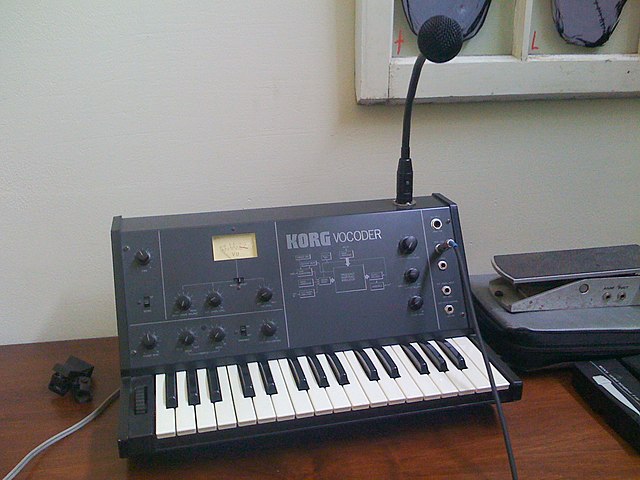
A synthesizer vocoder is a device that combines the sounds of two different signals, a modulator, and a carrier, to create a new, unique sound. The carrier signal is typically a synthesized sound, like a sawtooth or square wave, while the modulator signal generally is an audio recording of a human voice. The vocoder modifies the frequency content of the carrier signal by studying the modulator signal’s frequency content. The end result is a sound that combines the modulator signal’s timbre and intonation with the carrier signal’s harmonic content.

A bank of bandpass filters divides the modulator signal into various frequency bands, producing the vocoder effect. The amplitude of each frequency band then controls the carrier signal’s amplitude. This gives the impression that the words or sounds coming from the modulator signal are being “spoken” by the carrier signal.

The 1930s saw the introduction of the vocoder effect, initially used to compress speech but quickly made its way into music. It gained popularity in the 1970s thanks to the use of robotic and futuristic vocal effects by bands like Kraftwerk and ELO. Vocoders are still frequently used to produce distinctive vocal effects in electronic, pop, and hip-hop music today.

Some synthesizers come with a built-in vocoder, while others can be used to add the vocoder effect using an external microphone. The vocoder can be a potent tool for producing distinctive and intriguing sounds, adding a fresh perspective to the music-making process.

Categories
Synthesizer Features

Arpeggiator (Arp)

Many synthesizers have an arpeggiator feature that enables the user to automatically play a series of notes in a particular order, typically based on the notes held down on a keyboard. An arpeggiator can make a repeating pattern known as an “arpeggio” by playing a chord’s notes one at a time.

On a keyboard, the arpeggiator will play each chord note in a particular order, such as up, down, up-and-down, or random order. Additional settings for the arpeggiator include tempo, note duration, gate time, and octave range. In addition, the arpeggiator can play in various ways, including “hold,” which keeps the arpeggio playing even after the notes are released, and “latch,” which halts the arpeggio when the notes are released.

The ability to quickly and easily create complex and dynamic patterns using a single chord makes arpeggiators an effective tool for music production. Additionally, they can be used to produce a wide variety of textures and timbres, from straightforward, repeating patterns to more intricate, evolving sequences. Some synths also let you sync the arpeggiator with other hardware, enabling you to combine multiple instruments into a tight, seamless performance.

When a repeating pattern is desired, arpeggiators can be used in any genre of music, but they are most frequently used in electronic, dance, and pop music.