Categories
Classic Synthesizers Synthesizer Models

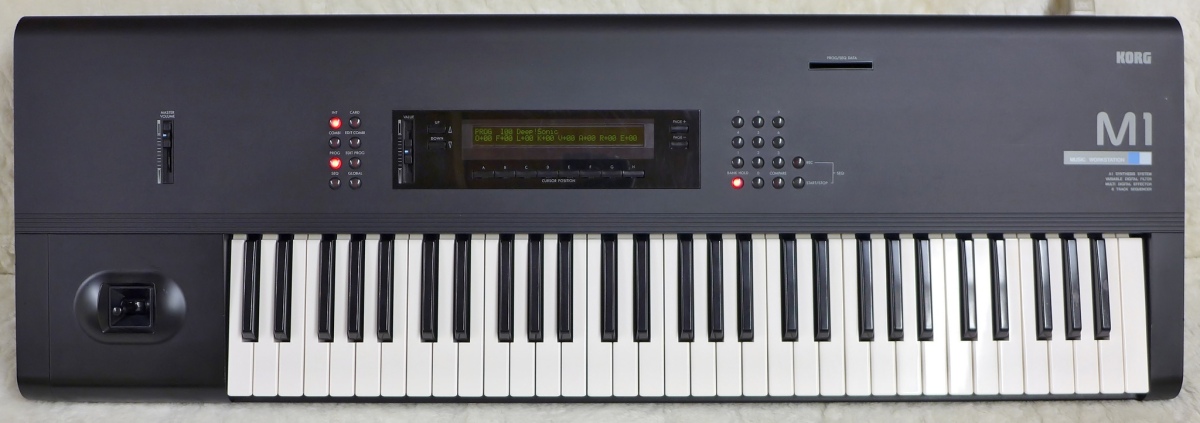
Korg M1

The Korg M1 is a digital workstation and music synthesizer that was first introduced in 1988. It quickly rose to prominence and became one of the most recognizable synthesizers of all time. Musicians from all genres have used it on countless recordings and live performances.

Korg’s AI (Advanced Integrated) synthesis technology, which combines samples of real instruments with synthesis techniques to produce a wide variety of realistic and expressive sounds, was first implemented in the M1 synthesizer. Additionally, the M1 was the first synthesizer with an integrated sequencer, enabling musicians to record and replay their performances.

The M1 offered a variety of synthesized sounds, such as basses, pads, and leads, in addition to an assortment of natural sounds like piano, guitar, drums, and orchestral instruments. It also included a variety of effects, such as distortion, delay, and reverb. Musicians could record and edit their performances on the M1’s internal sequencer, which could also import and export MIDI data.

Musicians of all skill levels can use the M1 easily thanks to its user interface, which was created to be clear and straightforward. The M1 also included many performance-oriented features that enabled musicians to construct intricate and expressive performances, such as split and layer capabilities, an arpeggiator, and keyboard scaling.

The M1 was renowned for its robust design, dependability, and powerful synthesis and sequencing capabilities. Many well-known musicians used the M1 extensively on tour and in professional recording studios. It was a mainstay in the Pop, R&B, and Dance Music scenes and the electronic music scene.

During its ten-year production run, the Korg M1 sold more than 250,000 units globally. The M1EX, an upgraded version of the M1, and the T-series succeeded it. Numerous software and hardware emulations are still available today, preserving its legacy.

The Korg M1 was a revolutionary synthesizer that altered how musicians compose and perform music. Realistic sounds, effective sequencing, and an easy-to-use user interface made it a must-have tool for musicians of all levels. It is still regarded as one of the most recognizable synthesizers in the history of electronic music because of its lasting legacy.

Used by

Categories
Classic Synthesizers Synthesizer Models

Roland D-50

The Roland D-50 is a digital synthesizer that was first released in 1987. It is renowned for its distinctive sound, which combines real instrument samples with sound synthesis techniques to produce a fresh, hybrid sound.

The D-50 uses “Linear Arithmetic” synthesis, a technique that combines sample-based synthesis with the conventional subtractive synthesis method, making it one of its standout features. This makes it possible to have more control over the instrument’s timbre and a wider variety of sounds.

The D-50’s extensive use of presets is yet another standout feature. The instrument includes a wide range of pre-programmed sounds, such as accurate piano and string sounds and more experimental and abstract sounds. Because of this, even new users can quickly produce complex music that sounds professional.

Despite its age, the D-50 is still a preferred option for producers and musicians. Its unique sound has been featured on countless recordings and is still used in a wide range of genres, such as electronic, pop, and film scores.

The D-50’s lack of MIDI support is one drawback; it was introduced before MIDI became a standard, making it challenging to integrate with contemporary production environments. However, a MIDI retrofit or converter can be used to get around this.

Overall, the Roland D-50 is a legendary and classic synthesizer that is still highly sought after for its distinctive and adaptable sound. The D-50 is certain to spark creativity and give your music a fresh perspective, whether you’re a seasoned pro or just getting started.

Used by

Categories
Classic Synthesizers Synthesizer Models

Yamaha DX7

The Yamaha DX7 is a synthesizer that was first introduced in 1983. It immediately became well-liked by musicians and producers because of its distinctive sound qualities and adaptability. The DX7 was the first synthesizer to use FM synthesis, a method that makes it feasible to produce complex, subtle sounds that were before unattainable.

The DX7’s six-operator FM synthesis engine, which enables the manipulation of sine wave oscillators to produce various sounds, is one of its primary characteristics. The 16-voice polyphony of the DX7 allows for the simultaneous playback of numerous notes. With the ability to save and retrieve patches and performances, the keyboard boasts a velocity- and aftertouch-sensitive keyboard and powerful editing features.

From pop and rock bands like Depeche Mode and Phil Collins to jazz and experimental musicians like Herbie Hancock and Brian Eno, a wide variety of musicians and producers have employed the DX7. Numerous records from the 1980s and 1990s have its distinctive digital sound, and electronic and experimental music continue to use it frequently.

The DX7 is still a solid and adaptable synthesizer, even after all these years. The DX7 is a well-liked option for electronic music production and live performance because numerous contemporary software synthesizers and plugins have been created to mimic its sound and capabilities.

The Yamaha DX7 is a timeless synthesizer that has withstood the test of time in general. It is an effective instrument for producing a variety of sounds thanks to its distinctive FM synthesis engine and rich editing features. Due to its success in the 1980s and 1990s, it gained a permanent position in music history and is still extensively employed today.

Used by

Categories
Classic Synthesizers Synthesizer Models

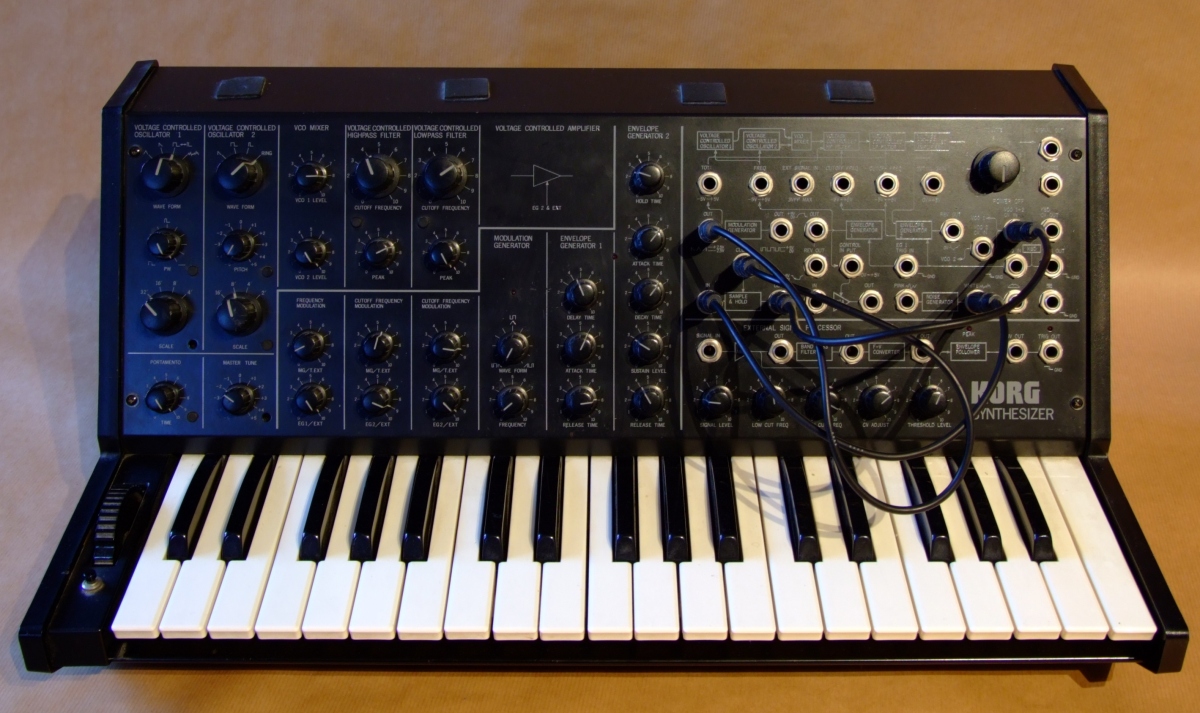
Korg MS-20

The Korg MS-20 is a classic analog synthesizer first introduced in 1978 by Korg. It swiftly established itself as a standard in the music business, being utilized by many different musicians in various musical genres, such as rock, pop, and electronic music.

The MS-20’s patchable design, which offers a variety of sound-sculpting choices, is one of its defining characteristics. It contains a low-pass filter, two voltage-controlled oscillators, and several modulation choices. Due to its peculiar filter design, the MS-20 also has a recognizable squelchy sound.

In addition to its small size and portability, the MS-20 was a favorite of touring musicians. The live stage arrangements of well-known bands like Depeche Mode and New Order demonstrate this.

The MS-20 mini, a scaled-down version of the original synthesizer with the same capabilities and tone, was released by Korg in 2007. This made the MS-20 more approachable for producers and musicians.

The Korg MS-20 is a well-known vintage analog synthesizer with a patchable design, squelchy sound, and mobility. With the reintroduction of the MS-20 mini, its legacy has continued to inspire new generations of musicians.

Used by

Categories
Classic Synthesizers Synthesizer Models

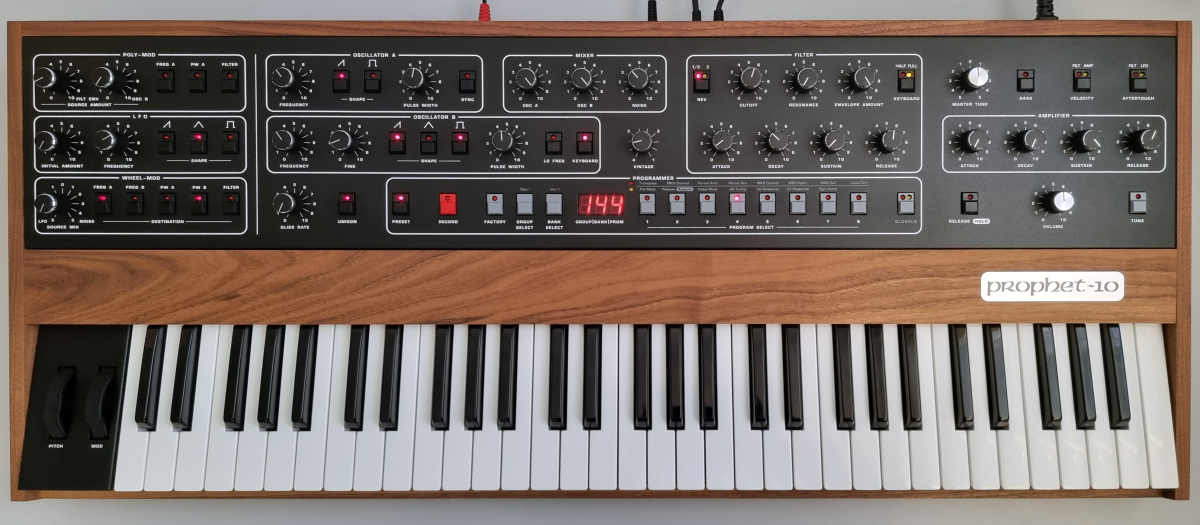
Sequential Circuits Prophet-5

The Sequential Circuits Prophet-5 is a vintage analog synthesizer that the company initially released in 1978. It was one of the first fully programmable synthesizers and immediately established itself as a standard in the music business. Many performers from different musical genres, including rock, pop, and electronic music, used it.

The Prophet-5’s five-voice polyphony, which enables the creation of intricate and varied sounds, is one of its defining characteristics. Additionally, it contains a voltage-controlled filter and two voltage-controlled oscillators for each voice, which can be used to modify the sound. Its user-friendly interface makes it simple for musicians to create new sounds and save them as presets.

Additionally, the Prophet-5’s small size and portability made it a favorite of touring performers. The live stage arrangements of well-known bands like Tangerine Dream, Depeche Mode, and New Order demonstrate this.

The Prophet-5 was used in popular music and soundtracks for movies and television shows, especially in the 1970s and 1980s. It was the ideal instrument for bringing depth and passion to a scene because of its rich and intricate sound.

The Prophet-5 was manufactured until 1984, and original machines are still in high demand and sell for a high price on the vintage market. But in 2015, Dave Smith Instruments unveiled the Prophet-6, a more contemporary version of the Prophet-5 that is still well-liked by synth fans.

In conclusion, the Sequential Circuits Prophet-5 is a well-known five-voice polyphonic, rich and complex sounding, and programmable classic analog synthesizer. Its portability and small size made it popular with traveling musicians, and many well-known bands’ music may be heard reflecting its influence.

Used by

Categories
Classic Synthesizers

Arp 2600

The ARP 2600 is a classic analog synthesizer first introduced in 1971 by ARP Instruments. It swiftly established itself as a standard in the music business, being utilized by many different musicians in various musical genres, such as rock, pop, and electronic music.

The adaptability of the ARP 2600 is one of its distinguishing qualities. Three voltage-controlled oscillators, a low-pass filter, and a number of modulation possibilities are just a few of its many sound-sculpting options. A built-in spring reverb is another feature of the 2600 that can give the sound more depth and warmth.

In addition, the ARP 2600 includes a semi-modular construction, allowing it to function both as a standalone synthesizer and as a modular synthesizer when patched with outside signals. Due to its increased adaptability, it became well-liked among experimental musicians and sound designers.

The ARP 2600 was renowned for being portable since it could be carried around simply while providing various sound-sculpting choices. It became popular among traveling artists, and well-known bands like Styx, Tangerine Dream, and Led Zeppelin use it in their stage arrangements.

The ARP 2600 was used in popular music and soundtracks for movies and television shows, especially in the 1970s and 1980s. It was the ideal instrument for adding complexity and emotion to a scene because of its adaptability and strong sound.

Although the ARP 2600 wasn’t produced until 1981, it’s still a very sought-after instrument, and original models sell for a lot of money on the vintage market. Numerous well-known bands’ music shows its impact, and its legacy continues to motivate new musical generations.

The ARP 2600 is a well-known vintage analog synthesizer with a strong reputation for portability, adaptability, and sound quality. Many well-known bands’ music can be recognized as having been influenced by it because of its semi-modular design and variety of sound-sculpting choice

Used by

Categories
Classic Synthesizers Uncategorized

Roland TB-303

1982 saw the initial release of the iconic analog synthesizer, the Roland TB-303. Despite having a brief production run that lasted just until 1984, it significantly influenced the evolution of electronic music, particularly Acid House and Techno.

Although the TB-303 was initially intended to be a guitar player’s accompanist, it swiftly found a new home in the burgeoning electronic music scene. It was a cost-effective choice for electronic musicians who wished to experiment with new sounds and produce their own music.

The TB-303 is known for its characteristic sound, distinguished by its squelchy, acidic tone. The TB-303 comes with a simple envelope generator for modulating the filter cutoff and amplitude and a resonant low-pass filter that may be used to shape the sound.

The TB-303 contains an integrated step sequencer that enables the construction of intricate patterns and grooves. Many techno and acid house producers relied on the TB-303 because of this function to construct the characteristic repeated patterns that characterize those genres.

The affordability of the TB-303, which made it available to many musicians and producers, was another factor in its appeal. This led to the democratization of electronic music and the creation of numerous subgenres, including Acid House and Techno.

The TB-303 significantly influenced electronic music despite its short production. The TB-303 is a famous instrument whose influence can be heard in many contemporary electronic genres thanks to its distinctive tone and capacity for intricate pattern creation.

To sum up, the Roland TB-303 is a legendary instrument that influenced the rise of electronic music. Many notable artists have exploited its distinctive sound and step sequencer, and electronic musicians are still inspired by it today.

Used by

Categories
Classic Synthesizers

Moog Minimoog

Robert Moog originally unveiled the iconic analog synthesizer known as the Moog Minimoog in 1970. It was one of the first portable synthesizers. It quickly established itself as a standard in the music business, being utilized by a variety of musicians in the rock, pop, and electronic music genres.

The Minimoog’s use of oscillators to produce sound is one of its distinguishing characteristics. A wide range of tone possibilities and the capacity to create complex sounds are made possible by the instrument’s three voltage-controlled oscillators. A low-pass filter is also included, which can be used to sculpt the sound and give warmth and depth.

The Minimoog’s interface was also straightforward and user-friendly, making it easier for musicians to produce new sounds swiftly. The oscillators, filter, and modulation may all be adjusted with the knobs on the front panel. A keyboard is also included for playing sounds. The synthesizer became more widely used because of its layout, making it affordable for musicians of all levels.

The Minimoog was renowned for being portable since it was tiny enough to be carried around easily but still provided a variety of sound-shaping choices. It became popular among traveling artists, and renowned bands like Pink Floyd, Tangerine Dream, and many others have used it in their stage settings.

The Minimoog was used in popular music and soundtracks for movies and television shows, especially in the 1970s and 1980s. It was the ideal instrument for bringing depth and emotion to a scene because of its rich, powerful sound.

Even though it wasn’t manufactured after 1981, the Minimoog is still a very popular instrument, with original examples fetching high sums on the vintage market. Moog Music relaunched the Minimoog in 2002 with enhanced features like MIDI and a bigger keyboard, and synth enthusiasts continue to favor it.

The Moog Minimoog is a true classic in analog synthesizers due to its warm and powerful sound, user-friendly design, and portability. Numerous well-known bands’ music shows its impact, and its legacy motivates new musical generations.

Used by