Categories
Classic Synthesizers Synthesizer Models

Akai S1000/3000

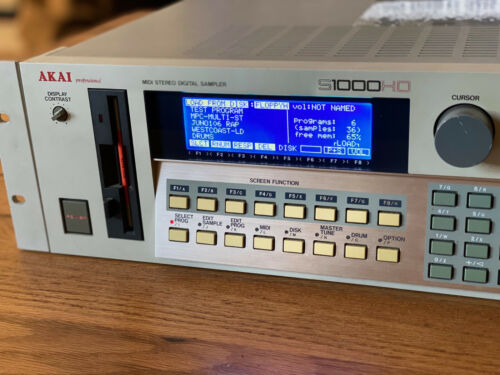
The Akai S1000 is a popular digital sampler synthesizer that was first introduced in 1986. It is regarded as one of the most important and innovative electronic instruments of its era.

The Akai S1000 was one of the first digital samplers widely adopted by professional musicians and producers. It was renowned for its excellent audio and capacity to store a sizable amount of sample data. The S1000 included an integrated hard drive that could hold up to 20 seconds of mono audio or 10 seconds of stereo audio. Input and output options for the sampler included MIDI and SCSI, making it easy to integrate into a studio setup.

Another noteworthy feature of the Akai S1000 was its user-friendly interface. Thanks to the front panel’s large LCD screen and an assortment of knobs and buttons, it was simple to manage the several features and settings. A sequencer already included in the sampler allowed users to record and alter their tunes.

The ability to modify samples was one of the Akai S1000’s most distinctive features. Many sample editing options, including the capacity to alter a sample’s pitch, length, and loop points, were included with the S1000. Additionally, it contained an integrated effects processor that users could use to give their samples reverb, delay, and other effects.

Hip-hop, electronic, and pop music, among other musical genres, frequently employed the Akai S1000. Numerous artists utilized it, including Depeche Mode, Nine Inch Nails, and Dr. Dre. The S1000 was a popular choice for soundtracks for movies and TV shows because of its propensity for producing authentic sound effects and orchestral simulations.

The S3000 series eventually took the place of the Akai S1000 and provided even more features and capabilities. The S1000 is still a well-liked and coveted instrument among fans and collectors of electronic music. Given that it is still employed in many contemporary songs today, its legacy endures.

Overall, the music industry was transformed by the high-quality sound, ample storage, and user-friendly design of the Akai S1000 synthesizer. Many musicians and producers considered it a necessary instrument due to its adaptability and capacity for sample manipulation, and its legacy is still felt today.

Used by

  • Depeche Mode: The band used the S1000 on their album “Violator”, which was released in 1990.
  • Nine Inch Nails: Trent Reznor, the frontman of Nine Inch Nails, has used the S1000 extensively throughout his career. He used it on the band’s debut album “Pretty Hate Machine” (1989) and on their 1992 EP “Broken”.
  • Dr. Dre: The hip-hop producer and rapper used the S1000 on many of his early albums, including “The Chronic” (1992) and “Doggystyle” (1993).
  • A Tribe Called Quest: The hip-hop group used the S1000 on their album “The Low End Theory” (1991).
  • Public Enemy: The hip-hop group used the S1000 on their album “Apocalypse 91…The Enemy Strikes Black” (1991).
  • The Prodigy: The electronic group used the S1000 on their album “Experience” (1992).
  • The Chemical Brothers: The electronic group used the S1000 on their album “Exit Planet Dust” (1995)
  • Goldie: The drum and bass artist used the S1000 on his album “Timeless” (1995)
Categories
Synthesizer Manufacturers

Akai

For over 80 years, the Japanese company Akai has been a significant force in the music business. Masukichi Akai established the business in 1929 as a producer of electrical machinery and appliances. But Akai started to establish itself in the realm of musical instruments in the 1970s.

In the 1970s, Akai made its first push into the music industry by introducing its reel-to-reel tape decks. Due to their sturdy construction and excellent sound, these decks were favored by producers and musicians. But what made the company famous was the release of the Akai MPC (MIDI Production Center) in 1988. The MPC was a ground-breaking instrument that merged a sequencer, sampler, and drum machine into one device. This ground-breaking tool immediately became a requirement for hip-hop artists, and electronic music producers still rely on it today.

Akai unveiled a number of additional innovative instruments in the early 1990s, including the Akai S1000 and S3000 samplers, which many musicians and producers extensively used. These samplers were used on numerous successful records throughout the decade because of their well-known high-quality sound and sample manipulation capabilities.

Additionally, Akai had a significant position in the home audio and video market; the business produced TVs, DVD players, and VCRs. With a wide range of products like digital audio workstations, audio interfaces, and studio monitors, it also had a significant position in the professional audio market.

The Akai MPC Renaissance and MPC Studio are only two of the innovative instruments and gadgets that Akai released during the 2000s. However, the business found it difficult to keep up with the music industry’s rapid developments, and in 2012 it declared bankruptcy.

The MPC X, MPC Live, and MPC One are just a few new products and instruments that Akai Professional, a division of inMusic Brands, Inc., continues to release. It is still regarded as a top brand in the music industry. The heritage of Akai is carried on by its extensive line of products, which are still in high demand among producers and musicians worldwide. The business is still well renowned for its cutting-edge instruments that push the limits of what is conceivable in music production.

Important models

Categories
Classic Synthesizers Synthesizer Models

Fairlight CMI

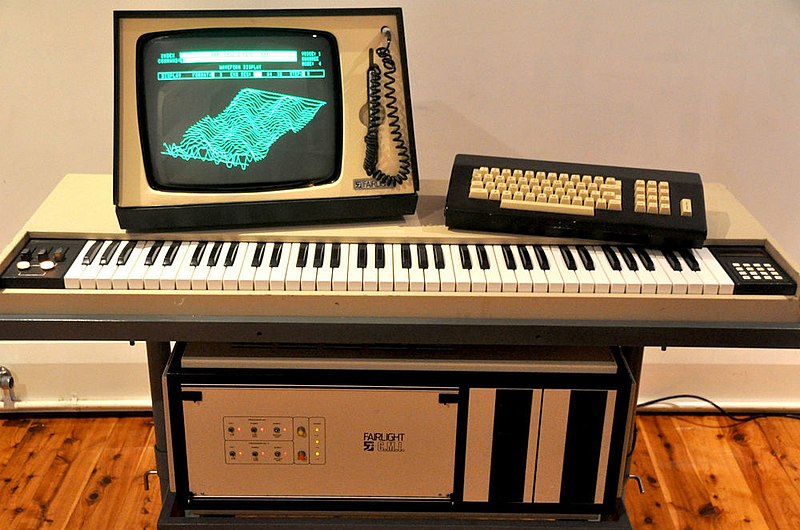
The Firelight CMI (Computer Musical Instrument) synthesizer is a digital musical instrument first developed in the late 1970s by engineer Peter Vogel and musician Kim Ryrie. It was among the first synthesizers to use a digital computer at the center of its construction, giving the user more creative freedom and control over the instrument’s sound.

The Fairlight Instruments company, formed by Vogel and Ryrie, initially produced the Firelight CMI before it was first released in 1979. Because of the instrument’s cutting-edge capabilities and distinctive tone, musicians and producers took to it instantly.

The Firelight CMI’s capacity to sample and retain sound, which allowed users to manipulate recorded samples to generate new sounds, was one of its primary features. A touch-sensitive keyboard, an integrated sequencer, and a number of other controls and interfaces for modifying sound were also included in the instrument.

The Firelight CMI was renowned for its cutting-edge technology, exorbitant price, and exclusivity. Initially costing roughly $25,000, the instrument was out of many performers’ and producers’ pricing ranges. Because of this, the recording industry’s professional musicians and producers were the primary users of the Firelight CMI.

The Firelight CMI is regarded as a groundbreaking instrument in the development of digital music technology despite its high price. It had a big impact on the music business. Its sampling and storing capabilities helped other digital instruments and software evolve, and its distinctive sound can be heard on many well-known songs from the 1980s.

The Firelight CMI is now regarded as a classic instrument and is highly sought after by vintage gear collectors and enthusiasts. The manufacturer Fairlight Instruments discontinued making the Firelight CMI in the 1990s. However, a few businesses are still able to service and repair it, and it still has a loyal user community.

Overall, the Firelight CMI was a groundbreaking digital musical instrument that expanded the realms of what was conceivable regarding technology and sound design. Its influence on modern music creation is still felt today.

Used by

  • Peter Gabriel: The musician used the Firelight CMI on his fourth solo album, “Security,” which was released in 1982. Gabriel also used the instrument on his tours during this period.
  • Kate Bush: The singer-songwriter used the Firelight CMI on her 1985 album, “Hounds of Love.” The album featured the hit single “Running Up That Hill (A Deal With God)” which was produced using the CMI.
  • Jean Michel Jarre: The French electronic musician used the Firelight CMI on his 1981 album, “Magnetic Fields,” which featured the hit single “Magnetic Fields 2.”
  • Thomas Dolby: The musician and producer used the Firelight CMI on his 1982 debut album, “The Golden Age of Wireless.”
  • Art of Noise: The British band used the Firelight CMI on their 1984 album, “Who’s Afraid of the Art of Noise?”
  • A-ha: The Norwegian band used the Firelight CMI on their hit single “Take On Me,” which was released in 1985.
  • Frankie Goes to Hollywood: The British band used the Firelight CMI on their 1984 debut album, “Welcome to the Pleasuredome.”
  • Toto: The American band used the Firelight CMI on their 1982 album “Toto IV” which featured the hit single “Africa”
  • Fleetwood Mac: The band used the Firelight CMI on their 1982 album “Mirage”
  • Revolting Cocks: The industrial super-group used the Fairlight CMI on their albums “Big Sexy Land” and “Beers, Steers, and Queers.”
  • Front 242: The Belgian EBM Industrial group used the Fairlight on numerous early recordings.

Categories
Synthesizer Manufacturers

Roland Synthesizers

Roland Corporation is a Japanese company that is renowned for producing some of the most innovative and influential synthesizers in the history of electronic music. The company was founded in 1972 by Ikutaro Kakehashi and is headquartered in Hamamatsu, Japan.

Roland’s first synthesizer, the SH-1000, was released in 1973. This monophonic synthesizer was designed for home use and was relatively affordable, making it accessible to a wider range of musicians. The SH-1000 was followed by the SH-2000 in 1974, a more advanced and powerful version of the original.

In 1978, Roland released the SH-09, which was the company’s first modular synthesizer. This instrument was highly configurable and allowed musicians to create a wide range of sounds using a variety of different modules.

In 1980 Roland released the Roland Jupiter-8, this was a polyphonic synthesizer that was widely used by many musicians and bands of the era. It’s known for its versatility and powerful sound, and it was used on a number of hit records, including Michael Jackson‘s “Thriller” and David Bowie‘s “Let’s Dance.”

In 1984, Roland released the Roland D-50 Linear Synthesizer, it was one of the first synthesizers to utilize digital samples, which allowed it to create more realistic sounds, such as piano, guitar, and drums. This synthesizer was widely used in the 80s and 90s and was popular in genres like pop, rock, and new age music.

In 1999, Roland released the Roland V-Synth, it was a digital synthesizer that featured a combination of wavetable synthesis, sample-based synthesis, and virtual analog synthesis. This synthesizer was widely used in electronic and dance music, and it was a popular choice among DJs and electronic music producers.

Roland also has a range of other synthesizers in their catalog like the Roland SH-101, Roland SH-5, Roland SH-7, Roland SH-3A, Roland SH-2, Roland SH-09, Roland SH-1000 and many more.

In recent years, Roland has continued to innovate and push the boundaries of synthesis technology with the release of new instruments such as the Roland FA-08 and the Roland Integra-7.

In conclusion, Roland has a long and storied history in the world of electronic music. The company’s synthesizers have been used by musicians and producers in a wide range of genres and have played a significant role in shaping the sound of popular music. From the early monophonic synthesizers like the SH-1000 to the advanced digital synthesizers like the V-Synth, Roland has consistently been at the forefront of synthesis technology, and continues to be a major player in the world of electronic music.

Important models

Categories
Synthesizer Manufacturers

Moog Synthesizers

The Moog synthesizer, also known as the Moog synth, is a type of electronic music synthesizer that was first developed by Robert Moog in the 1960s. Voltage-controlled synthesis, which allowed for precise sound control by modulating the voltage of electronic signals, was the foundation of Moog’s early synthesizers.

The Moog Modular Synthesizer, the original Moog synthesizer, was created in 1964. It was a modular system made up of separate modules that could be combined to produce a variety of sounds. This system quickly gained popularity among experimental and electronic musicians because it gave the user a great deal of control and flexibility over the sound.

The Minimoog, a more compact and portable variation of the Moog Modular Synthesizer, was introduced by Moog in 1970. A built-in keyboard and a more user-friendly control scheme were included in the Minimoog’s design. Rock, pop, and electronic music were among the many musical genres that used the Minimoog, which quickly gained popularity among musicians.

Throughout the 1970s and 1980s, the Moog synthesizer’s recognition grew, and many well-known musicians, including Keith Emerson, Rick Wakeman, Jan Hammer, and Giorgio Moroder, used it. Many legendary recordings, including “Walking on the Moon” by The Police, “Superstition” by Stevie Wonder, “Space Oddity” by David Bowie, and “Hot Butter” by Popcorn, also featured the use of Moog synthesizers.

The Polymoog, the Prodigy, and the Source are just a few of the new synthesizer models Moog released in the late 1970s and early 1980s. These new models were created to be more reasonably priced and available to more types of musicians.

The Moog synthesizer’s appeal started to wane as digital synthesizers and samplers increased in the late 1980s and early 1990s. However, Moog continued to produce new synthesizer models, such as the 2002 release of the Moog Voyager. Moog synthesizers are still regarded as some of the most coveted and esteemed musical instruments in the contemporary electronic music scene.

The classic Moog synthesizers are still widely used by musicians today. Moog has also kept up its innovative streak, introducing fresh synthesizer models and adding modern features to vintage models. The business is still operating today and keeps on creating new synthesizers and electronic musical instruments.

In conclusion, Robert Moog invented the Moog synthesizer, an electronic music instrument, in the 1960s. Its foundation was the idea of voltage-controlled synthesis, which made it possible to precisely control sound by varying the voltage of electronic signals. The Minimoog, a smaller, more portable version of the Moog Modular Synthesizer, quickly gained popularity among musicians of various genres. Moog’s early synthesizers were popular among experimental and electronic musicians. Even today, many people still use Moog synthesizers, and the company is still going strong, creating new synths and other electronic musical instruments.

Important Models

  • Moog Modular: The original Moog synthesizer, was created in 1964. It was a modular system made up of separate modules that could be combined to produce a variety of sounds.
  • Moog Minimoog: A monophonic analog synthesizer released in 1970, known for its portability and warm, rich sound.
  • Moog Taurus: A pedal-controlled analog synthesizer released in 1975, known for its bass and lead sounds.
  • Moog Prodigy: A compact, affordable analog synthesizer released in 1979, known for its powerful sound and ease of use.
  • Moog Memorymoog: A polyphonic analog synthesizer released in 1982, known for its advanced synthesis capabilities and wide range of sounds.
  • Moog Source: A compact, affordable analog synthesizer released in 1981, known for its powerful sound and ease of use.
  • Moog Voyager: A flagship, monophonic and polyphonic analog synthesizer released in 2002, known for its advanced synthesis capabilities and wide range of sounds.
  • Moog Sub 37: A monophonic analog synthesizer released in 2013, known for its powerful sound, portability and easy-to-use interface.
  • Moog Matriarch: A semi-modular, 4-note paraphonic analog synthesizer released in 2019, known for its advanced synthesis capabilities, wide range of sounds and user-friendly interface.
Categories
Uncategorized

Moog Modular Synthesizer

The Moog modular synthesizer, also known simply as the Moog modular, is a type of electronic music synthesizer that Robert Moog first developed in the early 1960s. The device, which was among the first modular synthesizers ever made, had a significant influence on the evolution of electronic music.

The Moog modular synthesizer is made up of a number of individual modules, including oscillators, filters, and envelope generators, that can be connected using patch cables. This allows the musician to create complex sounds and control the various parameters of the instrument in real time.

The Moog 901, the original Moog modular synthesizer, was first released in 1964. This early design included many separate modules, such as an envelope generator, a filter, and a voltage-controlled oscillator. Avant-garde musicians and experimental composers were the instrument’s primary users due to its high cost.

Robert Moog continued working on the Moog modular synthesizer for several years, introducing additional modules and bolstering the instrument’s capabilities. He launched the Moog Model 15, a more portable and cost-effective variation of the original Moog modular, in 1967.

The Moog modular synthesizer gained popularity among a broader variety of musicians in the 1970s, including rock and pop performers. Numerous popular songs, such as Pink Floyd’s “Wish You Were Here” album and Hot Butter’s “Popcorn,” featured the instrument.

As newer, more affordable digital synthesizers became available in the 1980s, the Moog modular synthesizer’s appeal started to wane. But in recent years, the instrument has undergone a resurgence in popularity as more musicians and producers rediscover the distinctive and plentiful sounds that can be produced with a Moog modular.

In the world of electronic music, the Moog modular synthesizer is now viewed as a classic instrument. It continues to attract musicians and producers from a variety of genres thanks to its distinctive sound and flexibility. Modular synthesizers are still produced and sold by Moog, and numerous businesses also offer copies and replicas of the original Moog modulars.

Used by

  • Wendy Carlos: Wendy Carlos was one of the first musicians to extensively use the Moog modular synthesizer in her music. Her 1968 album “Switched-On Bach,” which featured electronic renditions of compositions by Johann Sebastian Bach, was a commercial and critical success and helped to popularize the Moog modular.
  • The Beatles: The Beatles used a Moog modular synthesizer on the song “Because” from the album “Abbey Road” in 1969.
  • Keith Emerson: Emerson, keyboardist for the band Emerson, Lake & Palmer, was a pioneer of using Moog modular synthesizer in a rock context. He used the instrument extensively throughout the band’s career, and is widely credited with popularizing the use of the Moog in rock music.
  • Tangerine Dream: The German electronic music band Tangerine Dream was another early adopter of the Moog modular synthesizer. They used the instrument on a number of their early albums and helped to establish the Moog as a staple in the world of electronic music.
  • Giorgio Moroder: Italian producer and composer Giorgio Moroder is known for using the Moog modular synthesizer in disco and electronic pop music, especially in the 1970s.
  • Isao Tomita: Japanese electronic musician and composer, Isao Tomita, was known for his use of the Moog modular synthesizer in his classical music arrangements.
  • Pink Floyd: The band Pink Floyd used a Moog modular synthesizer on their 1975 album “Wish You Were Here.”
  • Jan Hammer: Jan Hammer, the keyboardist of the Mahavishnu Orchestra, used the Moog Modular synthesizer on the band’s album Inner Worlds(1976)
Categories
Sound Design and Production Concepts Synthesizer Concepts

Phase Distortion Synthesis (PDS)

Phase Distortion Synthesis (PDS) is a technique for creating sounds that are used in creating electronic music, particularly in the mid-1980s Casio CZ synthesizers. The method, which is based on changing a waveform‘s phase, gives users more control over a sound’s harmonic composition. This makes it possible to produce a wider variety of sounds than traditional subtractive synthesis.

By changing the phase of a fundamental waveform, typically a sine wave, PDS produces sound by generating a new waveform with new harmonic content. Complex sounds that would be challenging or impossible to create using conventional subtractive synthesis can be produced by manipulating the waveform’s phase.

One of PDS’s main benefits is that it makes it possible to produce sounds with a variety of harmonic content. Bass, leads, and percussive sounds can all be produced this way. Additionally, it enables the production of intricate and changing sounds that are challenging to achieve using conventional subtractive synthesis.

PDS also offers extensive control over a sound’s harmonic composition, which can be used to produce unusual and distinctive sounds. This has led to it becoming a well-liked option for musicians and producers looking to incorporate unique and distinctive sounds into their music.

In general, phase distortion synthesis is a robust and adaptable method of sound creation that can create a variety of sounds. It has become a popular option among musicians and producers looking to produce distinctive and one-of-a-kind sounds. It is still used today in many types of electronic music production.

Categories
Classic Synthesizers Synthesizer Models

Casio CZ

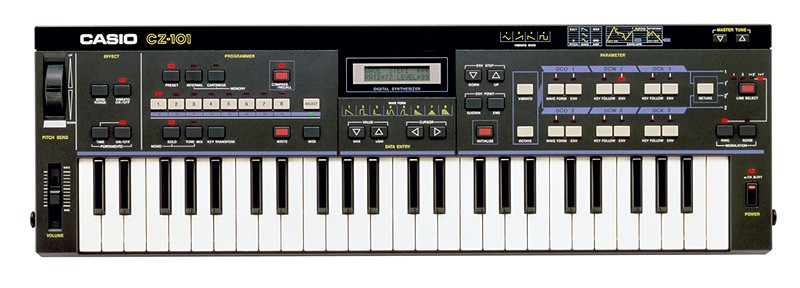
The Casio CZ synthesizer series was first introduced by Casio in the early 1980s and quickly gained popularity among musicians and producers for their compact size and affordable price. The phase distortion synthesis used in the CZ series, which stands for “Compact and Zooming,” was noteworthy because it was a relatively new technique for creating sounds at the time.

The Casio CZ synthesizers’ portability and compact size were two of their standout qualities. They are a popular option for traveling musicians because they are lightweight and easy to transport. The CZ series synthesizers were compact, but they were jam-packed with a variety of features and abilities.

Phase distortion synthesis, a then-relatively-new method of sound creation, was a feature that set the Casio CZ series apart. Using this method, the synthesizers were able to create a variety of sounds, including bass, leads, and percussion. The CZ synthesizers also included a variety of built-in effects, such as delay and reverb, which enhanced the sounds the synthesizer produced.

The Casio CZ series’ use of digital technology was yet another distinguishing trait. The synthesizers had powerful microprocessors that provided fine control over the sounds generated. The CZ series was able to create a variety of sounds that were impossible with conventional analog synthesizers thanks to this and the use of phase distortion synthesis.

Another noteworthy aspect of the Casio CZ series was its reasonable cost. The Casio CZ series was affordable for a wide range of musicians and producers at a time when the majority of professional synthesizers cost thousands of dollars.

Phase distortion synthesis was a new type of synthesis that Casio unveiled in its CZ synthesizer line in the middle of the 1980s (PDS). Phase distortion synthesis is a technique for creating sounds that rely on changing a waveform’s phase. PDS makes it possible to create a wider variety of sounds than is possible with conventional subtractive synthesis because it gives users more control over the harmonic content of a sound.

In terms of music technology, the Casio CZ series of synthesizers represented a significant advancement. Its portability, low cost, and abundance of high-tech features made it possible for musicians to create a variety of sounds. Phase Distortion Synthesis, a novel synthesis technique that marked a significant advancement in sound creation, was also introduced with the CZ series. The CZ series is still popular among musicians and producers who appreciate its distinctive sound and adaptability today. It is regarded as a classic.

One of the key features of the Casio CZ synthesizers was their compact size and portability. They were designed to be lightweight and easy to transport, making them a popular choice for musicians on the go. Despite their small size, however, the CZ series synthesizers were packed with a wide range of features and capabilities.

The Casio CZ series was notable for its use of phase distortion synthesis, a method of sound generation that was relatively new at the time. This technique allowed the synthesizers to produce a wide range of sounds, including bass, leads, and percussive sounds. The CZ synthesizers also featured a wide range of built-in effects, including reverb and delay, which helped to enhance the sounds produced by the synthesizer.

Another key feature of the Casio CZ series was its use of digital technology. The synthesizers were equipped with powerful microprocessors that allowed for precise control over the sounds produced. This, combined with the use of phase distortion synthesis, allowed the CZ series to produce a wide range of sounds that were not possible with traditional analog synthesizers.

The Casio CZ series was also notable for its affordable price. At a time when most professional synthesizers cost thousands of dollars, the Casio CZ series was priced at a fraction of the cost, making it accessible to a wide range of musicians and producers.

Overall, the Casio CZ series of synthesizers was a major development in the world of music technology. It was portable, affordable and packed with advanced features that allowed musicians to produce a wide range of sounds. The CZ series also introduced a new synthesis method, Phase Distortion Synthesis, that was a major development in the field of sound generation. Today, the CZ series is considered a classic and still has a following among musicians and producers who value its unique sound and versatility.

Used by

  1. Depeche Mode: The band used the Casio CZ-101 on their album “Some Great Reward” (1984) to add a unique and distinctive sound to their music.
  2. New Order: The band used the Casio CZ-1000 on their album “Power, Corruption & Lies” (1983) and other of their albums, to add a unique and distinctive sound to their music.
  3. Pet Shop Boys: The band used the Casio CZ-1000 and CZ-3000 in their early albums and live performances.
  4. OMD (Orchestral Manoeuvres in the Dark): The band used the Casio CZ-101 and CZ-1000 in their albums and live performances.
  5. Jean-Michel Jarre: Jarre used the Casio CZ-101 and CZ-3000 in his album “Zoolook” (1984) and other of his albums and live performances.
  6. Vince Clarke: The musician and songwriter used the Casio CZ-101 and CZ-3000 extensively in his work with the band Depeche Mode and his solo projects.
  7. Aphex Twin: The musician used the Casio CZ-101 in his early albums, adding a unique and distinctive sound to his music.
  8. Harold Faltermeyer: The German keyboardist and composer used the Casio CZ-101 in his album “Axel F” and other of his albums, adding a unique and distinctive sound to his music.
Categories
Synthesizer Features

Aftertouch

Aftertouch in a synthesizer is a feature that allows the player to add expression to a sound by applying pressure to a key after it has been struck. Additionally, it is referred to as “channel pressure” or “monophonic pressure.” Aftertouch comes in two flavors: monophonic and polyphonic.

All the keys simultaneously receive monophonic aftertouch, meaning that pressing one key will impact all the notes being played at that moment. The filter cutoff or vibrato depth are two examples of single parameters that are frequently controlled by this kind of aftertouch.

On the other hand, polyphonic aftertouch enables the player to apply pressure to specific keys, allowing each key to affect a different parameter. This enables more expressive and nuanced playing. Given that it requires more complicated hardware to implement, monophonic aftertouch is rare.

Aftertouch can be used to control the vibrato depth, amplitude, and filter cutoff in a synthesizer, among other parameters. Additionally, it can be designated to manage extraneous gadgets like effects processors or other synthesizers. It’s a feature that gives the player more freedom of expression and control, enabling them to sculpt the sound in novel ways.

Not all synthesizers have aftertouch; it is more frequently found in expensive, professional-grade instruments and requires more complicated hardware. Many professional musicians and performers want it, but it’s not a standard feature in most MIDI controllers.

Categories
Synthesizer Features

Velocity Sensitivity

Velocity sensitivity in a synthesizer refers to the ability of the instrument to respond to the speed at which a key is struck. A key strike’s velocity is frequently expressed in MIDI (Musical Instrument Digital Interface) values, which range from 0-127. A velocity-sensitive synthesizer’s corresponding MIDI value will be lower when a key is played softly and higher when the key is played harder.

A velocity-sensitive synthesizer can use this knowledge to modify the sound’s volume, timbre, and attack. When a velocity-sensitive synthesizer is used to control the volume, pressing a key lightly will produce a quieter sound, while pressing it firmly will make a louder sound. As a result, playing can be more expressive, and the instrument may appear more lively and responsive to the player’s touch.

Electronic keyboards and synthesizers frequently have velocity sensitivity, and most professional-grade MIDI controllers come equipped with it as standard. It can play a significant role in a synth’s expressive potential by granting the user greater control over the dynamics and articulation of the sound.