Categories
Synthesizer Models

Korg Prologue

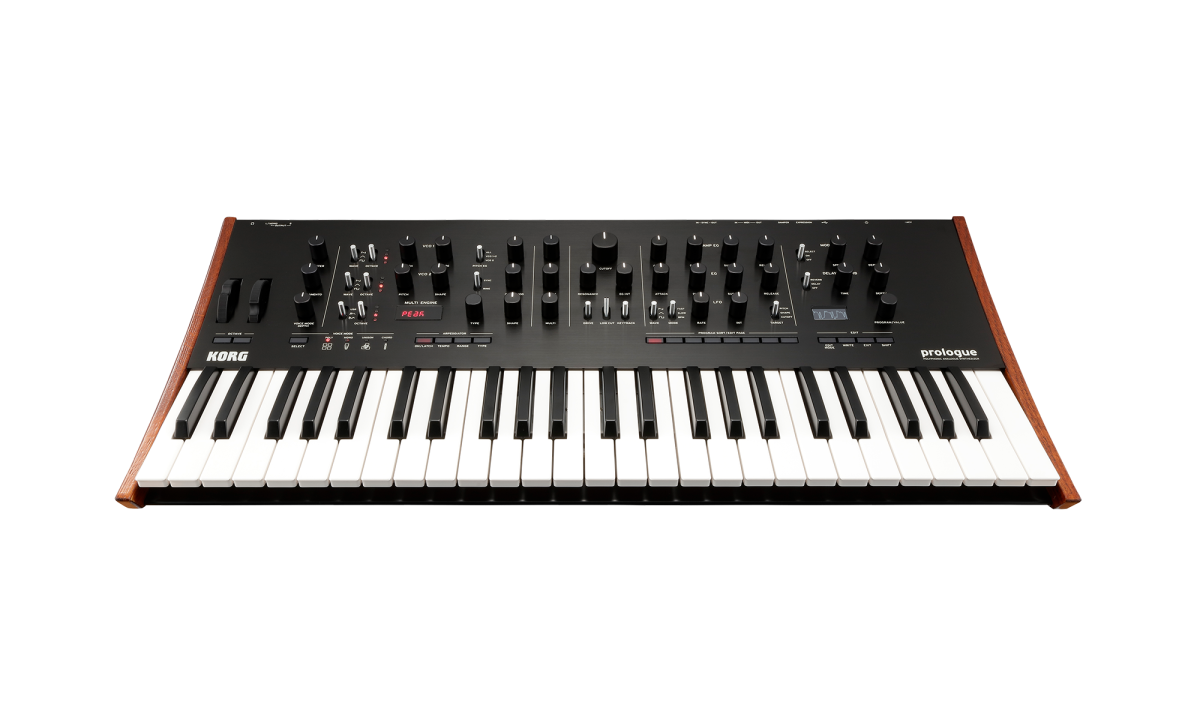
The Korg Prologue is a polyphonic analog synthesizer that was first released by Korg in 2016. The Prologue was designed as a modern take on classic analog synthesizers, and it features several advanced features that set it apart from other analog synths on the market.

One of the defining features of the Prologue is its use of a multi-engine oscillator system. This system allows various sound generation options, including traditional analog waveforms, wavetables, and even user-created samples. This gives the Prologue a level of versatility not typically found in other analog synths.

The Prologue also features a powerful filter section, which includes a two-pole resonant filter and a four-pole non-resonant filter. This allows for many tonal options, from classic analog sounds to more modern, aggressive sounds. The Prologue also features a comprehensive modulation section, which includes a number of envelopes, LFOs, and other modulation sources, allowing for a wide range of sound shaping options.

In addition to its advanced sound generation and modulation capabilities, the Prologue is also designed to be easy to use. It features a large, easy-to-read OLED display, and a user-friendly interface that allows for quick and easy access to all of its features.

The Prologue has been used by various musicians, including electronic, experimental, and pop musicians. Some notable users of the Prologue include The Chemical Brothers, Aphex Twin, and Tycho.

In 2019, Korg released the Prologue 16 and Prologue 8, which are versions of the Prologue with 16 and 8 voices respectively. In 2020, Korg also released the Prologue desktop module and the Prologue Module.

The Korg Prologue is a cutting-edge analog synthesizer that combines classic analog sound with modern features and design. Its versatility and ease of use have made it a favorite among musicians of all types and it continues to be a popular choice for both live performances and studio recording.

Used by

  • The Chemical Brothers
  • Aphex Twin
  • Tycho
Categories
Synthesizer Models Uncategorized

Moog Grandmother

The Moog Grandmother is a semi-modular analog synthesizer first released in 2018 by Moog Music Inc. The Grandmother is part of Moog’s “Mother-32” family of synthesizers, which also includes the Mother-32 and Subharmonicon.

The Grandmother is a compact, 32-key keyboard synthesizer that is perfect for musicians and producers who want to add a vintage analog sound to their productions. It features a classic Moog sound engine with a 2-pole filter, a Moog ladder filter, and a 32-step sequencer.

The Grandmother’s semi-modular design allows for a wide range of sound-design possibilities. It has a total of 31 patch points that allow users to connect various modular synth components such as oscillators, filters, and envelopes. This allows users to create unique and complex sounds that cannot be achieved with traditional synthesizers.

One of the standout features of the Grandmother is its 32-step sequencer. This allows users to create complex patterns and sequences, and also features a “Chain” mode that allows for the creation of longer sequences. The Grandmother also has an arpeggiator, which is perfect for creating intricate and evolving patterns.

The Grandmother also has a built-in spring reverb tank, which adds a vintage and spacious feel to the sound. Additionally, it has a stereo output, which can be used to create wide stereo sounds.

The Grandmother’s compact size and vintage aesthetic make it a great addition to any studio or live setup. Its semi-modular design and wide range of features make it a versatile and powerful instrument for musicians and producers of all skill levels.

Overall, the Moog Grandmother is a powerful and versatile analog synthesizer that offers a wide range of sound-design possibilities. Its semi-modular design, 32-step sequencer, and built-in spring reverb tank make it a great addition to any studio or live setup. Its compact size and vintage aesthetic make it a perfect instrument for musicians and producers who want to add a classic Moog sound to their productions.

Categories
Synthesizer Models

Akai Timbre Wolf

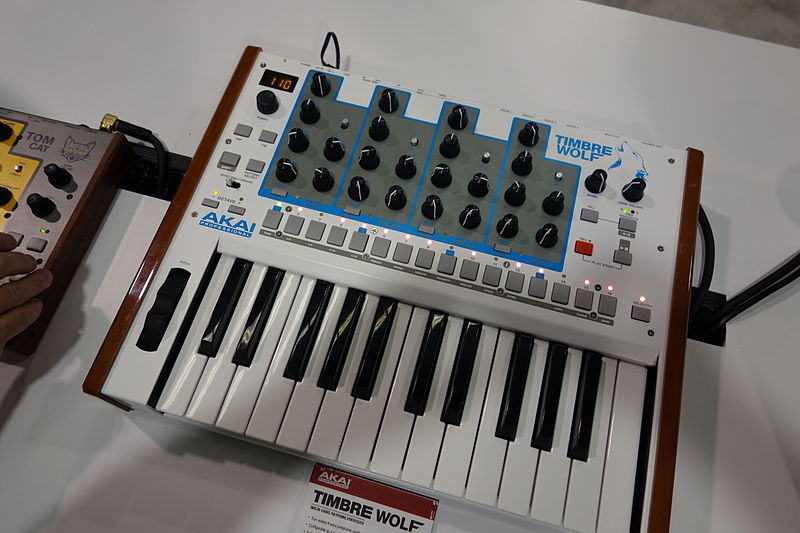
The Akai Timbre Wolf is a compact, four-voice analog synthesizer that was first released in 2013. It features a 32-step sequencer, MIDI In and Out/Thru, and a variety of controls for creating and shaping sounds.

The Timbre Wolf is part of Akai’s line of “Wolf” synthesizers, which also includes the Tom Cat and the Max49. The Timbre Wolf is notable for its small form factor and portability, making it a popular choice for musicians on the go or those with limited space.

The synth features four voices, each with its own oscillator, filter, and envelope. It also has a built-in step sequencer, allowing for easy creation of patterns and loops. The Timbre Wolf also has a variety of controls for shaping and modulating sounds, including a modulation matrix and a variety of modulation sources such as LFOs and envelopes.

One of the most unique features of the Timbre Wolf is its “Timbre” control, which allows the user to blend the waveforms of the four voices together to create new and unique sounds. Additionally, the Timbre Wolf also has a built-in distortion effect that can add a gritty, overdriven character to the sound.

Overall, the Akai Timbre Wolf is a compact and powerful synthesizer that offers a wide range of sound shaping options in a portable package. Its built-in sequencer and modulation matrix make it a great choice for electronic musicians looking for a versatile and portable synth.

Categories
Classic Synthesizers Synthesizer Models

Moog Prodigy

The Moog Prodigy is a classic synthesizer first introduced in 1979 by Moog Music. It was designed as a more affordable and compact alternative to Moog’s larger and more expensive synthesizers, such as the Minimoog and the Polymoog. Despite its smaller size and lower price point, the Prodigy still featured many of the same powerful sound-generating capabilities as its larger counterparts.

The Prodigy’s sound-generating capabilities are based on Moog’s classic subtractive synthesis architecture. This architecture uses a voltage-controlled oscillator (VCO) to generate a basic waveform, such as a sawtooth or square wave. This waveform is then passed through a voltage-controlled filter (VCF) and a voltage-controlled amplifier (VCA) to shape and control the final sound. The Prodigy also features a noise generator, a sample-and-hold module, and a modulation section that includes a low-frequency oscillator (LFO) for creating vibrato and other modulation effects.

One of the Prodigy’s most notable features is its compact and portable design. The Prodigy’s compact size and lightweight construction made it ideal for musicians on the go, and its relatively low price point made it more accessible to a wider range of musicians than Moog’s larger and more expensive synthesizers. Despite its compact size, the Prodigy still featured a full-sized keyboard and a comprehensive control panel, allowing musicians to easily access and manipulate all of the synth’s various sound-generating capabilities.

The Prodigy was well-received by musicians and critics when it was first released. It was used by many musicians across different genres, from electronic and experimental musicians to pop and rock bands. Some notable musicians that used the Prodigy include Depeche Mode, New Order, and Ultravox.

Despite its popularity, the Moog Prodigy was only produced for a few years and was discontinued in the early 1980s. However, its legacy lives on, and the Prodigy remains a popular and highly sought-after synthesizer among vintage synth enthusiasts and collectors.

Used by

Categories
Classic Synthesizers Synthesizer Models

Moog Polymoog

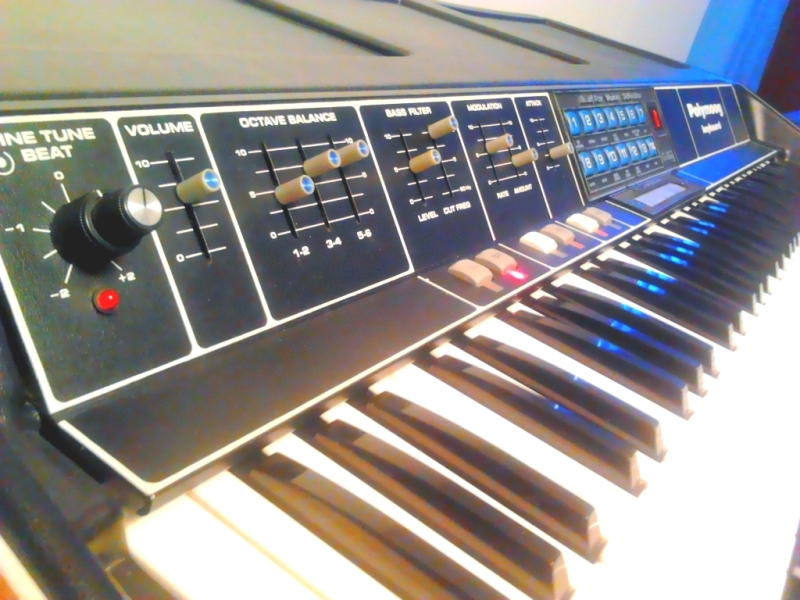
The Polymoog is a polyphonic analog synthesizer manufactured by Moog Music in the 1970s. It was one of the first polyphonic synthesizers available to musicians and was known for its rich, expressive sound and versatility.

The Polymoog was first introduced in 1975 as a follow-up to the popular Minimoog monophonic synthesizer. The Polymoog featured a 71-note weighted keyboard and was capable of producing up to six voices simultaneously, making it a popular choice for musicians who wanted to add a more complex and dynamic sound to their music.

One of the key features of the Polymoog was its use of filtering, which allowed users to shape the synth’s sound in various ways. The synth featured a 24dB/octave resonant low-pass filter, which could be used to create a wide range of sounds, from subtle to extreme. Additionally, the Polymoog featured a 3-band equalizer, which allowed users to adjust the balance of bass, midrange, and treble frequencies.

The Polymoog also featured a variety of modulation sources, including an LFO, a sample-and-hold generator, and an envelope generator. These tools allowed users to add movement and variation to their sounds, creating a wide range of textures and effects.
The Polymoog’s sound generation was based on subtractive synthesis and featured a voltage-controlled oscillator. The Polymoog also featured a noise generator, which could be used to add percussive or other natural sounds to the synth’s sound palette.

Despite its popularity, the Polymoog was in production for only a few years, and production was halted in 1980. However, the Polymoog has become a cult classic and is still highly sought-after by synth enthusiasts today. Its rich, expressive sound and versatility make it a popular choice for musicians looking to add a unique and dynamic sound to their music.

Used by:

Categories
Classic Synthesizers Uncategorized

Roland TB-303

1982 saw the initial release of the iconic analog synthesizer, the Roland TB-303. Despite having a brief production run that lasted just until 1984, it significantly influenced the evolution of electronic music, particularly Acid House and Techno.

Although the TB-303 was initially intended to be a guitar player’s accompanist, it swiftly found a new home in the burgeoning electronic music scene. It was a cost-effective choice for electronic musicians who wished to experiment with new sounds and produce their own music.

The TB-303 is known for its characteristic sound, distinguished by its squelchy, acidic tone. The TB-303 comes with a simple envelope generator for modulating the filter cutoff and amplitude and a resonant low-pass filter that may be used to shape the sound.

The TB-303 contains an integrated step sequencer that enables the construction of intricate patterns and grooves. Many techno and acid house producers relied on the TB-303 because of this function to construct the characteristic repeated patterns that characterize those genres.

The affordability of the TB-303, which made it available to many musicians and producers, was another factor in its appeal. This led to the democratization of electronic music and the creation of numerous subgenres, including Acid House and Techno.

The TB-303 significantly influenced electronic music despite its short production. The TB-303 is a famous instrument whose influence can be heard in many contemporary electronic genres thanks to its distinctive tone and capacity for intricate pattern creation.

To sum up, the Roland TB-303 is a legendary instrument that influenced the rise of electronic music. Many notable artists have exploited its distinctive sound and step sequencer, and electronic musicians are still inspired by it today.

Used by

Categories
Classic Synthesizers

Moog Minimoog

Robert Moog originally unveiled the iconic analog synthesizer known as the Moog Minimoog in 1970. It was one of the first portable synthesizers. It quickly established itself as a standard in the music business, being utilized by a variety of musicians in the rock, pop, and electronic music genres.

The Minimoog’s use of oscillators to produce sound is one of its distinguishing characteristics. A wide range of tone possibilities and the capacity to create complex sounds are made possible by the instrument’s three voltage-controlled oscillators. A low-pass filter is also included, which can be used to sculpt the sound and give warmth and depth.

The Minimoog’s interface was also straightforward and user-friendly, making it easier for musicians to produce new sounds swiftly. The oscillators, filter, and modulation may all be adjusted with the knobs on the front panel. A keyboard is also included for playing sounds. The synthesizer became more widely used because of its layout, making it affordable for musicians of all levels.

The Minimoog was renowned for being portable since it was tiny enough to be carried around easily but still provided a variety of sound-shaping choices. It became popular among traveling artists, and renowned bands like Pink Floyd, Tangerine Dream, and many others have used it in their stage settings.

The Minimoog was used in popular music and soundtracks for movies and television shows, especially in the 1970s and 1980s. It was the ideal instrument for bringing depth and emotion to a scene because of its rich, powerful sound.

Even though it wasn’t manufactured after 1981, the Minimoog is still a very popular instrument, with original examples fetching high sums on the vintage market. Moog Music relaunched the Minimoog in 2002 with enhanced features like MIDI and a bigger keyboard, and synth enthusiasts continue to favor it.

The Moog Minimoog is a true classic in analog synthesizers due to its warm and powerful sound, user-friendly design, and portability. Numerous well-known bands’ music shows its impact, and its legacy motivates new musical generations.

Used by

Categories
Synthesizer Types

Analog Synthesizers

An analog synthesizer is a type of synthesizer that produces sound using analog circuits and parts. Unlike digital synthesizers, which produce sound using digital technology, analog synthesizers produce sound using analog circuits and components like oscillators, filters, and amplifiers.

Due to the inherent variations and flaws in the analog components, analog synthesizers are renowned for their warm and rich sound and their capacity to produce unpredictable and one-of-a-kind sounds. Additionally, they frequently have many physical controls like sliders, knobs, and others that can be used to modulate and shape the sound, allowing for a lot of expression and creativity.

Since the 1970s, analog synthesizers have been extensively used in electronic and popular music. The Moog Minimoog, Roland TB-303, and ARP 2600 are some of the most well-known and well-liked analog synthesizers.

However, analog synthesizers also have some drawbacks, such as drifting more easily and needing more upkeep than digital synthesizers. Additionally, they cost more to make and buy, and humidity and temperature might impact how they sound.

Examples