
Categories
Classic Synthesizers Synthesizer Models

PPG Wave

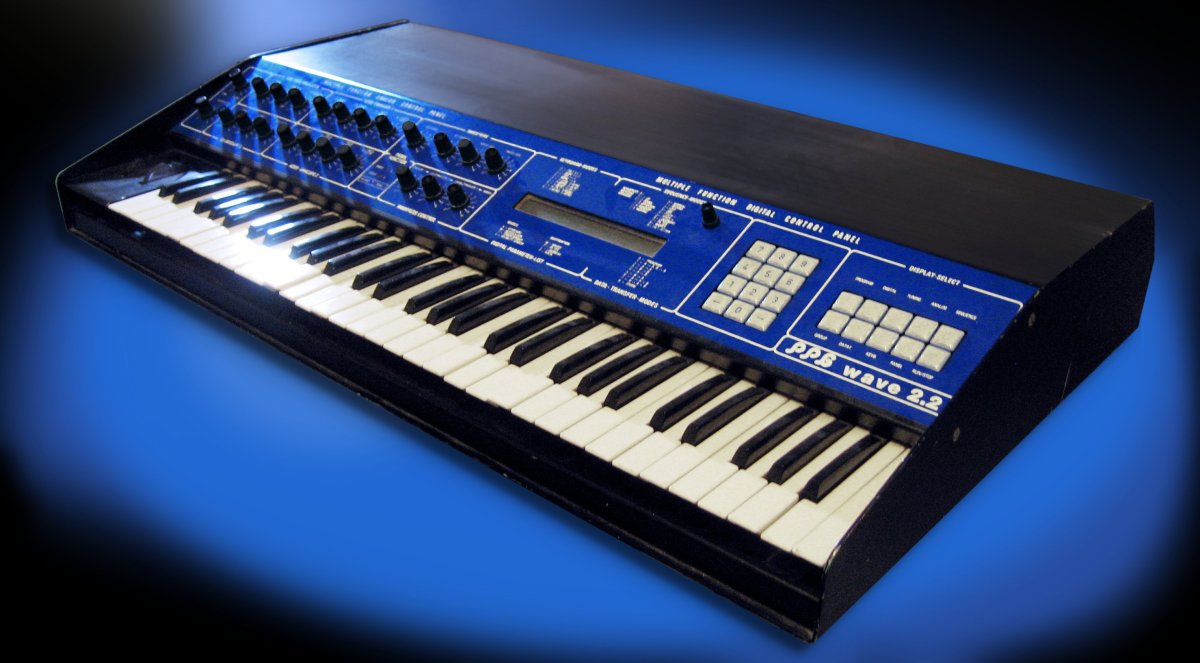
The PPG Wave synthesizer, also known as the Wavecomputer, was a digital synthesizer developed by the German company PPG (Palm Products GmbH) in the 1980s. The instrument was distinguished by its distinctive tone, which was produced by combining additive and wavetable synthesis methods.

With the debut of the PPG Wave 2.2 in 1981, the PPG Wave was first made public. This model has a 61-note keyboard and an integrated 8-track sequencer. Many well-known bands, including Tangerine Dream, Pet Shop Boys, and Depeche Mode, utilized the instrument. Musicians in the electronic and experimental music genres soon welcomed it.

The PPG Wave’s wavetable synthesis method, which lets users manipulate many single-cycle waveforms to produce complex and changing sounds, was one of its standout features. The device also has a variety of built-in waveforms, such as sine, square, and sawtooth waves, as well as some more complex waveforms, such as formants and noise.

The PPG Wave’s ability to perform additive synthesis was another noteworthy aspect. This method allows users to combine several sine waves with various frequencies and amplitudes to produce sounds. This made it possible to create sounds that were even more intricate and nuanced than with only wavetable synthesis.

The PPG Wave had a variety of valuable features in addition to its synthesis capabilities, including an arpeggiator, a built-in chorus effect, and numerous modulation possibilities.

Eventually, the PPG Wave was replaced by the PPG Wave 2.3 and PPG Wave 2.3 Turbo, which had better sound and more memory. The PPG Wave was well-liked by electronic and experimental musicians, but as newer and more sophisticated synthesizers became available in the late 1980s, production of the instrument eventually ceased.

Despite this, the PPG Wave is still regarded as a cult favorite among synth lovers, and its features and sounds are still in high demand.

Used by

  • Tangerine Dream: The German electronic music band was one of the first and most prominent users of the PPG Wave. The band used the instrument on several of their albums, including “Exit” and “Hyperborea.”
  • Pet Shop Boys: The British synthpop duo used the PPG Wave on several of their early albums, including “Please” and “Actually.”
  • Depeche Mode: The British electronic band used the PPG Wave on their album “Black Celebration,” which was released in 1986.
  • Gary Numan: The British musician and pioneer of electronic music used the PPG Wave on his album “The Fury,” which was released in 1985.
  • Jean Michel Jarre: The French electronic musician also used PPG Wave on his album “Zoolook” which was released in 1984.
  • Art of Noise: The British band and pioneers of sample-based music used PPG Wave on their album “In Visible Silence” which was released in 1986
  • New Order: The British band used PPG Wave on their album “Power, Corruption & Lies” which was released in 1983
Categories
Classic Synthesizers Synthesizer Models

Fairlight CMI

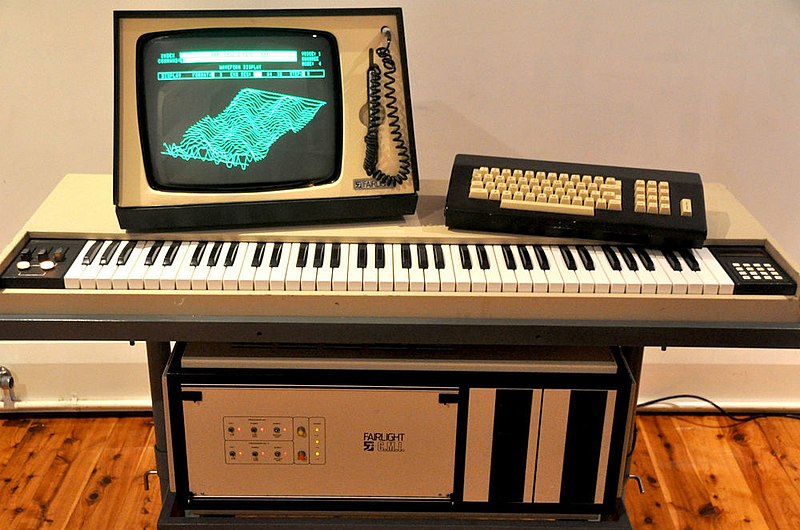
The Firelight CMI (Computer Musical Instrument) synthesizer is a digital musical instrument first developed in the late 1970s by engineer Peter Vogel and musician Kim Ryrie. It was among the first synthesizers to use a digital computer at the center of its construction, giving the user more creative freedom and control over the instrument’s sound.

The Fairlight Instruments company, formed by Vogel and Ryrie, initially produced the Firelight CMI before it was first released in 1979. Because of the instrument’s cutting-edge capabilities and distinctive tone, musicians and producers took to it instantly.

The Firelight CMI’s capacity to sample and retain sound, which allowed users to manipulate recorded samples to generate new sounds, was one of its primary features. A touch-sensitive keyboard, an integrated sequencer, and a number of other controls and interfaces for modifying sound were also included in the instrument.

The Firelight CMI was renowned for its cutting-edge technology, exorbitant price, and exclusivity. Initially costing roughly $25,000, the instrument was out of many performers’ and producers’ pricing ranges. Because of this, the recording industry’s professional musicians and producers were the primary users of the Firelight CMI.

The Firelight CMI is regarded as a groundbreaking instrument in the development of digital music technology despite its high price. It had a big impact on the music business. Its sampling and storing capabilities helped other digital instruments and software evolve, and its distinctive sound can be heard on many well-known songs from the 1980s.

The Firelight CMI is now regarded as a classic instrument and is highly sought after by vintage gear collectors and enthusiasts. The manufacturer Fairlight Instruments discontinued making the Firelight CMI in the 1990s. However, a few businesses are still able to service and repair it, and it still has a loyal user community.

Overall, the Firelight CMI was a groundbreaking digital musical instrument that expanded the realms of what was conceivable regarding technology and sound design. Its influence on modern music creation is still felt today.

Used by

  • Peter Gabriel: The musician used the Firelight CMI on his fourth solo album, “Security,” which was released in 1982. Gabriel also used the instrument on his tours during this period.
  • Kate Bush: The singer-songwriter used the Firelight CMI on her 1985 album, “Hounds of Love.” The album featured the hit single “Running Up That Hill (A Deal With God)” which was produced using the CMI.
  • Jean Michel Jarre: The French electronic musician used the Firelight CMI on his 1981 album, “Magnetic Fields,” which featured the hit single “Magnetic Fields 2.”
  • Thomas Dolby: The musician and producer used the Firelight CMI on his 1982 debut album, “The Golden Age of Wireless.”
  • Art of Noise: The British band used the Firelight CMI on their 1984 album, “Who’s Afraid of the Art of Noise?”
  • A-ha: The Norwegian band used the Firelight CMI on their hit single “Take On Me,” which was released in 1985.
  • Frankie Goes to Hollywood: The British band used the Firelight CMI on their 1984 debut album, “Welcome to the Pleasuredome.”
  • Toto: The American band used the Firelight CMI on their 1982 album “Toto IV” which featured the hit single “Africa”
  • Fleetwood Mac: The band used the Firelight CMI on their 1982 album “Mirage”
  • Revolting Cocks: The industrial super-group used the Fairlight CMI on their albums “Big Sexy Land” and “Beers, Steers, and Queers.”
  • Front 242: The Belgian EBM Industrial group used the Fairlight on numerous early recordings.