Categories
Classic Synthesizers Synthesizer Models

Ensoniq Mirage

The Ensoniq Mirage is a digital synthesizer and sampler introduced in 1984 by the Pennsylvania-based company Ensoniq. The Mirage was one of the first affordable digital synthesizers on the market and quickly gained popularity among professional and amateur musicians.

The Mirage featured a unique sound generation system called “DSS” (Digital Sampling Synthesis) which combined the capabilities of both sampling and synthesis. It allowed the user to record and manipulate samples in real-time and then use them as the basis for creating new sounds. The Mirage also featured a built-in 8-track sequencer and a variety of preset and user-editable sounds, making it a versatile and powerful instrument.

One of the most notable features of the Mirage was its low cost. At the time of its release, it was significantly less expensive than other digital synthesizers on the market, such as the Fairlight CMI and the Synclavier. This made it accessible to a broader range of musicians and helped to establish Ensoniq as a major player in the synth market.

The Mirage’s design was also notable for its compact size, making it easy to transport and set up. The synth featured a built-in keyboard with velocity-sensitive keys and could also be played using an external MIDI controller.

The Mirage was also known for its ease of use. The interface was simple and intuitive, with a clear layout that made it easy to navigate and edit sounds. The built-in sequencer also made it simple for users to record and edit their own compositions.

Ensoniq released several updates and upgrades to the Mirage throughout its production run, including the Mirage DSK-1, Mirage DSK-8, and Mirage DSK-16. The DSK-1 and DSK-8 were expansion units that added extra memory and more advanced sequencing capabilities to the Mirage. The Mirage DSK-16 was a rack-mount version of the Mirage that did not include a built-in keyboard.

The Ensoniq Mirage was discontinued in the early 1990s, but it remains a cult classic among synth enthusiasts. Its unique sound generation system and ease of use made it a popular choice for electronic music producers, and it can be heard on many tracks from the 1980s and 1990s.

In conclusion, The Ensoniq Mirage was a revolutionary digital synthesizer that was affordable, easy to use, and powerful. Its combination of sampling and synthesis capabilities, built-in sequencer and its low cost made it a popular choice among musicians of the time. It remains a cult classic and its sound can be heard on many tracks from the 80s and 90s.

Used by

  • Depeche Mode: The band extensively used a Mirage on their album “Black Celebration” and their “Music for the Masses” tour.
  • New Order: The band used a Mirage on their ” Technique ” album and their “World In Motion” single.
  • Pet Shop Boys: The band used a Mirage on their album “Please” and also on their “Actually” album.
  • Jean-Michel Jarre: The French electronic musician used a Mirage on his album “Rendez-Vous”
  • Thomas Dolby: The English musician and producer used a Mirage on his album “The Golden Age of Wireless”
  • A-ha: The Norwegian band used a Mirage on their album “Scoundrel Days”
  • Vince Clarke: The musician and producer used a Mirage on his album “The Clarke Duke Project”
  • Neneh Cherry: The singer-songwriter used a Mirage on her album “Raw Like Sushi”
Categories
Classic Synthesizers Synthesizer Models

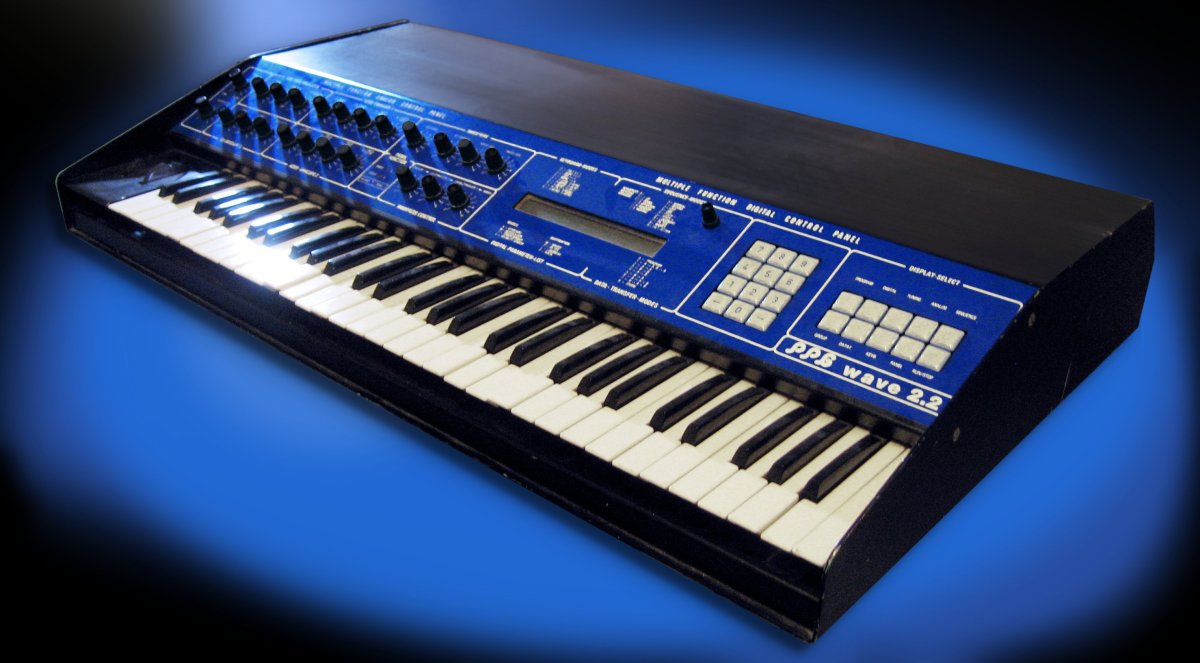
PPG Wave

The PPG Wave synthesizer, also known as the Wavecomputer, was a digital synthesizer developed by the German company PPG (Palm Products GmbH) in the 1980s. The instrument was distinguished by its distinctive tone, which was produced by combining additive and wavetable synthesis methods.

With the debut of the PPG Wave 2.2 in 1981, the PPG Wave was first made public. This model has a 61-note keyboard and an integrated 8-track sequencer. Many well-known bands, including Tangerine Dream, Pet Shop Boys, and Depeche Mode, utilized the instrument. Musicians in the electronic and experimental music genres soon welcomed it.

The PPG Wave’s wavetable synthesis method, which lets users manipulate many single-cycle waveforms to produce complex and changing sounds, was one of its standout features. The device also has a variety of built-in waveforms, such as sine, square, and sawtooth waves, as well as some more complex waveforms, such as formants and noise.

The PPG Wave’s ability to perform additive synthesis was another noteworthy aspect. This method allows users to combine several sine waves with various frequencies and amplitudes to produce sounds. This made it possible to create sounds that were even more intricate and nuanced than with only wavetable synthesis.

The PPG Wave had a variety of valuable features in addition to its synthesis capabilities, including an arpeggiator, a built-in chorus effect, and numerous modulation possibilities.

Eventually, the PPG Wave was replaced by the PPG Wave 2.3 and PPG Wave 2.3 Turbo, which had better sound and more memory. The PPG Wave was well-liked by electronic and experimental musicians, but as newer and more sophisticated synthesizers became available in the late 1980s, production of the instrument eventually ceased.

Despite this, the PPG Wave is still regarded as a cult favorite among synth lovers, and its features and sounds are still in high demand.

Used by

  • Tangerine Dream: The German electronic music band was one of the first and most prominent users of the PPG Wave. The band used the instrument on several of their albums, including “Exit” and “Hyperborea.”
  • Pet Shop Boys: The British synthpop duo used the PPG Wave on several of their early albums, including “Please” and “Actually.”
  • Depeche Mode: The British electronic band used the PPG Wave on their album “Black Celebration,” which was released in 1986.
  • Gary Numan: The British musician and pioneer of electronic music used the PPG Wave on his album “The Fury,” which was released in 1985.
  • Jean Michel Jarre: The French electronic musician also used PPG Wave on his album “Zoolook” which was released in 1984.
  • Art of Noise: The British band and pioneers of sample-based music used PPG Wave on their album “In Visible Silence” which was released in 1986
  • New Order: The British band used PPG Wave on their album “Power, Corruption & Lies” which was released in 1983
Categories
Classic Synthesizers Drum Machines Synthesizer Models

Akai MPC

The Akai MPC, or MIDI Production Center, is a series of music production workstations introduced by Akai in 1988. The MPC soon rose to prominence as one of the most widely used and significant tools in the field of electronic music creation.

The original MPC was intended to be an all-in-one music production system. It included a sequencer, a sampler, and a drum machine. The sampler allowed users to record and edit samples, whereas the drum machine allowed users to construct and edit their own drum patterns. Users could record and edit their own tunes using the sequencer, and it could sync with other devices through MIDI.

Music producers and artists found the MPC’s user-friendly interface to make recording and editing music simple. Thanks to the front panel’s many knobs, buttons, and sizable LCD screen, it was simple to access the numerous operations and settings. The MPC also included an integrated effects processor that let users give their samples and drum patterns reverb, delay, and other effects.

Hip-hop, electronic, and pop music, among other musical styles, all frequently employed the MPC. A Tribe Called Quest, Public Enemy, Dr. Dre, and The Prodigy were just a few musicians who utilized it. The MPC was renowned for its capacity to produce lifelike sound effects and orchestral simulations, and it was also employed in film and television soundtracks.

The MPC60, MPC3000, MPC2000, MPC2000XL, MPC4000, MPC5000, MPC Renaissance, MPC Studio, and MPC Live are just a few of the new MPC models that Akai has released over the years. With each subsequent release, more features and functionalities were added, such as increased RAM, storage space, and processing power.

The MPC is still a well-liked and highly sought-after instrument among fans and producers of electronic music today. Since it is still employed in many contemporary performances, its legacy endures. The MPC continues to offer a blend of vintage feel and cutting-edge technology in its most recent iterations, the MPC X, MPC Live, and MPC One, making it a flexible instrument for music production.

With its integration of a drum machine, sampler, and sequencer, the Akai MPC is a music production workstation that transformed the music business. It became a necessary tool for many musicians and producers due to its user-friendly interface, potent sound manipulation capabilities, and extensive feature set. It is still frequently employed in various musical genres and the music production industry, preserving its legacy.

Used by

  • Dr. Dre: The hip-hop producer and rapper used the MPC extensively throughout his career. He used it on his groundbreaking album “The Chronic” (1992) and on many of his other albums.
  • A Tribe Called Quest: The hip-hop group used the MPC on their album “The Low End Theory” (1991).
  • Public Enemy: The hip-hop group used the MPC on their album “Apocalypse 91…The Enemy Strikes Black” (1991).
  • The Prodigy: The electronic group used the MPC on their album “Experience” (1992).
  • The Chemical Brothers: The electronic group used the MPC on their album “Exit Planet Dust” (1995)
  • Goldie: The drum and bass artist used the MPC on his album “Timeless” (1995)
  • J Dilla: The hip-hop producer and rapper used the MPC extensively throughout his career. He used it on many of his productions and solo albums.
  • Madlib: The hip-hop producer and rapper used the MPC extensively throughout his career. He used it on many of his productions and solo albums.
  • Timbaland: The hip-hop producer and rapper used the MPC extensively throughout his career. He used it on many of his productions and solo albums.
Categories
Classic Synthesizers Synthesizer Models

Akai S1000/3000

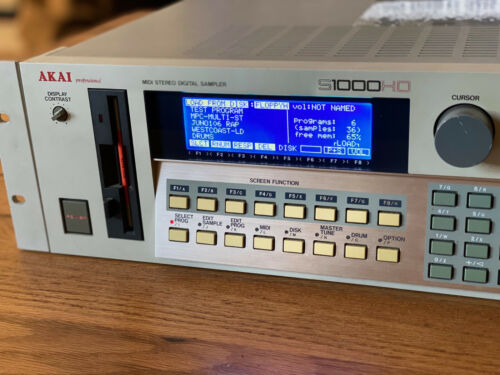
The Akai S1000 is a popular digital sampler synthesizer that was first introduced in 1986. It is regarded as one of the most important and innovative electronic instruments of its era.

The Akai S1000 was one of the first digital samplers widely adopted by professional musicians and producers. It was renowned for its excellent audio and capacity to store a sizable amount of sample data. The S1000 included an integrated hard drive that could hold up to 20 seconds of mono audio or 10 seconds of stereo audio. Input and output options for the sampler included MIDI and SCSI, making it easy to integrate into a studio setup.

Another noteworthy feature of the Akai S1000 was its user-friendly interface. Thanks to the front panel’s large LCD screen and an assortment of knobs and buttons, it was simple to manage the several features and settings. A sequencer already included in the sampler allowed users to record and alter their tunes.

The ability to modify samples was one of the Akai S1000’s most distinctive features. Many sample editing options, including the capacity to alter a sample’s pitch, length, and loop points, were included with the S1000. Additionally, it contained an integrated effects processor that users could use to give their samples reverb, delay, and other effects.

Hip-hop, electronic, and pop music, among other musical genres, frequently employed the Akai S1000. Numerous artists utilized it, including Depeche Mode, Nine Inch Nails, and Dr. Dre. The S1000 was a popular choice for soundtracks for movies and TV shows because of its propensity for producing authentic sound effects and orchestral simulations.

The S3000 series eventually took the place of the Akai S1000 and provided even more features and capabilities. The S1000 is still a well-liked and coveted instrument among fans and collectors of electronic music. Given that it is still employed in many contemporary songs today, its legacy endures.

Overall, the music industry was transformed by the high-quality sound, ample storage, and user-friendly design of the Akai S1000 synthesizer. Many musicians and producers considered it a necessary instrument due to its adaptability and capacity for sample manipulation, and its legacy is still felt today.

Used by

  • Depeche Mode: The band used the S1000 on their album “Violator”, which was released in 1990.
  • Nine Inch Nails: Trent Reznor, the frontman of Nine Inch Nails, has used the S1000 extensively throughout his career. He used it on the band’s debut album “Pretty Hate Machine” (1989) and on their 1992 EP “Broken”.
  • Dr. Dre: The hip-hop producer and rapper used the S1000 on many of his early albums, including “The Chronic” (1992) and “Doggystyle” (1993).
  • A Tribe Called Quest: The hip-hop group used the S1000 on their album “The Low End Theory” (1991).
  • Public Enemy: The hip-hop group used the S1000 on their album “Apocalypse 91…The Enemy Strikes Black” (1991).
  • The Prodigy: The electronic group used the S1000 on their album “Experience” (1992).
  • The Chemical Brothers: The electronic group used the S1000 on their album “Exit Planet Dust” (1995)
  • Goldie: The drum and bass artist used the S1000 on his album “Timeless” (1995)
Categories
Classic Synthesizers Synthesizer Models

Fairlight CMI

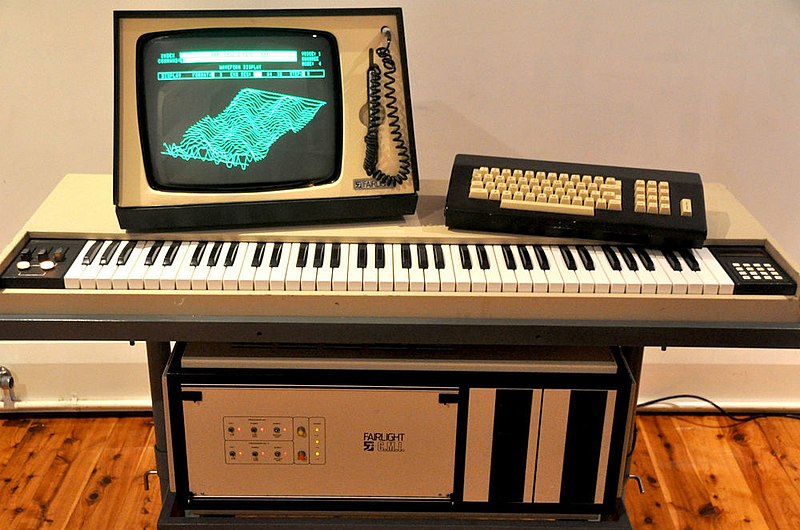
The Firelight CMI (Computer Musical Instrument) synthesizer is a digital musical instrument first developed in the late 1970s by engineer Peter Vogel and musician Kim Ryrie. It was among the first synthesizers to use a digital computer at the center of its construction, giving the user more creative freedom and control over the instrument’s sound.

The Fairlight Instruments company, formed by Vogel and Ryrie, initially produced the Firelight CMI before it was first released in 1979. Because of the instrument’s cutting-edge capabilities and distinctive tone, musicians and producers took to it instantly.

The Firelight CMI’s capacity to sample and retain sound, which allowed users to manipulate recorded samples to generate new sounds, was one of its primary features. A touch-sensitive keyboard, an integrated sequencer, and a number of other controls and interfaces for modifying sound were also included in the instrument.

The Firelight CMI was renowned for its cutting-edge technology, exorbitant price, and exclusivity. Initially costing roughly $25,000, the instrument was out of many performers’ and producers’ pricing ranges. Because of this, the recording industry’s professional musicians and producers were the primary users of the Firelight CMI.

The Firelight CMI is regarded as a groundbreaking instrument in the development of digital music technology despite its high price. It had a big impact on the music business. Its sampling and storing capabilities helped other digital instruments and software evolve, and its distinctive sound can be heard on many well-known songs from the 1980s.

The Firelight CMI is now regarded as a classic instrument and is highly sought after by vintage gear collectors and enthusiasts. The manufacturer Fairlight Instruments discontinued making the Firelight CMI in the 1990s. However, a few businesses are still able to service and repair it, and it still has a loyal user community.

Overall, the Firelight CMI was a groundbreaking digital musical instrument that expanded the realms of what was conceivable regarding technology and sound design. Its influence on modern music creation is still felt today.

Used by

  • Peter Gabriel: The musician used the Firelight CMI on his fourth solo album, “Security,” which was released in 1982. Gabriel also used the instrument on his tours during this period.
  • Kate Bush: The singer-songwriter used the Firelight CMI on her 1985 album, “Hounds of Love.” The album featured the hit single “Running Up That Hill (A Deal With God)” which was produced using the CMI.
  • Jean Michel Jarre: The French electronic musician used the Firelight CMI on his 1981 album, “Magnetic Fields,” which featured the hit single “Magnetic Fields 2.”
  • Thomas Dolby: The musician and producer used the Firelight CMI on his 1982 debut album, “The Golden Age of Wireless.”
  • Art of Noise: The British band used the Firelight CMI on their 1984 album, “Who’s Afraid of the Art of Noise?”
  • A-ha: The Norwegian band used the Firelight CMI on their hit single “Take On Me,” which was released in 1985.
  • Frankie Goes to Hollywood: The British band used the Firelight CMI on their 1984 debut album, “Welcome to the Pleasuredome.”
  • Toto: The American band used the Firelight CMI on their 1982 album “Toto IV” which featured the hit single “Africa”
  • Fleetwood Mac: The band used the Firelight CMI on their 1982 album “Mirage”
  • Revolting Cocks: The industrial super-group used the Fairlight CMI on their albums “Big Sexy Land” and “Beers, Steers, and Queers.”
  • Front 242: The Belgian EBM Industrial group used the Fairlight on numerous early recordings.

Categories
Classic Synthesizers Synthesizer Models

Casio CZ

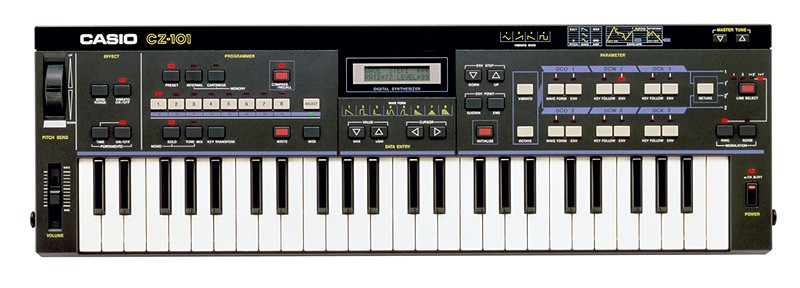
The Casio CZ synthesizer series was first introduced by Casio in the early 1980s and quickly gained popularity among musicians and producers for their compact size and affordable price. The phase distortion synthesis used in the CZ series, which stands for “Compact and Zooming,” was noteworthy because it was a relatively new technique for creating sounds at the time.

The Casio CZ synthesizers’ portability and compact size were two of their standout qualities. They are a popular option for traveling musicians because they are lightweight and easy to transport. The CZ series synthesizers were compact, but they were jam-packed with a variety of features and abilities.

Phase distortion synthesis, a then-relatively-new method of sound creation, was a feature that set the Casio CZ series apart. Using this method, the synthesizers were able to create a variety of sounds, including bass, leads, and percussion. The CZ synthesizers also included a variety of built-in effects, such as delay and reverb, which enhanced the sounds the synthesizer produced.

The Casio CZ series’ use of digital technology was yet another distinguishing trait. The synthesizers had powerful microprocessors that provided fine control over the sounds generated. The CZ series was able to create a variety of sounds that were impossible with conventional analog synthesizers thanks to this and the use of phase distortion synthesis.

Another noteworthy aspect of the Casio CZ series was its reasonable cost. The Casio CZ series was affordable for a wide range of musicians and producers at a time when the majority of professional synthesizers cost thousands of dollars.

Phase distortion synthesis was a new type of synthesis that Casio unveiled in its CZ synthesizer line in the middle of the 1980s (PDS). Phase distortion synthesis is a technique for creating sounds that rely on changing a waveform’s phase. PDS makes it possible to create a wider variety of sounds than is possible with conventional subtractive synthesis because it gives users more control over the harmonic content of a sound.

In terms of music technology, the Casio CZ series of synthesizers represented a significant advancement. Its portability, low cost, and abundance of high-tech features made it possible for musicians to create a variety of sounds. Phase Distortion Synthesis, a novel synthesis technique that marked a significant advancement in sound creation, was also introduced with the CZ series. The CZ series is still popular among musicians and producers who appreciate its distinctive sound and adaptability today. It is regarded as a classic.

One of the key features of the Casio CZ synthesizers was their compact size and portability. They were designed to be lightweight and easy to transport, making them a popular choice for musicians on the go. Despite their small size, however, the CZ series synthesizers were packed with a wide range of features and capabilities.

The Casio CZ series was notable for its use of phase distortion synthesis, a method of sound generation that was relatively new at the time. This technique allowed the synthesizers to produce a wide range of sounds, including bass, leads, and percussive sounds. The CZ synthesizers also featured a wide range of built-in effects, including reverb and delay, which helped to enhance the sounds produced by the synthesizer.

Another key feature of the Casio CZ series was its use of digital technology. The synthesizers were equipped with powerful microprocessors that allowed for precise control over the sounds produced. This, combined with the use of phase distortion synthesis, allowed the CZ series to produce a wide range of sounds that were not possible with traditional analog synthesizers.

The Casio CZ series was also notable for its affordable price. At a time when most professional synthesizers cost thousands of dollars, the Casio CZ series was priced at a fraction of the cost, making it accessible to a wide range of musicians and producers.

Overall, the Casio CZ series of synthesizers was a major development in the world of music technology. It was portable, affordable and packed with advanced features that allowed musicians to produce a wide range of sounds. The CZ series also introduced a new synthesis method, Phase Distortion Synthesis, that was a major development in the field of sound generation. Today, the CZ series is considered a classic and still has a following among musicians and producers who value its unique sound and versatility.

Used by

  1. Depeche Mode: The band used the Casio CZ-101 on their album “Some Great Reward” (1984) to add a unique and distinctive sound to their music.
  2. New Order: The band used the Casio CZ-1000 on their album “Power, Corruption & Lies” (1983) and other of their albums, to add a unique and distinctive sound to their music.
  3. Pet Shop Boys: The band used the Casio CZ-1000 and CZ-3000 in their early albums and live performances.
  4. OMD (Orchestral Manoeuvres in the Dark): The band used the Casio CZ-101 and CZ-1000 in their albums and live performances.
  5. Jean-Michel Jarre: Jarre used the Casio CZ-101 and CZ-3000 in his album “Zoolook” (1984) and other of his albums and live performances.
  6. Vince Clarke: The musician and songwriter used the Casio CZ-101 and CZ-3000 extensively in his work with the band Depeche Mode and his solo projects.
  7. Aphex Twin: The musician used the Casio CZ-101 in his early albums, adding a unique and distinctive sound to his music.
  8. Harold Faltermeyer: The German keyboardist and composer used the Casio CZ-101 in his album “Axel F” and other of his albums, adding a unique and distinctive sound to his music.
Categories
Classic Synthesizers Synthesizer Models

Korg M1

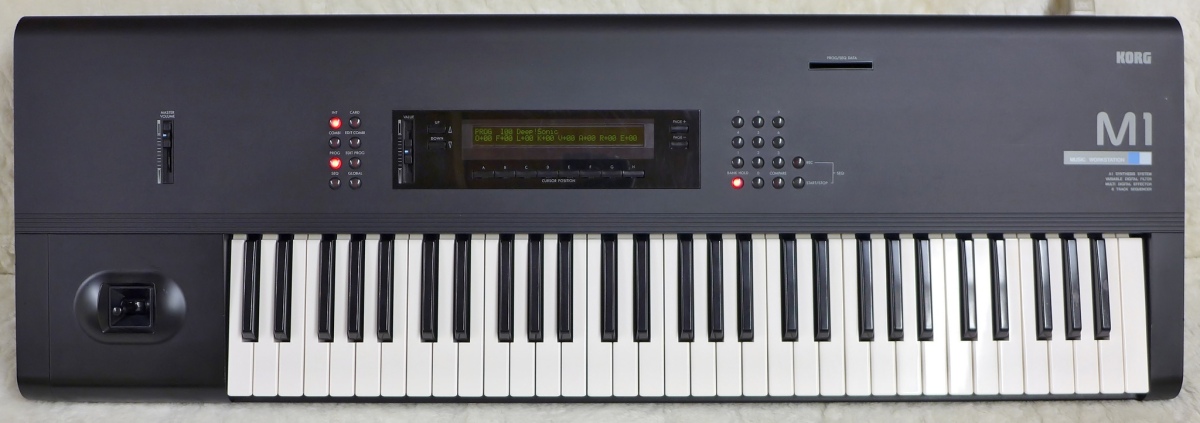
The Korg M1 is a digital workstation and music synthesizer that was first introduced in 1988. It quickly rose to prominence and became one of the most recognizable synthesizers of all time. Musicians from all genres have used it on countless recordings and live performances.

Korg’s AI (Advanced Integrated) synthesis technology, which combines samples of real instruments with synthesis techniques to produce a wide variety of realistic and expressive sounds, was first implemented in the M1 synthesizer. Additionally, the M1 was the first synthesizer with an integrated sequencer, enabling musicians to record and replay their performances.

The M1 offered a variety of synthesized sounds, such as basses, pads, and leads, in addition to an assortment of natural sounds like piano, guitar, drums, and orchestral instruments. It also included a variety of effects, such as distortion, delay, and reverb. Musicians could record and edit their performances on the M1’s internal sequencer, which could also import and export MIDI data.

Musicians of all skill levels can use the M1 easily thanks to its user interface, which was created to be clear and straightforward. The M1 also included many performance-oriented features that enabled musicians to construct intricate and expressive performances, such as split and layer capabilities, an arpeggiator, and keyboard scaling.

The M1 was renowned for its robust design, dependability, and powerful synthesis and sequencing capabilities. Many well-known musicians used the M1 extensively on tour and in professional recording studios. It was a mainstay in the Pop, R&B, and Dance Music scenes and the electronic music scene.

During its ten-year production run, the Korg M1 sold more than 250,000 units globally. The M1EX, an upgraded version of the M1, and the T-series succeeded it. Numerous software and hardware emulations are still available today, preserving its legacy.

The Korg M1 was a revolutionary synthesizer that altered how musicians compose and perform music. Realistic sounds, effective sequencing, and an easy-to-use user interface made it a must-have tool for musicians of all levels. It is still regarded as one of the most recognizable synthesizers in the history of electronic music because of its lasting legacy.

Used by

Categories
Classic Synthesizers Synthesizer Models

Roland D-50

The Roland D-50 is a digital synthesizer that was first released in 1987. It is renowned for its distinctive sound, which combines real instrument samples with sound synthesis techniques to produce a fresh, hybrid sound.

The D-50 uses “Linear Arithmetic” synthesis, a technique that combines sample-based synthesis with the conventional subtractive synthesis method, making it one of its standout features. This makes it possible to have more control over the instrument’s timbre and a wider variety of sounds.

The D-50’s extensive use of presets is yet another standout feature. The instrument includes a wide range of pre-programmed sounds, such as accurate piano and string sounds and more experimental and abstract sounds. Because of this, even new users can quickly produce complex music that sounds professional.

Despite its age, the D-50 is still a preferred option for producers and musicians. Its unique sound has been featured on countless recordings and is still used in a wide range of genres, such as electronic, pop, and film scores.

The D-50’s lack of MIDI support is one drawback; it was introduced before MIDI became a standard, making it challenging to integrate with contemporary production environments. However, a MIDI retrofit or converter can be used to get around this.

Overall, the Roland D-50 is a legendary and classic synthesizer that is still highly sought after for its distinctive and adaptable sound. The D-50 is certain to spark creativity and give your music a fresh perspective, whether you’re a seasoned pro or just getting started.

Used by

Categories
Classic Synthesizers Synthesizer Models

Yamaha DX7

The Yamaha DX7 is a synthesizer that was first introduced in 1983. It immediately became well-liked by musicians and producers because of its distinctive sound qualities and adaptability. The DX7 was the first synthesizer to use FM synthesis, a method that makes it feasible to produce complex, subtle sounds that were before unattainable.

The DX7’s six-operator FM synthesis engine, which enables the manipulation of sine wave oscillators to produce various sounds, is one of its primary characteristics. The 16-voice polyphony of the DX7 allows for the simultaneous playback of numerous notes. With the ability to save and retrieve patches and performances, the keyboard boasts a velocity- and aftertouch-sensitive keyboard and powerful editing features.

From pop and rock bands like Depeche Mode and Phil Collins to jazz and experimental musicians like Herbie Hancock and Brian Eno, a wide variety of musicians and producers have employed the DX7. Numerous records from the 1980s and 1990s have its distinctive digital sound, and electronic and experimental music continue to use it frequently.

The DX7 is still a solid and adaptable synthesizer, even after all these years. The DX7 is a well-liked option for electronic music production and live performance because numerous contemporary software synthesizers and plugins have been created to mimic its sound and capabilities.

The Yamaha DX7 is a timeless synthesizer that has withstood the test of time in general. It is an effective instrument for producing a variety of sounds thanks to its distinctive FM synthesis engine and rich editing features. Due to its success in the 1980s and 1990s, it gained a permanent position in music history and is still extensively employed today.

Used by

Categories
Synthesizer Types

Digital Synthesizers

A digital synthesizer is a type of synthesizer that uses digital technology to generate sound. Unlike analog synthesizers, which use analog circuits and components, digital synthesizers use digital signal processing (DSP) and computer algorithms to create sound.

Digital synthesizers have several advantages over analog synthesizers, such as the ability to store and recall large numbers of presets, higher precision and stability in sound generation and control, and the ability to add more complex and sophisticated features such as multi-timbrality, built-in effects and sequencing. They also tend to be more lightweight, portable and less expensive than analog synthesizers.

A digital synthesizer can have several types of synthesis methods, such as, subtractive, additive, FM, AM, sample-based, physical modeling, and more. They also can have different types of interfaces, from simple preset selection, to complex programming interfaces with a lot of parameters to tweak and modulate.

Some popular digital synthesizers include the Yamaha DX7, the Roland D-50, and the Korg M1.

In summary, a Digital Synthesizer is a type of synthesizer that uses digital technology to generate sound, they have advantages such as the ability to store and recall large numbers of presets, higher precision and stability in sound generation and control, and the ability to add more complex and sophisticated features. They also tend to be more lightweight, portable and less expensive than analog synthesizers, and can have several types of synthesis methods and interfaces.

Examples