
Categories
Classic Synthesizers Synthesizer Models

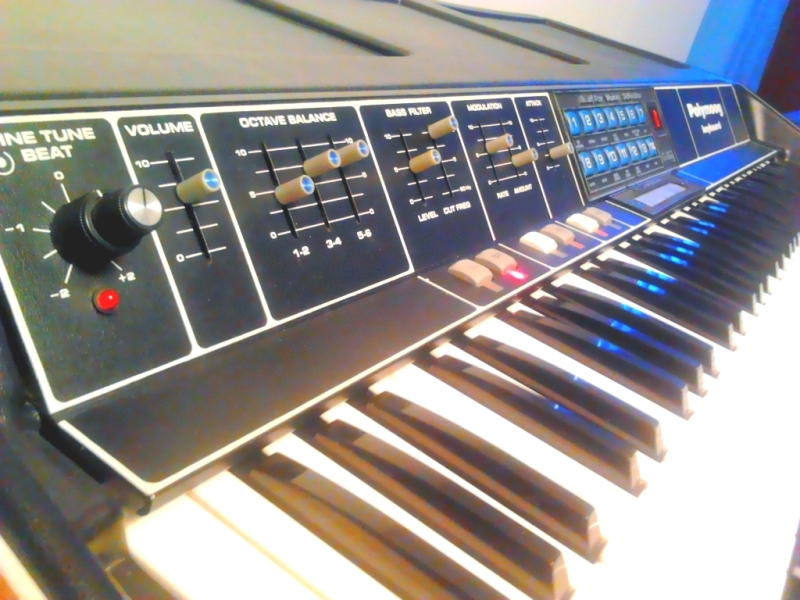
Moog Polymoog

The Polymoog is a polyphonic analog synthesizer manufactured by Moog Music in the 1970s. It was one of the first polyphonic synthesizers available to musicians and was known for its rich, expressive sound and versatility.

The Polymoog was first introduced in 1975 as a follow-up to the popular Minimoog monophonic synthesizer. The Polymoog featured a 71-note weighted keyboard and was capable of producing up to six voices simultaneously, making it a popular choice for musicians who wanted to add a more complex and dynamic sound to their music.

One of the key features of the Polymoog was its use of filtering, which allowed users to shape the synth’s sound in various ways. The synth featured a 24dB/octave resonant low-pass filter, which could be used to create a wide range of sounds, from subtle to extreme. Additionally, the Polymoog featured a 3-band equalizer, which allowed users to adjust the balance of bass, midrange, and treble frequencies.

The Polymoog also featured a variety of modulation sources, including an LFO, a sample-and-hold generator, and an envelope generator. These tools allowed users to add movement and variation to their sounds, creating a wide range of textures and effects.
The Polymoog’s sound generation was based on subtractive synthesis and featured a voltage-controlled oscillator. The Polymoog also featured a noise generator, which could be used to add percussive or other natural sounds to the synth’s sound palette.

Despite its popularity, the Polymoog was in production for only a few years, and production was halted in 1980. However, the Polymoog has become a cult classic and is still highly sought-after by synth enthusiasts today. Its rich, expressive sound and versatility make it a popular choice for musicians looking to add a unique and dynamic sound to their music.

Used by:
Categories
Classic Synthesizers Synthesizer Models

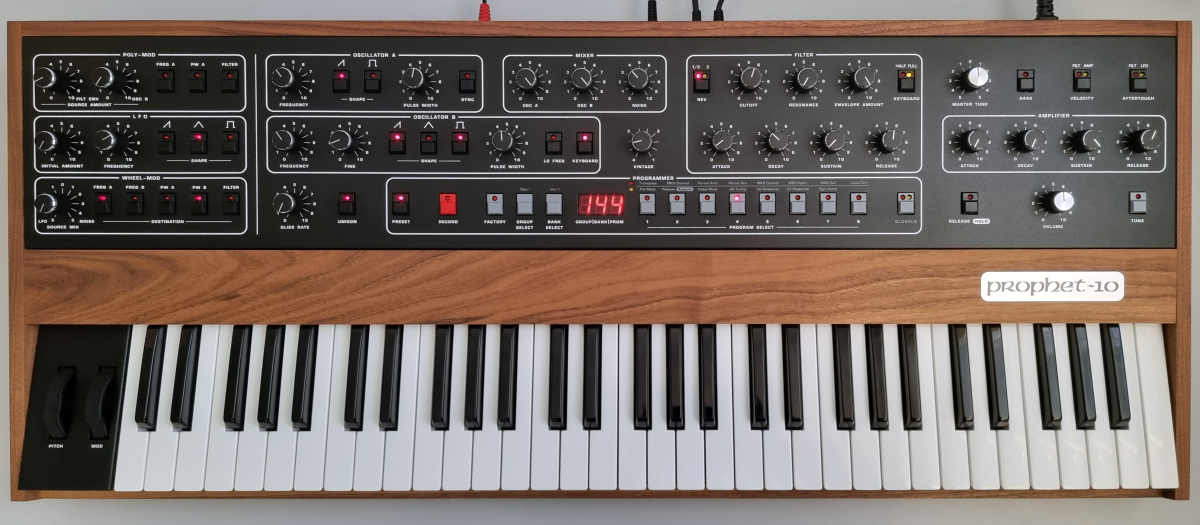
Sequential Circuits Prophet-5

The Sequential Circuits Prophet-5 is a vintage analog synthesizer that the company initially released in 1978. It was one of the first fully programmable synthesizers and immediately established itself as a standard in the music business. Many performers from different musical genres, including rock, pop, and electronic music, used it.

The Prophet-5’s five-voice polyphony, which enables the creation of intricate and varied sounds, is one of its defining characteristics. Additionally, it contains a voltage-controlled filter and two voltage-controlled oscillators for each voice, which can be used to modify the sound. Its user-friendly interface makes it simple for musicians to create new sounds and save them as presets.

Additionally, the Prophet-5’s small size and portability made it a favorite of touring performers. The live stage arrangements of well-known bands like Tangerine Dream, Depeche Mode, and New Order demonstrate this.

The Prophet-5 was used in popular music and soundtracks for movies and television shows, especially in the 1970s and 1980s. It was the ideal instrument for bringing depth and passion to a scene because of its rich and intricate sound.

The Prophet-5 was manufactured until 1984, and original machines are still in high demand and sell for a high price on the vintage market. But in 2015, Dave Smith Instruments unveiled the Prophet-6, a more contemporary version of the Prophet-5 that is still well-liked by synth fans.

In conclusion, the Sequential Circuits Prophet-5 is a well-known five-voice polyphonic, rich and complex sounding, and programmable classic analog synthesizer. Its portability and small size made it popular with traveling musicians, and many well-known bands’ music may be heard reflecting its influence.

Used by