Categories
Classic Synthesizers Synthesizer Models

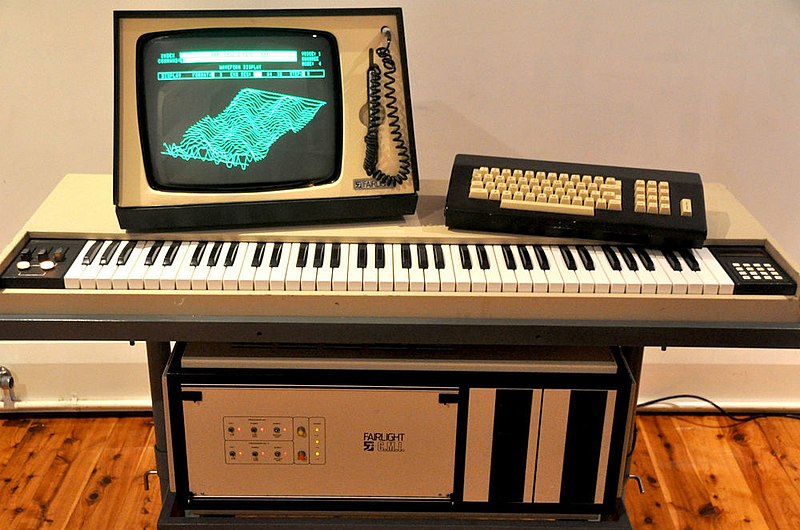
Fairlight CMI

The Firelight CMI (Computer Musical Instrument) synthesizer is a digital musical instrument first developed in the late 1970s by engineer Peter Vogel and musician Kim Ryrie. It was among the first synthesizers to use a digital computer at the center of its construction, giving the user more creative freedom and control over the instrument’s sound.

The Fairlight Instruments company, formed by Vogel and Ryrie, initially produced the Firelight CMI before it was first released in 1979. Because of the instrument’s cutting-edge capabilities and distinctive tone, musicians and producers took to it instantly.

The Firelight CMI’s capacity to sample and retain sound, which allowed users to manipulate recorded samples to generate new sounds, was one of its primary features. A touch-sensitive keyboard, an integrated sequencer, and a number of other controls and interfaces for modifying sound were also included in the instrument.

The Firelight CMI was renowned for its cutting-edge technology, exorbitant price, and exclusivity. Initially costing roughly $25,000, the instrument was out of many performers’ and producers’ pricing ranges. Because of this, the recording industry’s professional musicians and producers were the primary users of the Firelight CMI.

The Firelight CMI is regarded as a groundbreaking instrument in the development of digital music technology despite its high price. It had a big impact on the music business. Its sampling and storing capabilities helped other digital instruments and software evolve, and its distinctive sound can be heard on many well-known songs from the 1980s.

The Firelight CMI is now regarded as a classic instrument and is highly sought after by vintage gear collectors and enthusiasts. The manufacturer Fairlight Instruments discontinued making the Firelight CMI in the 1990s. However, a few businesses are still able to service and repair it, and it still has a loyal user community.

Overall, the Firelight CMI was a groundbreaking digital musical instrument that expanded the realms of what was conceivable regarding technology and sound design. Its influence on modern music creation is still felt today.

Used by

  • Peter Gabriel: The musician used the Firelight CMI on his fourth solo album, “Security,” which was released in 1982. Gabriel also used the instrument on his tours during this period.
  • Kate Bush: The singer-songwriter used the Firelight CMI on her 1985 album, “Hounds of Love.” The album featured the hit single “Running Up That Hill (A Deal With God)” which was produced using the CMI.
  • Jean Michel Jarre: The French electronic musician used the Firelight CMI on his 1981 album, “Magnetic Fields,” which featured the hit single “Magnetic Fields 2.”
  • Thomas Dolby: The musician and producer used the Firelight CMI on his 1982 debut album, “The Golden Age of Wireless.”
  • Art of Noise: The British band used the Firelight CMI on their 1984 album, “Who’s Afraid of the Art of Noise?”
  • A-ha: The Norwegian band used the Firelight CMI on their hit single “Take On Me,” which was released in 1985.
  • Frankie Goes to Hollywood: The British band used the Firelight CMI on their 1984 debut album, “Welcome to the Pleasuredome.”
  • Toto: The American band used the Firelight CMI on their 1982 album “Toto IV” which featured the hit single “Africa”
  • Fleetwood Mac: The band used the Firelight CMI on their 1982 album “Mirage”
  • Revolting Cocks: The industrial super-group used the Fairlight CMI on their albums “Big Sexy Land” and “Beers, Steers, and Queers.”
  • Front 242: The Belgian EBM Industrial group used the Fairlight on numerous early recordings.

Categories
Classic Synthesizers Synthesizer Models

Yamaha DX7

The Yamaha DX7 is a synthesizer that was first introduced in 1983. It immediately became well-liked by musicians and producers because of its distinctive sound qualities and adaptability. The DX7 was the first synthesizer to use FM synthesis, a method that makes it feasible to produce complex, subtle sounds that were before unattainable.

The DX7’s six-operator FM synthesis engine, which enables the manipulation of sine wave oscillators to produce various sounds, is one of its primary characteristics. The 16-voice polyphony of the DX7 allows for the simultaneous playback of numerous notes. With the ability to save and retrieve patches and performances, the keyboard boasts a velocity- and aftertouch-sensitive keyboard and powerful editing features.

From pop and rock bands like Depeche Mode and Phil Collins to jazz and experimental musicians like Herbie Hancock and Brian Eno, a wide variety of musicians and producers have employed the DX7. Numerous records from the 1980s and 1990s have its distinctive digital sound, and electronic and experimental music continue to use it frequently.

The DX7 is still a solid and adaptable synthesizer, even after all these years. The DX7 is a well-liked option for electronic music production and live performance because numerous contemporary software synthesizers and plugins have been created to mimic its sound and capabilities.

The Yamaha DX7 is a timeless synthesizer that has withstood the test of time in general. It is an effective instrument for producing a variety of sounds thanks to its distinctive FM synthesis engine and rich editing features. Due to its success in the 1980s and 1990s, it gained a permanent position in music history and is still extensively employed today.

Used by

Categories
Classic Synthesizers Synthesizer Models

Sequential Circuits Prophet-5

The Sequential Circuits Prophet-5 is a vintage analog synthesizer that the company initially released in 1978. It was one of the first fully programmable synthesizers and immediately established itself as a standard in the music business. Many performers from different musical genres, including rock, pop, and electronic music, used it.

The Prophet-5’s five-voice polyphony, which enables the creation of intricate and varied sounds, is one of its defining characteristics. Additionally, it contains a voltage-controlled filter and two voltage-controlled oscillators for each voice, which can be used to modify the sound. Its user-friendly interface makes it simple for musicians to create new sounds and save them as presets.

Additionally, the Prophet-5’s small size and portability made it a favorite of touring performers. The live stage arrangements of well-known bands like Tangerine Dream, Depeche Mode, and New Order demonstrate this.

The Prophet-5 was used in popular music and soundtracks for movies and television shows, especially in the 1970s and 1980s. It was the ideal instrument for bringing depth and passion to a scene because of its rich and intricate sound.

The Prophet-5 was manufactured until 1984, and original machines are still in high demand and sell for a high price on the vintage market. But in 2015, Dave Smith Instruments unveiled the Prophet-6, a more contemporary version of the Prophet-5 that is still well-liked by synth fans.

In conclusion, the Sequential Circuits Prophet-5 is a well-known five-voice polyphonic, rich and complex sounding, and programmable classic analog synthesizer. Its portability and small size made it popular with traveling musicians, and many well-known bands’ music may be heard reflecting its influence.

Used by

Categories
Classic Synthesizers

Arp 2600

The ARP 2600 is a classic analog synthesizer first introduced in 1971 by ARP Instruments. It swiftly established itself as a standard in the music business, being utilized by many different musicians in various musical genres, such as rock, pop, and electronic music.

The adaptability of the ARP 2600 is one of its distinguishing qualities. Three voltage-controlled oscillators, a low-pass filter, and a number of modulation possibilities are just a few of its many sound-sculpting options. A built-in spring reverb is another feature of the 2600 that can give the sound more depth and warmth.

In addition, the ARP 2600 includes a semi-modular construction, allowing it to function both as a standalone synthesizer and as a modular synthesizer when patched with outside signals. Due to its increased adaptability, it became well-liked among experimental musicians and sound designers.

The ARP 2600 was renowned for being portable since it could be carried around simply while providing various sound-sculpting choices. It became popular among traveling artists, and well-known bands like Styx, Tangerine Dream, and Led Zeppelin use it in their stage arrangements.

The ARP 2600 was used in popular music and soundtracks for movies and television shows, especially in the 1970s and 1980s. It was the ideal instrument for adding complexity and emotion to a scene because of its adaptability and strong sound.

Although the ARP 2600 wasn’t produced until 1981, it’s still a very sought-after instrument, and original models sell for a lot of money on the vintage market. Numerous well-known bands’ music shows its impact, and its legacy continues to motivate new musical generations.

The ARP 2600 is a well-known vintage analog synthesizer with a strong reputation for portability, adaptability, and sound quality. Many well-known bands’ music can be recognized as having been influenced by it because of its semi-modular design and variety of sound-sculpting choice

Used by