The Moog modular synthesizer, also known simply as the Moog modular, is a type of electronic music synthesizer that Robert Moog first developed in the early 1960s. The device, which was among the first modular synthesizers ever made, had a significant influence on the evolution of electronic music.
The Moog modular synthesizer is made up of a number of individual modules, including oscillators, filters, and envelope generators, that can be connected using patch cables. This allows the musician to create complex sounds and control the various parameters of the instrument in real time.
The Moog 901, the original Moog modular synthesizer, was first released in 1964. This early design included many separate modules, such as an envelope generator, a filter, and a voltage-controlled oscillator. Avant-garde musicians and experimental composers were the instrument’s primary users due to its high cost.
Robert Moog continued working on the Moog modular synthesizer for several years, introducing additional modules and bolstering the instrument’s capabilities. He launched the Moog Model 15, a more portable and cost-effective variation of the original Moog modular, in 1967.
The Moog modular synthesizer gained popularity among a broader variety of musicians in the 1970s, including rock and pop performers. Numerous popular songs, such as Pink Floyd’s “Wish You Were Here” album and Hot Butter’s “Popcorn,” featured the instrument.
As newer, more affordable digital synthesizers became available in the 1980s, the Moog modular synthesizer’s appeal started to wane. But in recent years, the instrument has undergone a resurgence in popularity as more musicians and producers rediscover the distinctive and plentiful sounds that can be produced with a Moog modular.
In the world of electronic music, the Moog modular synthesizer is now viewed as a classic instrument. It continues to attract musicians and producers from a variety of genres thanks to its distinctive sound and flexibility. Modular synthesizers are still produced and sold by Moog, and numerous businesses also offer copies and replicas of the original Moog modulars.
Used by
- Wendy Carlos: Wendy Carlos was one of the first musicians to extensively use the Moog modular synthesizer in her music. Her 1968 album “Switched-On Bach,” which featured electronic renditions of compositions by Johann Sebastian Bach, was a commercial and critical success and helped to popularize the Moog modular.
- The Beatles: The Beatles used a Moog modular synthesizer on the song “Because” from the album “Abbey Road” in 1969.
- Keith Emerson: Emerson, keyboardist for the band Emerson, Lake & Palmer, was a pioneer of using Moog modular synthesizer in a rock context. He used the instrument extensively throughout the band’s career, and is widely credited with popularizing the use of the Moog in rock music.
- Tangerine Dream: The German electronic music band Tangerine Dream was another early adopter of the Moog modular synthesizer. They used the instrument on a number of their early albums and helped to establish the Moog as a staple in the world of electronic music.
- Giorgio Moroder: Italian producer and composer Giorgio Moroder is known for using the Moog modular synthesizer in disco and electronic pop music, especially in the 1970s.
- Isao Tomita: Japanese electronic musician and composer, Isao Tomita, was known for his use of the Moog modular synthesizer in his classical music arrangements.
- Pink Floyd: The band Pink Floyd used a Moog modular synthesizer on their 1975 album “Wish You Were Here.”
- Jan Hammer: Jan Hammer, the keyboardist of the Mahavishnu Orchestra, used the Moog Modular synthesizer on the band’s album Inner Worlds(1976)

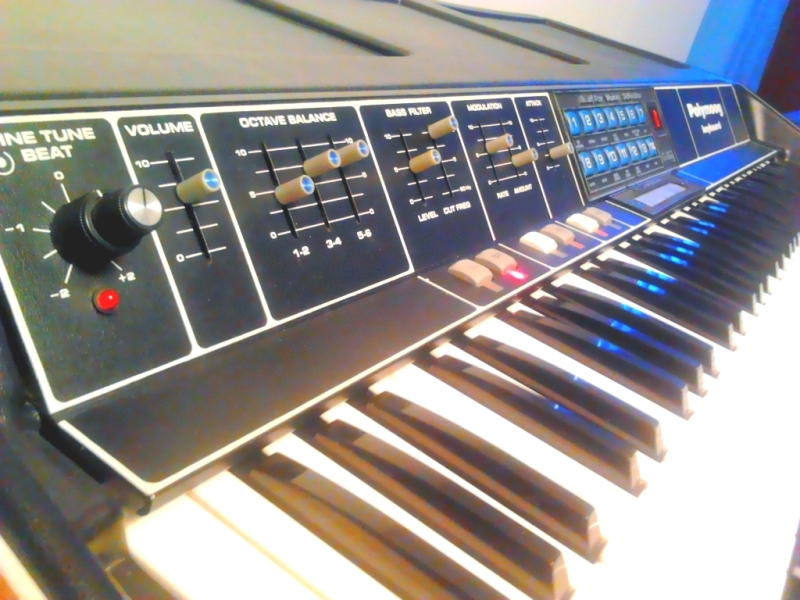

 Synthesizer Online