Categories
Classic Synthesizers Synthesizer Models

Moog Prodigy

The Moog Prodigy is a classic synthesizer first introduced in 1979 by Moog Music. It was designed as a more affordable and compact alternative to Moog’s larger and more expensive synthesizers, such as the Minimoog and the Polymoog. Despite its smaller size and lower price point, the Prodigy still featured many of the same powerful sound-generating capabilities as its larger counterparts.

The Prodigy’s sound-generating capabilities are based on Moog’s classic subtractive synthesis architecture. This architecture uses a voltage-controlled oscillator (VCO) to generate a basic waveform, such as a sawtooth or square wave. This waveform is then passed through a voltage-controlled filter (VCF) and a voltage-controlled amplifier (VCA) to shape and control the final sound. The Prodigy also features a noise generator, a sample-and-hold module, and a modulation section that includes a low-frequency oscillator (LFO) for creating vibrato and other modulation effects.

One of the Prodigy’s most notable features is its compact and portable design. The Prodigy’s compact size and lightweight construction made it ideal for musicians on the go, and its relatively low price point made it more accessible to a wider range of musicians than Moog’s larger and more expensive synthesizers. Despite its compact size, the Prodigy still featured a full-sized keyboard and a comprehensive control panel, allowing musicians to easily access and manipulate all of the synth’s various sound-generating capabilities.

The Prodigy was well-received by musicians and critics when it was first released. It was used by many musicians across different genres, from electronic and experimental musicians to pop and rock bands. Some notable musicians that used the Prodigy include Depeche Mode, New Order, and Ultravox.

Despite its popularity, the Moog Prodigy was only produced for a few years and was discontinued in the early 1980s. However, its legacy lives on, and the Prodigy remains a popular and highly sought-after synthesizer among vintage synth enthusiasts and collectors.

Used by
Categories
Classic Synthesizers Synthesizer Models

Akai S1000/3000

The Akai S1000 is a popular digital sampler synthesizer that was first introduced in 1986. It is regarded as one of the most important and innovative electronic instruments of its era.

The Akai S1000 was one of the first digital samplers widely adopted by professional musicians and producers. It was renowned for its excellent audio and capacity to store a sizable amount of sample data. The S1000 included an integrated hard drive that could hold up to 20 seconds of mono audio or 10 seconds of stereo audio. Input and output options for the sampler included MIDI and SCSI, making it easy to integrate into a studio setup.

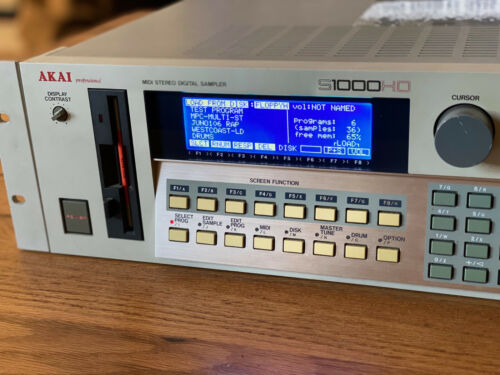
Another noteworthy feature of the Akai S1000 was its user-friendly interface. Thanks to the front panel’s large LCD screen and an assortment of knobs and buttons, it was simple to manage the several features and settings. A sequencer already included in the sampler allowed users to record and alter their tunes.

The ability to modify samples was one of the Akai S1000’s most distinctive features. Many sample editing options, including the capacity to alter a sample’s pitch, length, and loop points, were included with the S1000. Additionally, it contained an integrated effects processor that users could use to give their samples reverb, delay, and other effects.

Hip-hop, electronic, and pop music, among other musical genres, frequently employed the Akai S1000. Numerous artists utilized it, including Depeche Mode, Nine Inch Nails, and Dr. Dre. The S1000 was a popular choice for soundtracks for movies and TV shows because of its propensity for producing authentic sound effects and orchestral simulations.

The S3000 series eventually took the place of the Akai S1000 and provided even more features and capabilities. The S1000 is still a well-liked and coveted instrument among fans and collectors of electronic music. Given that it is still employed in many contemporary songs today, its legacy endures.

Overall, the music industry was transformed by the high-quality sound, ample storage, and user-friendly design of the Akai S1000 synthesizer. Many musicians and producers considered it a necessary instrument due to its adaptability and capacity for sample manipulation, and its legacy is still felt today.

Used by

  • Depeche Mode: The band used the S1000 on their album “Violator”, which was released in 1990.
  • Nine Inch Nails: Trent Reznor, the frontman of Nine Inch Nails, has used the S1000 extensively throughout his career. He used it on the band’s debut album “Pretty Hate Machine” (1989) and on their 1992 EP “Broken”.
  • Dr. Dre: The hip-hop producer and rapper used the S1000 on many of his early albums, including “The Chronic” (1992) and “Doggystyle” (1993).
  • A Tribe Called Quest: The hip-hop group used the S1000 on their album “The Low End Theory” (1991).
  • Public Enemy: The hip-hop group used the S1000 on their album “Apocalypse 91…The Enemy Strikes Black” (1991).
  • The Prodigy: The electronic group used the S1000 on their album “Experience” (1992).
  • The Chemical Brothers: The electronic group used the S1000 on their album “Exit Planet Dust” (1995)
  • Goldie: The drum and bass artist used the S1000 on his album “Timeless” (1995)
Categories
Classic Synthesizers Synthesizer Models

Korg MS-20

The Korg MS-20 is a classic analog synthesizer first introduced in 1978 by Korg. It swiftly established itself as a standard in the music business, being utilized by many different musicians in various musical genres, such as rock, pop, and electronic music.

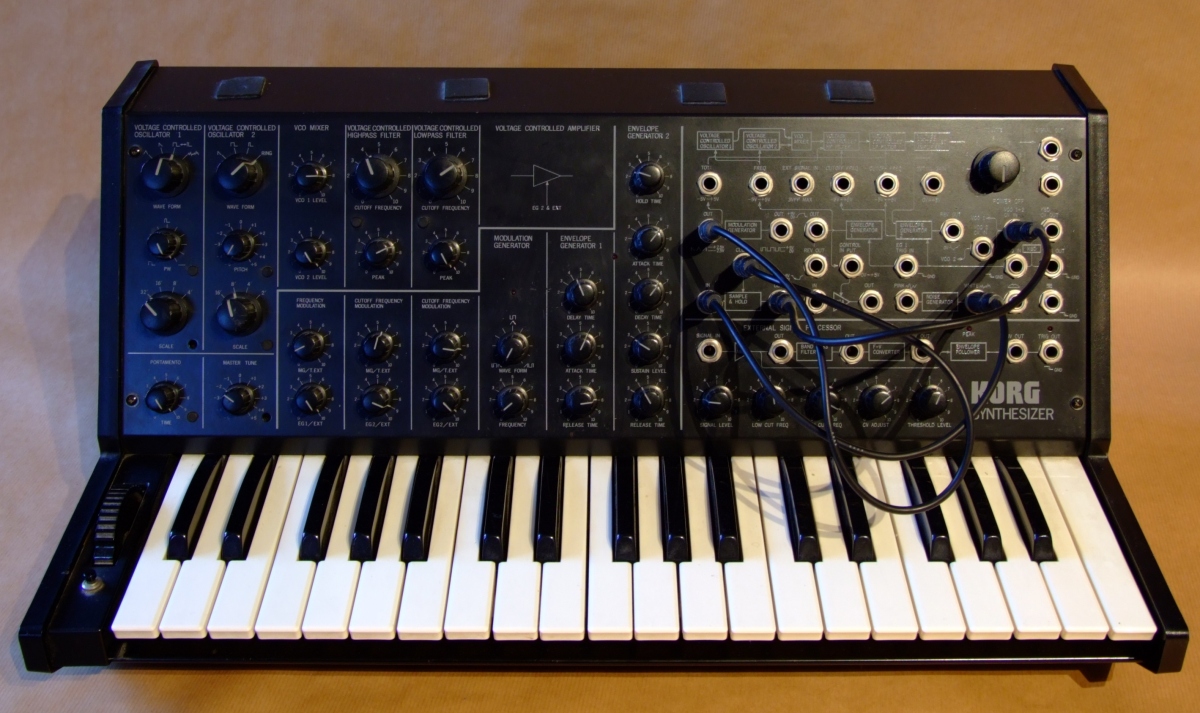
The MS-20’s patchable design, which offers a variety of sound-sculpting choices, is one of its defining characteristics. It contains a low-pass filter, two voltage-controlled oscillators, and several modulation choices. Due to its peculiar filter design, the MS-20 also has a recognizable squelchy sound.

In addition to its small size and portability, the MS-20 was a favorite of touring musicians. The live stage arrangements of well-known bands like Depeche Mode and New Order demonstrate this.

The MS-20 mini, a scaled-down version of the original synthesizer with the same capabilities and tone, was released by Korg in 2007. This made the MS-20 more approachable for producers and musicians.

The Korg MS-20 is a well-known vintage analog synthesizer with a patchable design, squelchy sound, and mobility. With the reintroduction of the MS-20 mini, its legacy has continued to inspire new generations of musicians.

Used by