
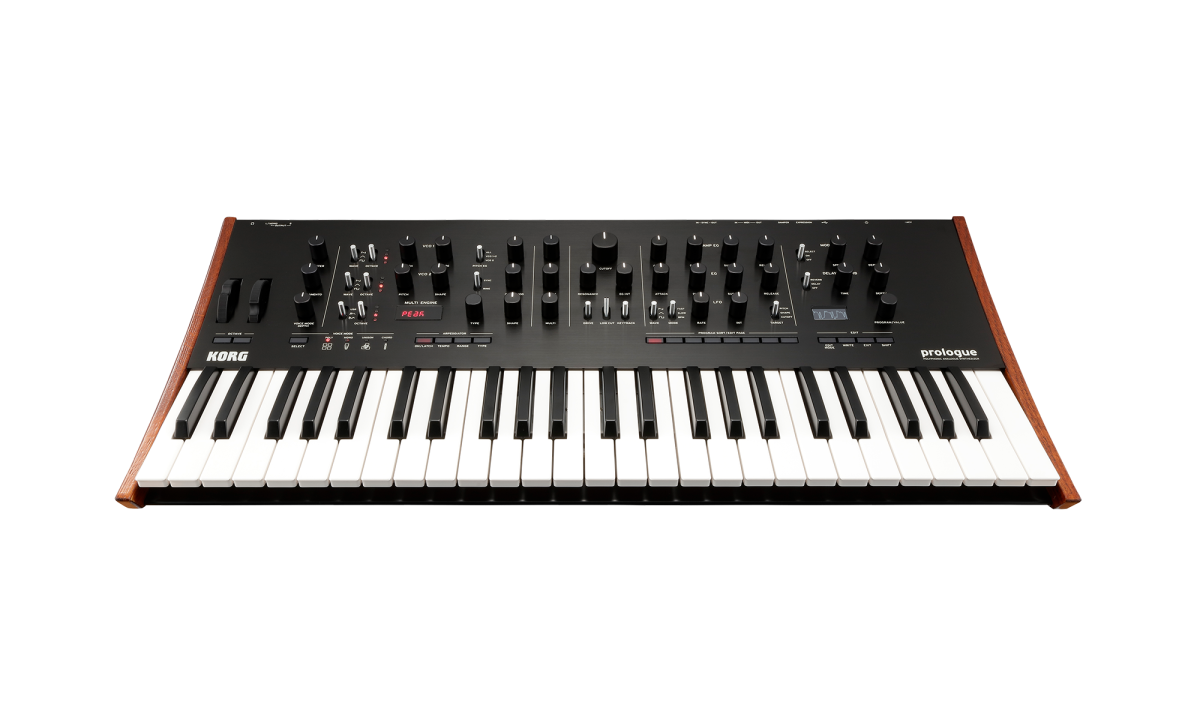
The Korg Prologue is a polyphonic analog synthesizer that was first released by Korg in 2016. The Prologue was designed as a modern take on classic analog synthesizers, and it features several advanced features that set it apart from other analog synths on the market.
One of the defining features of the Prologue is its use of a multi-engine oscillator system. This system allows various sound generation options, including traditional analog waveforms, wavetables, and even user-created samples. This gives the Prologue a level of versatility not typically found in other analog synths.
The Prologue also features a powerful filter section, which includes a two-pole resonant filter and a four-pole non-resonant filter. This allows for many tonal options, from classic analog sounds to more modern, aggressive sounds. The Prologue also features a comprehensive modulation section, which includes a number of envelopes, LFOs, and other modulation sources, allowing for a wide range of sound shaping options.
In addition to its advanced sound generation and modulation capabilities, the Prologue is also designed to be easy to use. It features a large, easy-to-read OLED display, and a user-friendly interface that allows for quick and easy access to all of its features.
The Prologue has been used by various musicians, including electronic, experimental, and pop musicians. Some notable users of the Prologue include The Chemical Brothers, Aphex Twin, and Tycho.
In 2019, Korg released the Prologue 16 and Prologue 8, which are versions of the Prologue with 16 and 8 voices respectively. In 2020, Korg also released the Prologue desktop module and the Prologue Module.
The Korg Prologue is a cutting-edge analog synthesizer that combines classic analog sound with modern features and design. Its versatility and ease of use have made it a favorite among musicians of all types and it continues to be a popular choice for both live performances and studio recording.
Used by
- The Chemical Brothers
- Aphex Twin
- Tycho

 Synthesizer Online