
Categories
Classic Synthesizers Synthesizer Models

Ensoniq ESQ-1

The Ensoniq ESQ-1 is a digital synthesizer that was first introduced in 1986. Ensoniq, an American company well-known for its electronic musical instruments, created and produced them. In the latter half of the 1980s and the beginning of the 1990s, producers and musicians frequently used the ESQ-1, and synth fans still covet it today.

The hybrid synthesis engine of the ESQ-1 is one of its fundamental characteristics. Because it combines the capabilities of digital and analog synthesis, a variety of sounds and textures are possible. The ESQ-1 comes with a library of pre-recorded samples that can be used to create sounds. The digital side of the synthesis engine is based on samples. Subtractive synthesis, which uses filters to shape and sculpt sounds, is the foundation of the analog side of the synthesis engine.

A strong sequencer included with the ESQ-1 enables users to construct intricate and complex compositions. The sequencer has numerous editing options and can hold up to 100,000 notes. Additionally, it has an integrated drum machine, which is excellent for making beats and rhythm tracks.

The ESQ-1 has a modern, straightforward user interface that is simple to use. It has a sizable LCD screen that shows all the crucial details, such as the settings for each parameter and the current patch. The keyboard has 61 velocity-sensitive keys, and the aftertouch feature on the instrument enables even more expressive playing.

The ESQ-1’s capacity to store and recall patches is among its most notable features. Users can save and load patches to and from external storage devices, and the instrument can store up to 64 patches in its internal memory.

In conclusion, the Ensoniq ESQ-1 is a traditional digital synthesizer that has withstood the test of time. It is a flexible instrument that can produce a wide variety of sounds and textures thanks to its hybrid synthesis engine and powerful sequencer. It’s a fantastic studio and live-use option due to its user-friendly interface and capacity for storing and recalling patches. The instrument is still highly sought after by collectors and synth enthusiasts.
Used by

Categories
Classic Synthesizers Synthesizer Models

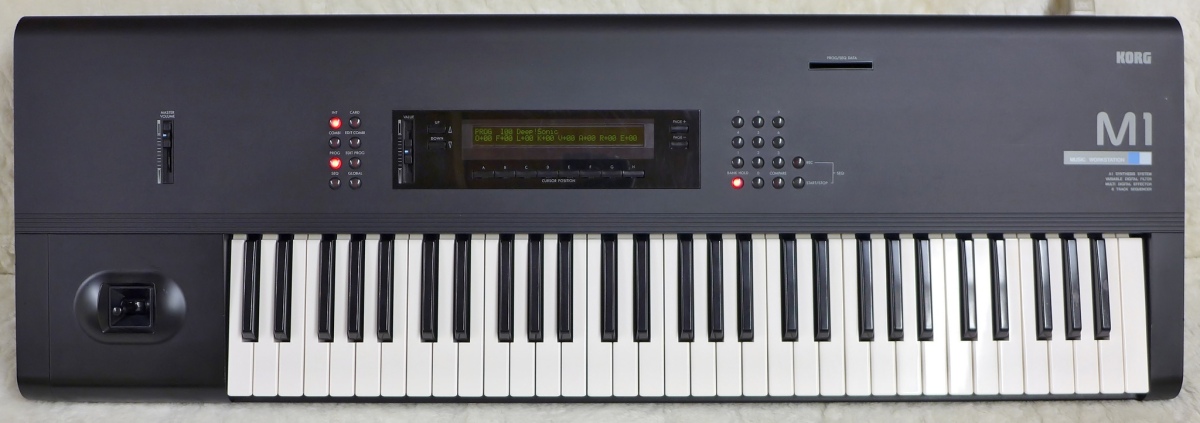
Korg M1

The Korg M1 is a digital workstation and music synthesizer that was first introduced in 1988. It quickly rose to prominence and became one of the most recognizable synthesizers of all time. Musicians from all genres have used it on countless recordings and live performances.

Korg’s AI (Advanced Integrated) synthesis technology, which combines samples of real instruments with synthesis techniques to produce a wide variety of realistic and expressive sounds, was first implemented in the M1 synthesizer. Additionally, the M1 was the first synthesizer with an integrated sequencer, enabling musicians to record and replay their performances.

The M1 offered a variety of synthesized sounds, such as basses, pads, and leads, in addition to an assortment of natural sounds like piano, guitar, drums, and orchestral instruments. It also included a variety of effects, such as distortion, delay, and reverb. Musicians could record and edit their performances on the M1’s internal sequencer, which could also import and export MIDI data.

Musicians of all skill levels can use the M1 easily thanks to its user interface, which was created to be clear and straightforward. The M1 also included many performance-oriented features that enabled musicians to construct intricate and expressive performances, such as split and layer capabilities, an arpeggiator, and keyboard scaling.

The M1 was renowned for its robust design, dependability, and powerful synthesis and sequencing capabilities. Many well-known musicians used the M1 extensively on tour and in professional recording studios. It was a mainstay in the Pop, R&B, and Dance Music scenes and the electronic music scene.

During its ten-year production run, the Korg M1 sold more than 250,000 units globally. The M1EX, an upgraded version of the M1, and the T-series succeeded it. Numerous software and hardware emulations are still available today, preserving its legacy.

The Korg M1 was a revolutionary synthesizer that altered how musicians compose and perform music. Realistic sounds, effective sequencing, and an easy-to-use user interface made it a must-have tool for musicians of all levels. It is still regarded as one of the most recognizable synthesizers in the history of electronic music because of its lasting legacy.

Used by

Categories
Synthesizer Features

Sequencer

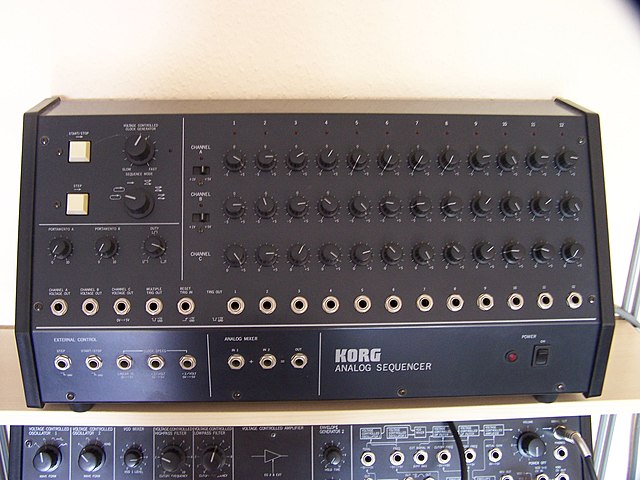
A synthesizer sequencer is a feature in many synthesizers that allows the user to record and playback a sequence of notes and other events. A sequencer essentially acts as a musical “memory” for the synthesizer, allowing the user to record and playback performance.

Sequencers can be used to record a melody or a chord progression, for example, and play it back repeatedly. The user can input the sequencer’s notes and other parameters such as velocity, pitch bend, modulation, and other CCs (Control Changes). Some sequencers also include editing capabilities such as quantization, transposition, and adding or removing notes from the sequence.

There are different types of sequencers; some are simpler and record the notes, while others have more advanced features, such as the ability to record multiple tracks and create complex arrangements. Some sequencers also can sync with external devices such as drum machines or other electronic instruments, allowing the user to create a cohesive and tight performance with multiple instruments.

Synthesizer sequencers can be a powerful tool for music production, allowing the user to quickly and easily record and play back complex performances, and create intricate, layered compositions.