
Categories
Classic Synthesizers Synthesizer Models

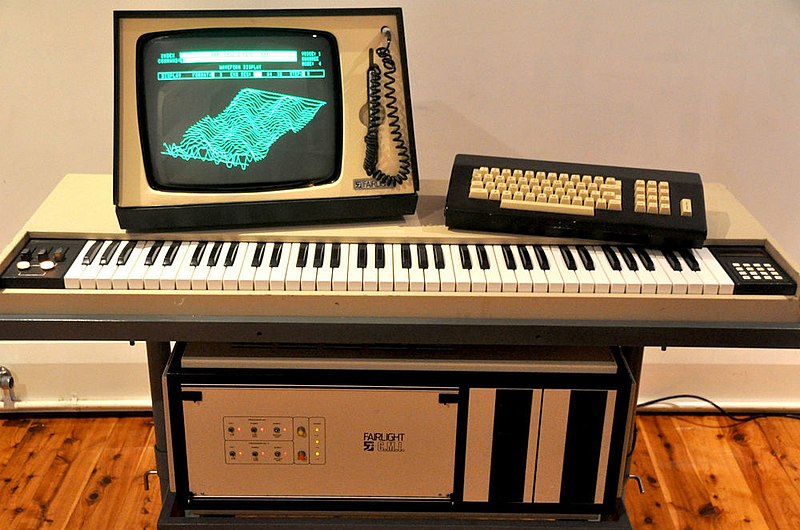
Fairlight CMI

The Firelight CMI (Computer Musical Instrument) synthesizer is a digital musical instrument first developed in the late 1970s by engineer Peter Vogel and musician Kim Ryrie. It was among the first synthesizers to use a digital computer at the center of its construction, giving the user more creative freedom and control over the instrument’s sound.

The Fairlight Instruments company, formed by Vogel and Ryrie, initially produced the Firelight CMI before it was first released in 1979. Because of the instrument’s cutting-edge capabilities and distinctive tone, musicians and producers took to it instantly.

The Firelight CMI’s capacity to sample and retain sound, which allowed users to manipulate recorded samples to generate new sounds, was one of its primary features. A touch-sensitive keyboard, an integrated sequencer, and a number of other controls and interfaces for modifying sound were also included in the instrument.

The Firelight CMI was renowned for its cutting-edge technology, exorbitant price, and exclusivity. Initially costing roughly $25,000, the instrument was out of many performers’ and producers’ pricing ranges. Because of this, the recording industry’s professional musicians and producers were the primary users of the Firelight CMI.

The Firelight CMI is regarded as a groundbreaking instrument in the development of digital music technology despite its high price. It had a big impact on the music business. Its sampling and storing capabilities helped other digital instruments and software evolve, and its distinctive sound can be heard on many well-known songs from the 1980s.

The Firelight CMI is now regarded as a classic instrument and is highly sought after by vintage gear collectors and enthusiasts. The manufacturer Fairlight Instruments discontinued making the Firelight CMI in the 1990s. However, a few businesses are still able to service and repair it, and it still has a loyal user community.

Overall, the Firelight CMI was a groundbreaking digital musical instrument that expanded the realms of what was conceivable regarding technology and sound design. Its influence on modern music creation is still felt today.

Used by

  • Peter Gabriel: The musician used the Firelight CMI on his fourth solo album, “Security,” which was released in 1982. Gabriel also used the instrument on his tours during this period.
  • Kate Bush: The singer-songwriter used the Firelight CMI on her 1985 album, “Hounds of Love.” The album featured the hit single “Running Up That Hill (A Deal With God)” which was produced using the CMI.
  • Jean Michel Jarre: The French electronic musician used the Firelight CMI on his 1981 album, “Magnetic Fields,” which featured the hit single “Magnetic Fields 2.”
  • Thomas Dolby: The musician and producer used the Firelight CMI on his 1982 debut album, “The Golden Age of Wireless.”
  • Art of Noise: The British band used the Firelight CMI on their 1984 album, “Who’s Afraid of the Art of Noise?”
  • A-ha: The Norwegian band used the Firelight CMI on their hit single “Take On Me,” which was released in 1985.
  • Frankie Goes to Hollywood: The British band used the Firelight CMI on their 1984 debut album, “Welcome to the Pleasuredome.”
  • Toto: The American band used the Firelight CMI on their 1982 album “Toto IV” which featured the hit single “Africa”
  • Fleetwood Mac: The band used the Firelight CMI on their 1982 album “Mirage”
  • Revolting Cocks: The industrial super-group used the Fairlight CMI on their albums “Big Sexy Land” and “Beers, Steers, and Queers.”
  • Front 242: The Belgian EBM Industrial group used the Fairlight on numerous early recordings.
Categories
Classic Synthesizers Synthesizer Models

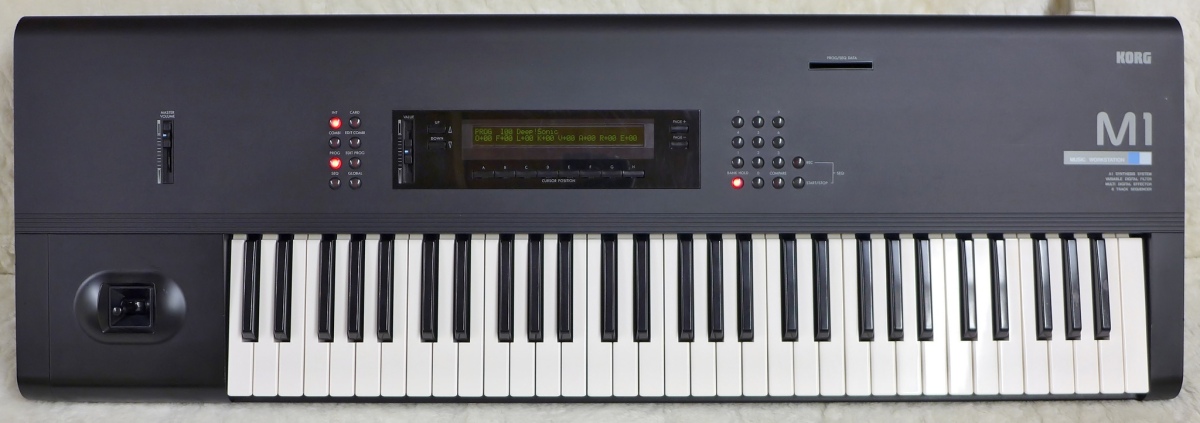
Korg M1

The Korg M1 is a digital workstation and music synthesizer that was first introduced in 1988. It quickly rose to prominence and became one of the most recognizable synthesizers of all time. Musicians from all genres have used it on countless recordings and live performances.

Korg’s AI (Advanced Integrated) synthesis technology, which combines samples of real instruments with synthesis techniques to produce a wide variety of realistic and expressive sounds, was first implemented in the M1 synthesizer. Additionally, the M1 was the first synthesizer with an integrated sequencer, enabling musicians to record and replay their performances.

The M1 offered a variety of synthesized sounds, such as basses, pads, and leads, in addition to an assortment of natural sounds like piano, guitar, drums, and orchestral instruments. It also included a variety of effects, such as distortion, delay, and reverb. Musicians could record and edit their performances on the M1’s internal sequencer, which could also import and export MIDI data.

Musicians of all skill levels can use the M1 easily thanks to its user interface, which was created to be clear and straightforward. The M1 also included many performance-oriented features that enabled musicians to construct intricate and expressive performances, such as split and layer capabilities, an arpeggiator, and keyboard scaling.

The M1 was renowned for its robust design, dependability, and powerful synthesis and sequencing capabilities. Many well-known musicians used the M1 extensively on tour and in professional recording studios. It was a mainstay in the Pop, R&B, and Dance Music scenes and the electronic music scene.

During its ten-year production run, the Korg M1 sold more than 250,000 units globally. The M1EX, an upgraded version of the M1, and the T-series succeeded it. Numerous software and hardware emulations are still available today, preserving its legacy.

The Korg M1 was a revolutionary synthesizer that altered how musicians compose and perform music. Realistic sounds, effective sequencing, and an easy-to-use user interface made it a must-have tool for musicians of all levels. It is still regarded as one of the most recognizable synthesizers in the history of electronic music because of its lasting legacy.

Used by

Categories
Classic Synthesizers Synthesizer Models

Roland D-50

The Roland D-50 is a digital synthesizer that was first released in 1987. It is renowned for its distinctive sound, which combines real instrument samples with sound synthesis techniques to produce a fresh, hybrid sound.

The D-50 uses “Linear Arithmetic” synthesis, a technique that combines sample-based synthesis with the conventional subtractive synthesis method, making it one of its standout features. This makes it possible to have more control over the instrument’s timbre and a wider variety of sounds.

The D-50’s extensive use of presets is yet another standout feature. The instrument includes a wide range of pre-programmed sounds, such as accurate piano and string sounds and more experimental and abstract sounds. Because of this, even new users can quickly produce complex music that sounds professional.

Despite its age, the D-50 is still a preferred option for producers and musicians. Its unique sound has been featured on countless recordings and is still used in a wide range of genres, such as electronic, pop, and film scores.

The D-50’s lack of MIDI support is one drawback; it was introduced before MIDI became a standard, making it challenging to integrate with contemporary production environments. However, a MIDI retrofit or converter can be used to get around this.

Overall, the Roland D-50 is a legendary and classic synthesizer that is still highly sought after for its distinctive and adaptable sound. The D-50 is certain to spark creativity and give your music a fresh perspective, whether you’re a seasoned pro or just getting started.

Used by

Categories
Classic Synthesizers Synthesizer Models

Yamaha DX7

The Yamaha DX7 is a synthesizer that was first introduced in 1983. It immediately became well-liked by musicians and producers because of its distinctive sound qualities and adaptability. The DX7 was the first synthesizer to use FM synthesis, a method that makes it feasible to produce complex, subtle sounds that were before unattainable.

The DX7’s six-operator FM synthesis engine, which enables the manipulation of sine wave oscillators to produce various sounds, is one of its primary characteristics. The 16-voice polyphony of the DX7 allows for the simultaneous playback of numerous notes. With the ability to save and retrieve patches and performances, the keyboard boasts a velocity- and aftertouch-sensitive keyboard and powerful editing features.

From pop and rock bands like Depeche Mode and Phil Collins to jazz and experimental musicians like Herbie Hancock and Brian Eno, a wide variety of musicians and producers have employed the DX7. Numerous records from the 1980s and 1990s have its distinctive digital sound, and electronic and experimental music continue to use it frequently.

The DX7 is still a solid and adaptable synthesizer, even after all these years. The DX7 is a well-liked option for electronic music production and live performance because numerous contemporary software synthesizers and plugins have been created to mimic its sound and capabilities.

The Yamaha DX7 is a timeless synthesizer that has withstood the test of time in general. It is an effective instrument for producing a variety of sounds thanks to its distinctive FM synthesis engine and rich editing features. Due to its success in the 1980s and 1990s, it gained a permanent position in music history and is still extensively employed today.

Used by