Categories
Classic Synthesizers Synthesizer Models

PPG Wave

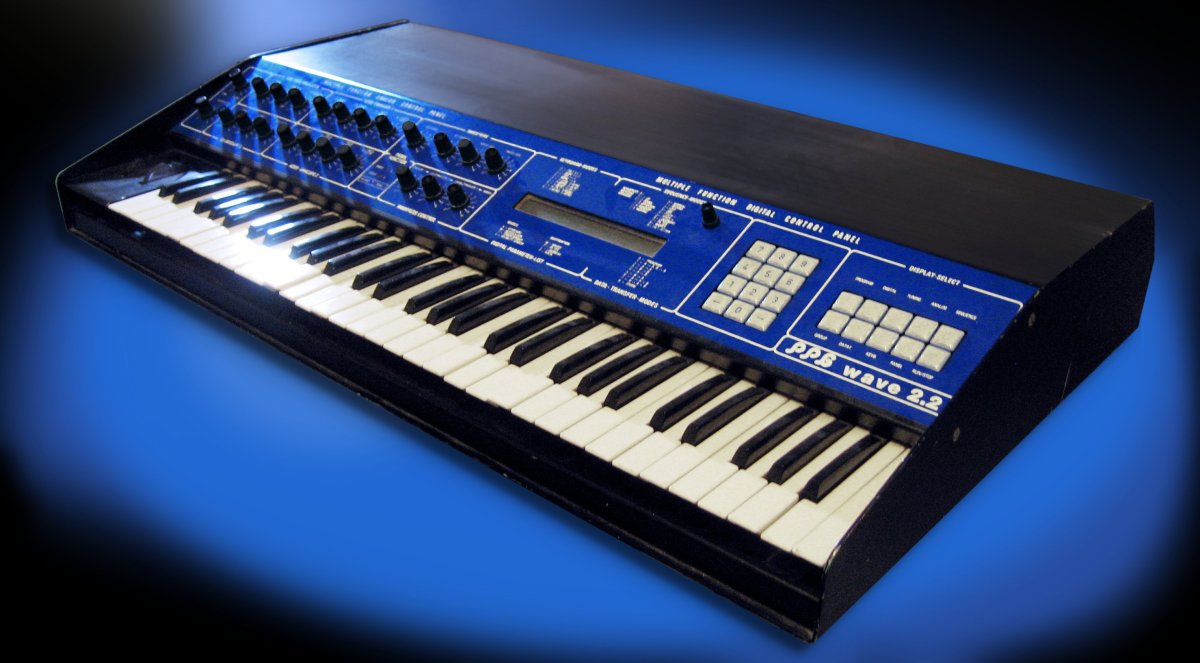
The PPG Wave synthesizer, also known as the Wavecomputer, was a digital synthesizer developed by the German company PPG (Palm Products GmbH) in the 1980s. The instrument was distinguished by its distinctive tone, which was produced by combining additive and wavetable synthesis methods.

With the debut of the PPG Wave 2.2 in 1981, the PPG Wave was first made public. This model has a 61-note keyboard and an integrated 8-track sequencer. Many well-known bands, including Tangerine Dream, Pet Shop Boys, and Depeche Mode, utilized the instrument. Musicians in the electronic and experimental music genres soon welcomed it.

The PPG Wave’s wavetable synthesis method, which lets users manipulate many single-cycle waveforms to produce complex and changing sounds, was one of its standout features. The device also has a variety of built-in waveforms, such as sine, square, and sawtooth waves, as well as some more complex waveforms, such as formants and noise.

The PPG Wave’s ability to perform additive synthesis was another noteworthy aspect. This method allows users to combine several sine waves with various frequencies and amplitudes to produce sounds. This made it possible to create sounds that were even more intricate and nuanced than with only wavetable synthesis.

The PPG Wave had a variety of valuable features in addition to its synthesis capabilities, including an arpeggiator, a built-in chorus effect, and numerous modulation possibilities.

Eventually, the PPG Wave was replaced by the PPG Wave 2.3 and PPG Wave 2.3 Turbo, which had better sound and more memory. The PPG Wave was well-liked by electronic and experimental musicians, but as newer and more sophisticated synthesizers became available in the late 1980s, production of the instrument eventually ceased.

Despite this, the PPG Wave is still regarded as a cult favorite among synth lovers, and its features and sounds are still in high demand.

Used by

  • Tangerine Dream: The German electronic music band was one of the first and most prominent users of the PPG Wave. The band used the instrument on several of their albums, including “Exit” and “Hyperborea.”
  • Pet Shop Boys: The British synthpop duo used the PPG Wave on several of their early albums, including “Please” and “Actually.”
  • Depeche Mode: The British electronic band used the PPG Wave on their album “Black Celebration,” which was released in 1986.
  • Gary Numan: The British musician and pioneer of electronic music used the PPG Wave on his album “The Fury,” which was released in 1985.
  • Jean Michel Jarre: The French electronic musician also used PPG Wave on his album “Zoolook” which was released in 1984.
  • Art of Noise: The British band and pioneers of sample-based music used PPG Wave on their album “In Visible Silence” which was released in 1986
  • New Order: The British band used PPG Wave on their album “Power, Corruption & Lies” which was released in 1983
Categories
Sound Design and Production Concepts Synthesizer Concepts

Wavetable

A wavetable is a group of sound samples stored digitally and used as the foundation for wavetable synthesis in synthesizers. It is a table of values that creates a digital representation of a waveform by representing the amplitude of a sound at various points in time. This waveform could be a straightforward sine wave or a more complex sound, like an instrument recording or a soundscape.

Wavetable synthesis uses the samples in the wavetable as the starting point for creating new sounds and uses wavetables. An oscillator that can be modulated to produce different sounds reads the wavetable. For instance, the index can be modulated to move through the wavetable at different rates, changing the harmonic content and overall character of the sound. The oscillator’s frequency can also alter the sound’s pitch.

In summary, a wavetable is a group of sound samples that can be used as the foundation for sound synthesis using wavetable synthesis and is stored in a digital format. It can be modulated to produce various sounds and read by an oscillator to generate a sound.

Categories
Synthesizer Types

Wavetable Synthesizers

A wavetable synthesizer is a type of synthesizer that creates sound using a table of previously recorded audio waveforms. The single-cycle waveforms that make up the wavetable are the fundamental building blocks for producing sounds. The synthesizer creates sound by replaying these waveforms at various pitches and utilizing various sound-shaping tools, including filters, envelopes, and modulation.

Various sounds, from conventional analog-like sounds to more complex and evolving sounds, can be produced using the wavetable synthesis technique. This synthesis technique is renowned for its capacity to create complex, rich timbres and seamless transitions between various sounds.

Wavetable synthesis is one of the sound generation techniques used by many contemporary digital synthesizers, including software synthesizers and some hardware synthesizers.

Examples

  • Xfer Serum: A popular software wavetable synthesizer that is widely used in electronic music production. It features a wide range of wavetables and sound-shaping tools, and has a user-friendly interface.
  • Native Instruments Massive: Another popular software wavetable synthesizer that is known for its powerful sound-shaping capabilities and wide range of presets.
  • Waldorf Quantum: A hardware wavetable synthesizer that features a large number of wavetables and sound-shaping tools, and is known for its high-quality sound.
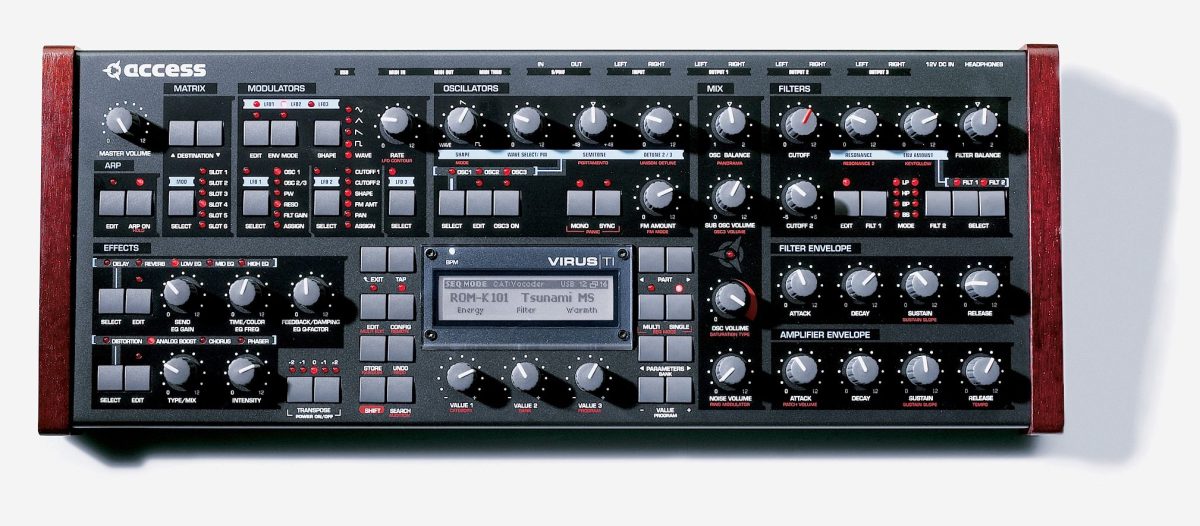
  • Access Virus TI: A hardware wavetable synthesizer that is popular among electronic music producers and is known for its versatile sound and powerful sound-shaping capabilities. (pictured)
  • PPG Wave 2.V: A classic hardware wavetable synthesizer from the 80s, known for it’s unique sound and versatility.
  • DSI Prophet Rev2: A hardware wavetable synthesizer with a large number of wavetables and sound-shaping tools and it’s known for its warm and rich sound.